

Welcome to the Blog
Keep up with the latest news and updates
If you’re counting down the days to your wedding, divorce is probably the last thing you and your fiancé want to be thinking about, and yet you might be rightfully concerned about what would happen to your assets in the event of a divorce—or your death. You may also be worried that suggesting a prenuptial agreement could hurt your future spouse by making him or her feel as if you don’t trust them, thereby creating friction before the marriage even begins.
While such concerns are valid, you should know that prenups aren’t your only option for shielding your assets from these scenarios. With a well-designed estate plan, for example, you can structure your assets in such a way to keep what you have safe, provide for your future spouse in the event of your death, and also protect your assets in the event of a divorce. In this way, you can avoid having the prenup conversation all together.
We do recommend talking with your future spouse about your assets, what would happen in the event of your death, and also making plans in advance so you can feel confident that any children from a prior marriage (or an expected inheritance) are well-planned for no matter what happens. In this two-part series, I’ll first discuss the pros and cons of prenuptial agreements, and then in part two, provide estate-planning alternatives you may want to consider.
Prenups
Sets clear financial expectations: For many couples, not openly discussing money and the partnership’s financial expectations can lead to big problems down the road. In fact, money problems are one of the leading reasons that marriages end, right up there with infidelity. A well-counseled prenuptial agreement could be an opportunity to start your marriage with complete transparency and clearly establish the financial and property rights of each spouse should a divorce occur or in the event of the death of either spouse.
Helps protect your separate assets: If you have any tangible or intangible assets you are bringing into the marriage that you don’t want to risk losing, a prenuptial agreement can help shield that property from divorce proceedings or from a future “elective share” of a spouse upon your death. This can be vital if you have significant assets like a business, real estate, intellectual property, vehicles, or family heirlooms. And, if you know you’ll want to ensure your assets go to children from a prior marriage, a prenuptial agreement can protect those assets for your children.
Helps prevent a lengthy, contentious, and expensive divorce: Divorce is never fun and can often be both emotionally and financially painful, but putting a prenuptial agreement in place could make it less so. Clearly establishing the financial and property rights of each spouse when the relationship is at its most loving—and putting those parameters in a legally-binding document—can greatly reduce the chances of you two duking it out in court later if your marriage doesn’t work out. A long, expensive court battle is the last thing you need when dealing with the painful emotions and often-hefty legal fees associated with a divorce.
Helps prevent disputes over debt: Not everyone is equal in their ability to manage their money. As mentioned earlier, disagreements over finances are a frequent reason marriages fail. Therefore, it could be a good idea to use a prenup to identify who is responsible for taking care of specific debts and liabilities. You don’t want to be stuck paying for your ex-spouse’s credit card debt when you had nothing to do with racking it up.
Prenup Cons
It’s not exactly a romantic gesture: No matter how untrue this assumption may be, people often perceive creating a prenuptial agreement as expecting the marriage to fail or that it indicates a lack of trust. Such concerns should be respected and addressed as tactfully as possible. But the reality is marriage involves lots of issues that aren’t romantic, and dealing with such delicate matters up front could bring the two of you closer (or expose hidden red flags), regardless of whether an agreement is actually created or not. Whatever you do, don’t wait to have the discussion until right before the ceremony. It’s not only extremely rude, but it could lead a court to invalidate an agreement put in place at the last minute as being created with undue pressure.
It might not be necessary: What a prenuptial agreement can cover depends on what kind of assets you have and where you live. Given this, existing divorce laws might already split your assets up in a way you think is fair. For example, in community-property states, the court will divide the property you and your spouse acquired during the marriage in an equal 50/50 split, while each spouse gets to keep his or her separate property. As your Personal Family Lawyer®, we can talk about how the laws in your state apply to you and your particular asset profile.
It can’t resolve issues of child custody, support, or visitation: It’s important to note that prenups can’t address certain issues related to children and divorce. For example, though prenups can help ensure your children from a prior marriage are able to inherit assets you want to leave them, these agreements cannot be used to address child support, custody, or visitation rights. Those issues must be resolved by the court, so a prenup would be useless if that’s what you’re hoping to achieve.
It may require two lawyers to be valid: Prenuptial agreements may be invalidated if both parties are not represented by independent legal counsel. And depending on the lawyers you each work with, lawyers who are not well-experienced with counseling, care, and conflict resolution can inadvertently escalate or intensify conflicts, rather than supporting you and your future spouse to get on the same page.
Alternative
If you plan ahead, certain estate planning vehicles can be used to protect your assets from divorce settlements and ensure that assets pass to your children from a prior marriage in the event of a divorce. There are different types of trusts, for instance, that can be set up to allow you to protect assets for yourself in the event of a divorce, and for your children in the event of your incapacity or death.
In fact, such planning vehicles may prove much more effective at protecting your assets and providing you with more control over how your assets are distributed than a prenup. In part two of this article, we’ll cover the various ways to use estate planning vehicles to proactively protect your assets, so you don’t need to have multiple attorneys or risk losing assets to a new spouse in the event of divorce or death.
Meet with us for additional help deciding whether a prenuptial agreement is the right choice for you and to discuss other estate planning alternatives that could achieve similar protections.
Proper estate planning can keep your family out of conflict, out of court, and out of the public eye. Are you ready to protect your loved ones and legacy? Check out my next presentation.

How to Avoid the Need For a Prenuptial Agreement—Part 1
Does anyone really love law school? Small Business Attorney Allie Moore loves law school but she loves photography even more. While Allie’s law career started in 2017, her passion has always been rooted in photography. She even met her husband in a high school darkroom in 2006. Even though Allie worked for a justice on the Colorado Supreme Court as well as the Colorado Attorney General’s office, her mindset shifted when she learned that she was going to be a mom. Today, Allie embraces the freedom and flexibility of entrepreneurship as she and her husband raise their two-year-old daughter. Allie’s business, Creatives Learn Law, produces an avenue for her to creatively use her law degree to help people find fulfillment in getting paid to pursue their passions.
Listen in as Allie describes how she and her business partner Ashley, help clients overcome their fears of some of the scariest words for small business owners such as contracts, taxes, and legal. By channeling her own experience as a young entrepreneur in law school, Allie empathetically provides the right resources to help “Bootstrap” businesses meet their legal obligations with less stress.
Next, Allie navigates through the difficult path of not being able to say no. What do you do when your priorities shift and your top concern is your child’s well being? Allie explains how being an entrepreneur helps her to meet challenges as she raises her daughter. Even during the present global crisis, Allie describes the rhythm she’s set to ensure she spends quality time with her daughter while focusing on high yield activities for her business.
Later Allie discusses the ins and outs of prioritization. When flexibility gives you the freedom to manage all aspects of your business, how do you decide between which tasks to work on and others that could be outsourced or delegated? Allie recalls facing the insecurities that come with letting go and where she found the inner confidence to let others into her world so she can be more present in her daughter’s. Allie also dovetails into a discussion about how she and Ashley have managed a business together while preserving a beautiful friendship.
Tune in as Allie deep dives into the interpersonal side of business and how having the right business partner can add value and energy. Allie disproves the rumor that friends do not make good business partners by revealing the flow of their management and communication style. Learn about their management document and how it targets potential risk areas for feelings of resentment. Allie also expresses how their partnership makes her feel refreshed and energized, especially since she’s not alone.
Don’t miss out on Allie’s answers to the questions you sent in on Facebook:
“What are the advantages and disadvantages of different business structures when you are starting out, Sole Proprietors vs LLCs?”
“Should my customers and clients sign waivers for releases with regard to their exposure to COVID as part of working with your business?”
Quotes:
- “We work with people who are carving their own career path and are following their passion and also trying to get paid and earn a living while they do it.”
- “Your legal obligations are not as impossible as you think they are.”
- “I’ve never been good at saying no, and I’ve never been good about quitting things.”
- “Not being alone is great.”
- “ the easiest thing ever to own and to operate.”
Links Mentioned:
Connect with Allie on Instagram for great legal tips
Join the Creatives Learn Law mailing list
Listen to Episode 2 for more tips on organizing work and spending time with family
Pamela Maass on Linkedin
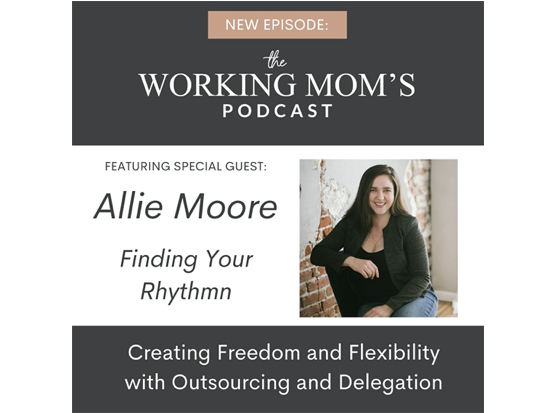
Episode 0005 : Small Business Attorney Allie Moore
In the first part of this series we discussed the vital importance of having updated advance directives in place in light of COVID-19. Here, we’ll look at several additional provisions you should consider adding to your directives to address potential contingencies related to the pandemic.
With new cases of COVID-19 currently surging in dozens of states, doctors across the country are joining lawyers in urging Americans to create the proper estate planning documents, so medical providers can better coordinate their treatment and care should they become hospitalized with the virus. The most crucial planning tools for this purpose are medical power of attorney and a living will, advance healthcare directives that work together to help describe your wishes for medical treatment and end-of-life care should you become unable to express your own wishes. While all adults over age 18 should put these documents in place as soon as possible, if you are over age 60 or have a chronic underlying health condition, the urgency is paramount.
COVID-19 considerations
What’s more, in light of COVID-19, even if you’ve already created these documents, you should revisit them to ensure they are up-to-date and address specific scenarios related to the coronavirus. In the first part of this series, we discussed some unique circumstances related to COVID-19 and its treatment that you should be aware of when creating or updating your directives. Here, we offer several more provisions you should consider adding to your directives to ensure the documents address as many potential contingencies as possible during the ongoing pandemic.
3. Permission to undergo experimental medical treatments
Since there is currently no proven vaccine or other effective treatment for COVID-19, you may consider adding provisions to your directives authorizing your agent to consent to—or withhold consent for—any experimental treatments or procedures that may be developed. Seeing that it could be years before an effective vaccine or cure will be available on a widespread basis, such a provision could be particularly important if you contract the virus while such treatments are still in the trial phase.
4. Express your wishes about intubation and ventilators
In severe COVID-19 cases, patients often require intubation, which involves putting you into a medically induced coma and inserting a tube into your windpipe, allowing oxygen to be pumped directly to your lungs using a ventilator. However, some directives specifically prohibit intubation, since such measures are often a last resort and used primarily for life-support purposes. Indeed, some people’s greatest fear is being hooked up to a machine just to keep them alive.That said, some coronavirus patients have successfully recovered after being on a ventilator, so you might not want a blanket prohibition of intubation in all cases. While the exact survival rates are still unknown, early reports from New York City health officials found fewer than 20% of COVID-19 patients ultimately survived after being placed on a ventilator. Reports from China and the U.K. found similar rates.You’ll also need to weigh the fact that even if you survive after being placed on a ventilator, you’re likely to require months, or even years, of rehabilitation and may never regain the full quality of life you previously enjoyed. And if you’re elderly or have an underlying condition, the prognosis for full recovery is especially slim. For these reasons, you should carefully review your directives’ provisions regarding intubation and ventilators with us and your doctor to be certain your documents accurately reflect your wishes. There is no right or wrong answer here, so it’s critical your loved ones and medical professionals know what you would want. To help you make more informed decisions, read What You Should Know Before You Need a Ventilator, a doctor’s perspective about intubation’s potential health consequences for COVID-19 patients. Additionally, you can find a more comprehensive discussion of coronavirus treatment decisions at the non-profit Compassion & Choices resource page, COVID-19: Understanding Your Options.
5. Consider a liability shield for doctors and hospitals
Due to fear of getting sued, some doctors and medical facilities are hesitant to honor living wills and work with healthcare agents. To deal with this, consider including language in your directives that “indemnifies” medical providers, facilities, and your agent from any liability incurred as a result of following your directions. People and institutions will be much more likely to fully honor your wishes if they understand they likely won’t get hit with a lawsuit for doing so.
6. Make sure everyone knows about (and has current copies of) your directives
Even if you have the most well thought-out and professionally prepared directives around, they won’t be worth the paper they’re printed on if nobody knows about them. Both medical power of attorney and living wills go into effect the second you sign them, so you should immediately deliver copies to your agent(s), your alternate agents, your primary care physician, and any other medical specialists you’re seeing. And don’t forget to give those folks new versions whenever you update the documents and have them tear up the old documents. This is a standard part of our practice when serving clients, so when you work with us on your legal documents, we’ll ensure that everyone who needs to have your documents always has the latest version.
Pandemic planning
The tragic reality of the pandemic is that far too many Americans are at risk of becoming seriously ill and even dying from COVID-19. In light of this dire situation, it’s vital that you and your loved ones take all possible precautions to not only mitigate your chances of catching the virus, but also having the best possible chance of surviving if you should become infected.In the event you become hospitalized with COVID-19, having updated advance directives in place can make the medical decision-making process for both your healthcare providers and family much safer and easier, while helping ensure your treatment is carried out based on your personal wishes and values. Given the overloaded state of our healthcare system right now, facilitating your medical care in this way could ultimately save your life.
Whether you have yet to create these documents or need yours updated to address COVID-19, meet with us, as your Personal Family Lawyer®, right away to take care of this urgent planning task.
Proper estate planning can keep your family out of conflict, out of court, and out of the public eye. Are you ready to protect your loved ones and legacy? Check out my next presentation.

COVID-19 Highlights Critical Need for Advance Healthcare Directives—Part 2
As the COVID-19 pandemic continues to ravage the country, doctors across the nation are joining lawyers in urging Americans to create the proper estate planning documents, so medical providers can better coordinate their care should they become hospitalized with the virus. The most critical planning tools for this purpose are medical power of attorney and a living will, advance healthcare directives that work together to help describe your wishes for medical treatment and end-of-life care in the event you’re unable to express your own wishes. In light of COVID-19, even those who have already created these documents should revisit them to ensure they are up-to-date and address specific scenarios related to the coronavirus.
While all adults over age 18 should put these documents in place as soon as possible, if you are over age 60 or have a chronic underlying health condition, the need is particularly urgent. Contact us right away if you or anyone in your family needs these documents created.
And if you’d like to listen in on a training with my mentor on when you can create these documents yourself, when you need a lawyer, what it should cost, and how to get your documents done right, please listen to it now by registering at PersonalResourceMap.com
Advance directives
Medical power of attorney is an advance directive that allows you to name a person, known as your “agent,” to make healthcare decisions for you if you’re incapacitated and unable to make those decisions yourself. For example, if you are hospitalized with COVID-19 and need to be placed in a medically induced coma, this person would have the legal authority to advise doctors about your subsequent medical care.
If you become incapacitated without medical power of attorney, physicians will generally look to someone in your family to make these decisions for you. If no family can be located, they may ask the court to appoint a legal guardian to be the decision maker. In either case, the person given this responsibility could be someone you’d never want having power over such life or death decisions—and that’s why having medical power of attorney is so important.
While medical power of attorney names who can make health-care decisions in the event of your incapacity, a living will explains how your care should be handled, particularly at the end of life. For example, if you should become seriously ill and unable to manage your own treatment, a living will can guide your agent to make these medical decisions on your behalf. These decisions could include if and when you want life support removed, whether you would want hydration and nutrition, and even what kind of food you want and who can visit you. To ensure your medical treatment is handled in exactly the way you want and prevent your family from undergoing needless stress and conflict during an already trying time, it’s vital that you document such wishes in a living will.
Keep your directives updated
Even if you’ve already created advanced directives, now is the perfect time to review the documents to ensure they still match your wishes and circumstances. For instance, is the agent named in your medical power of attorney still the individual you’d want making these decisions? Has your health changed in ways that might affect your living will’s instructions? Are you values and wishes regarding end-of-life still the same?What’s more, whether you are creating new documents or updating your old ones, you should keep COVID-19 in mind. The highly contagious and life-threatening nature of the coronavirus is something medical providers have never dealt with before, and it has strained our nation’s healthcare system to the breaking point.
Coronavirus considerations
In light of COVID-19, there are a few unique circumstances you need to be aware of when drafting these documents to ensure all of the potential scenarios related to the coronavirus and its treatment have been properly addressed.
1. Don’t do it yourself: While you’ll find a wide selection of generic, advance-directive documents online, you shouldn’t trust these do-it-yourself forms to adequately address such critical decisions. This is especially true during the ongoing pandemic, when doctors are constantly tasked with making highly difficult and uncertain decisions for patients suffering from this deadly new virus.
When it comes to your medical treatment and end-of-life care, you have unique needs and wishes that just can’t be anticipated by fill-in-the-blank documents. To ensure your directives are specifically tailored to suit your unique situation, you must work with experienced planning professionals like us to create—or at the very least, review—your medical power of attorney and living will.
2. Open lines of communication: Because COVID-19 is so contagious, family members of those who’ve contracted the virus are often not allowed to accompany them to the hospital. This means your agent likely won’t be there in person to make your treatment decisions. While most advance directives give your agent broad authority to communicate with your medical providers, the documents may not explicitly authorize certain types of remote communication.To remedy this, you may want to consider adding language to your directives expressly authorizing your agent to give directions by phone, Zoom, email, Skype, FaceTime, and other methods. To facilitate this communication, you should bring copies of your directives with you to the hospital to give your doctors, and ensure your agent (and any alternate agents named) have updated copies on-hand as well.
Next week, we’ll continue with part two in this series on the critical need for advanced directives in the age of COVID-19.
Proper estate planning can keep your family out of conflict, out of court, and out of the public eye. Are you ready to protect your loved ones and legacy? Check out my next presentation.

COVID-19 Highlights Critical Need for Advance Healthcare Directives—Part 1
Give the gift of peace of certainty to the people you love. Join the conversation as Jamie Sarche reveals her passion for dissolving barriers halting authentic conversations about death by channeling the presence of a beloved friend. Jamie believes it’s important to talk about the things our society doesn’t want us to talk about. In this episode, Jamie tells the story of how she, a communications major with a dream of working in television, finds a calling in creating a safe space for people to discuss the tragic reality of death.
Simply put, Jamie’s calling is helping people be less afraid of death. By helping them to provide their loved ones with a planned and funded funeral or memorial service, Jamie works with families to create a path for bereavement, long before it’s needed. Jamie truly helps people live a better, more meaningful life. Jamie is also a seasoned speaker who’s compassionate message extends well beyond death and dying. Jamie’s voice resonates across industries and individuals, bridging her passion to demystify death while enlightening communicators on overcoming challenging conversations.
Jamie begins her story admitting that her background does not match her current calling. However, her natural abilities as a good listener and inborn drive for walking in the shoes of others transformed her initial professional skill set into advantages. Jamie does not agree with the view of society that pain should be “papered over” and yet she applies an understanding tone that leaves people feeling secure. Later Jamie walks through the path she was drawn to when her current calling unexpectedly found her.
Watch or listen as Jamie seamlessly outlines principles and guides that can be followed when approaching this sensitive subject with your children, parents, or grandparents. Jamie highlights the “Sarche family rule” and addresses sensitive questions such as: How do I talk to my children about death? Is it ever too soon to create a path for bereavement? Jamie outlines a healthy way to identify family values and leave families intact.
Later, Jamie addresses how COVID-19 has impacted her support of families who have been led by current events to shift their viewpoint of planning for bereavement from the theoretical to practical. Jamie also provides information about how shes designed her process to be a comfortable way to provide your loved ones with the path to walk on knowing that it will meet your wishes.
Stay tuned to find out how Jamie has helped families ease stress and worry so they can refocus on other family values.
Quotes:
- “We have the opportunity to change this culture.”
- “The dead person is fine, but the people they love are not fine. This isn’t about you, this is about the people you love.”
- “Stop lying and acknowledge that things have a life span.”
- “It’s such a gift of love to have the path already paved.”
Links Mentioned:
Find Jamie Sarche on LinkedIn
Like Feldman Mortuary on Facebook or visit their website
Watch TEDx Talks: Breaking the Taboos About Death
Reach Jamie by phone: 720-404-6772
Send Jamie an email
Pamela Maass on Linkedin
Podcast production and marketing by FIRESIDE
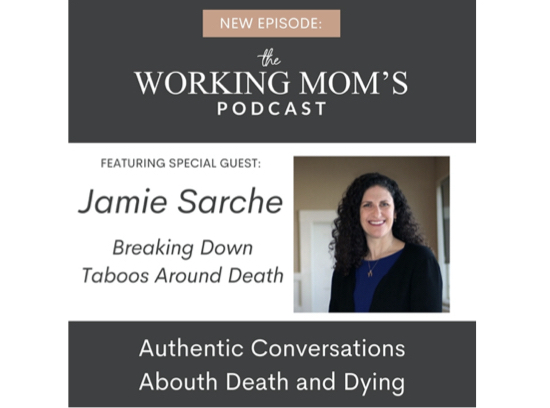
Episode 003: Breaking Down the Taboos Around Death with Jamie Sarche
“Don’t be afraid to start something new in a crisis; reinvent yourself.” These words are the tenor of Andrea Vahl’s story as she was affected economically by the 2008 “big bubble” and propelled into a surreal rhythm as a Social Media Consultant, Strategist, Speaker, and Co-author of Facebook Marketing All-in-One for Dummies. Andrea really is living proof of how a downturn can be crafted into an opportunity.
Tune in to this episode as Andrea describes how she weaved her love for art, expression, and comedy into her business. Andrea shares insight that breaks the mold of old school brand strategy by infusing and embracing passion, hobbies, and all things “weird”. Learn how Andrea’s unique sense of humor and her entrepreneurial spirit led her from running a wine tasting side gig to being named 50 Favorite Online Influencers of 2014 on Entrepreneur.com, 21 Best Blogs That Will Help You Grow Your Business on Inc.com in 2016, and Top 30 Women in Social Media by Boom Social.
Andrea is passionate about helping businesses understand and leverage the power of social media to actually grow their business. Andrea’s proven ability to make social media marketing easy to understand and implement has directly impacted the bottom line of thousands of companies through her training and one-on-one consulting. Andrea was also the Community Manager for Social Media Examiner, for over 2 years.
Andrea unfolds the secrets and best practices of how to reinvent yourself by overcoming fear and embracing your unique voice. See how to leverage your unique talents, such as comedy, to grow your own platform. Additionally, she provides reassuring guidance that perfection isn’t a requirement. Take note of tips Andrea provides to move your audience off of various social media platforms and bring them into something you own. Later, Andrea identifies how to position your brand to help you reach new milestones such as becoming a book author.
There are techniques to overcoming the challenges that come with owning a business, raising a family, and honoring and defending your own personal time. Andrea shares her views on work-life balance and how she’s shown her kids how they can strive for something and pursue passions with fervor. Andrea is sure she’s scared her children, but she’s used her business to expand their minds beyond “it’s all about me” and embrace the world.
Watch as Andrea gives advice for those who are struggling with trying to start something new during these uncertain times and how to pursue your own identity and goals. Enjoy a laugh with Andrea as she describes how the world of improv and stand up comedy has enhanced her speaking assignments and her overall joy.
Quotes:
- “This is something that everyone should be doing, showing up as you.”
- “Don’t worry that the market is saturated, it needs your voice.”
- “I’m sure I’ve scared my children.”
- “Don’t be afraid to niche and focus your business.”
Links Mentioned:
Visit Andrea’s website
Stay connected with Andrea by subscribing to her blog
Download Andrea’s eBook (PDF) – Top 10 Blog Posts
Like Andrea on Facebook
View stand up clips and sign up to be notified of Andrea’s Virtual show coming up in July 2020
Pamela Maas reveals her baby bump in Episode 1
Pamela Maass on Linkedin
Podcast production and marketing by FIRESIDE

Episode 004: Reinventing Yourself in a Crisis with Andrea Vahl
“Lorem ipsum dolor sit amet, consectetur adipiscing elit, sed do eiusmod tempor incididunt ut labore et dolore magna aliqua. Ut enim ad minim veniam, quis nostrud exercitation ullamco laboris nisi ut aliquip ex ea commodo consequat. Duis aute irure dolor in reprehenderit in voluptate velit esse cillum dolore eu fugiat nulla pariatur. Excepteur sint occaecat cupidatat non proident, sunt in culpa qui officia deserunt mollit anim id est laborum.”
Quotes:
“Lorem ipsum dolor sit amet, consectetur adipiscing elit, sed do eiusmod tempor incididunt ut labore et dolore magna aliqua. Ut enim ad minim veniam, quis nostrud exercitation ullamco laboris nisi ut aliquip ex ea commodo consequat. Duis aute irure dolor in reprehenderit in voluptate velit esse cillum dolore eu fugiat nulla pariatur. Excepteur sint occaecat cupidatat non proident, sunt in culpa qui officia deserunt mollit anim id est laborum.”
Links Mentioned:
“Lorem ipsum dolor sit amet, consectetur adipiscing elit, sed do eiusmod tempor incididunt ut labore et dolore magna aliqua. Ut enim ad minim veniam, quis nostrud exercitation ullamco laboris nisi ut aliquip ex ea commodo consequat. Duis aute irure dolor in reprehenderit in voluptate velit esse cillum dolore eu fugiat nulla pariatur. Excepteur sint occaecat cupidatat non proident, sunt in culpa qui officia deserunt mollit anim id est laborum.”
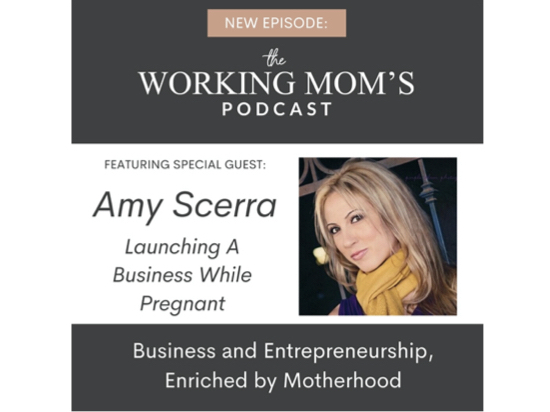
Episode 002: Two Babies at The Same Time: Launching a Business while Pregnant with Amy Scerra of Think Global.
If you have a blended family and do not plan for what happens to your assets in the event of your incapacity or eventual death, you are almost certainly guaranteeing hurt feelings, conflict, and maybe even a long, drawn out court battle.
So let’s start with clarity around what a blended family is and whether you have one. If you have stepchildren, or children from a prior marriage, or other people you consider “kin” who are not considered legal relatives in the eyes of the law, you’ve got a blended family.
Bottom line: if you have a blended family, you need an estate plan, and not just a will you created for yourself online, or a trust that isn’t very intentionally designed to keep your family out of court and out of conflict. Period. End of story. Unless you are okay with setting your loved ones up for unnecessary heartache, confusion, and pain when something happens to you.
What Will The Law Do?
“Blended Families, once considered “non-traditional” families are swiftly becoming the norm. Currently 52% of married couples (or unmarried couples who live together) have a stepkin relationship of some kind, and 4 in 10 new marriages involve remarriage. So, clearly, this is no longer “non-traditional” but quite traditional, though our laws about what happens if you become incapacitated or die are still very much based on the traditional.
Every state has different provisions for what happens when you become incapacitated or die, and the laws of the state where you become incapacitated or die may or may not match your wishes.
For example, in Colorado, if you are survived by a spouse, your surviving spouse would only receive a part of your estate if you have living children (or parents!), and your living children or parents would receive the rest. And the amount your spouse receives is variable based on the number and ages of your children.
In contrast, in California, all community property assets would go to your surviving spouse, and separate property assets would be distributed partially to a surviving spouse and partially to children, if living, in amounts depending on the number of surviving children.
In Texas, it can get very complex, depending on whether your assets are separate or community, and whether you have children from the marriage, no children from the marriage or living parents or siblings.
These are examples to show you that where you die, and what’s true when you die, may not result in the outcome you want for your loved ones, especially if you have a blended family situation.
So, here’s what you do to make sure that things do go the way you want: call us and schedule a Family Wealth Planning Session. While the session is normally $750, if you do some homework ahead of time (homework that’s going to make sure your family can find everything you have if and when you become incapacitated or die), we’ll waive the Family Wealth Planning Session fee for you, and spend two hours getting to know you, your family dynamics, and your assets, and teach you about the law here in our county and how it would impact your family and your assets in the event of your incapacity or death, so you can ensure that things go the way you want for the people you love.
Even within “traditional” families, aka married parents with families, I want to emphasize that having a full plan is the best way to provide for your loved ones. However, with “blended” families, carefully considered estate plans are, as you can see, even more vital to avoid massive misunderstanding and conflict, and having your assets tied up in court instead of going to the people you want to receive them.
Disputes Between Spouse and Children from Previous Marriage
One of the most common problems that arises in a blended family is that the deceased’s children from a prior marriage and the surviving spouse end up in conflict. This one is sadly common. Unless a comprehensive plan has been created, it could be very easy for your surviving spouse to cut your kids out completely.
When you’re considering all of these factors for the people you love, it’s important to have a Personal Family Lawyer® who can help you look at the reality of what will happen if you become incapacitated or when you die. With the complexities of modern families, it’s better to know than to leave it to the law or a court to provide. That way, not only do the people you love get the assets that you want them to receive, but you may also be saving them from years of legal conflict. Just give us a call and we’ll help you review your options.
Proper estate planning can keep your family out of conflict, out of court, and out of the public eye. Are you ready to protect your loved ones and legacy? Check out my next presentation.

Your “Blended” Family Is Likely Headed to Court Unless You Do This
Merit Kahn, CSP, is the Founder of Merit-based Business, author of Myth Shift: Challenging The Truths That Sabotage Success and creator of The Merit Method: Sales Mastery for Life program. With more than 20 years of sales, sales management, coaching, training, consulting, writing and speaking experience, Merit has worked with thousands of clients across multiple industries with one goal in mind… grow sales and influence. She is certified in Emotional Intelligence and earned the highest designation in The National Speakers Association, one held by less than 12% of professional speakers worldwide, The Certified Speaking Professional, CSP.
In this episode, Merit describes how motherhood is a priority for her decisions. There was a time when Merit would literally breastfeed her baby while responding to emails. Merit realized that she wasn’t doing either thing very well. Multi-tasking is currently fashionable and trendy; however, Merit understands that she is no good at it. While reflecting on her brand new baby, Merit decided to refocus and adjust her business model to be more family-focused.
Then, Merit explains how she made adjustments to her work schedule after her son’s birth. Merit found that she could effectively do her work remotely. Plus, there were opportunities to combine multiple tasks and delegate to others. Basically, Merit put her family at the center and worked all her other obligations around that. Merit thought about all the ways she could give value in the workplace without sacrificing her personal life.
Merit wishes she was better at collaboration and asking for help. The first thing Merit learned to outsource was cleaning. The second thing that Merit got rid of was grocery shopping. Grocery shopping does not require her talents, nor does Merit enjoy it. Why would she be at the grocery store when she could be with her son? Get rid of everything that doesn’t require your skill level, your unique gifts, and your love. The last thing Merit outsourced was cooking – she has given herself full permission to be that woman.
During COVID-19, people are coming to Merit more motivated to invest in themselves. We shouldn’t be waiting for COVID-19 to end in order to start investing in ourselves. Merit says that her “Can’t Wait This Out” Movement is a community of business go-getters who will do whatever it takes to go out there and make things happen. They believe the crisis does not define us; it outlines us. Plus, the movement expands the edges of what we are capable of. Also, the movement will help you strengthen your sales skills and mindset to sell despite the crisis.
Later, Merit describes what it’s like to make sales during COVID-19. There is a difference between empathy and assertiveness in sales professionals. If empathy is too high, and assertiveness is too low, those people do not make sales calls at all. Most likely, they were not selling before COVID-19, but now they have an excuse. On the flip side, too much assertiveness and not enough empathy is also a bad thing. Those are the people who are saying the same things today as they were three months ago. You want to strive for a balance of empathy and assertiveness. This means, acknowledging COVID-19 while also making your sales pitch.
Stay tuned as Merit Kahn speaks about what it’s like to work with her, and Merit gives us the scoop behind The Smarter Sales Show, a podcast all about getting the tech and technique you need to sell more and stress less.
Quotes:
- “I haven’t vacuumed a floor in twenty years.”
- “It’s easy for me to offload things on the personal side.”
- “I put a lot of emphasis on a strong business mindset.”
- “I can’t wait for circumstances to change before I invest in myself and reach my goals.”
Links Mentioned:
Check out Merit’s Website.
Follow Merit on Facebook and Twitter.
Book Merit for your next business event.
Get Myth Shift: Challenging The Truths That Sabotage Success.
Join the Can’t Wait This Out Movement.
Listen to The Smarter Sales Show.
Pamela Maass on Linkedin
Podcast production and marketing by FIRESIDE
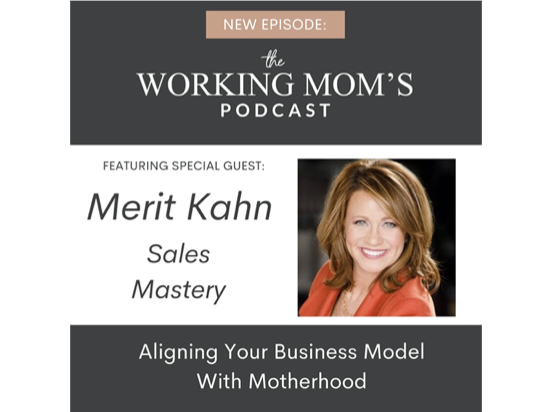

.svg)
