

Welcome to the Blog
Keep up with the latest news and updates
Many people come to us curious (or confused) about trusts and taxes. So today’s article is going to sort it out and clarify things for you.
There are two types of trusts, and each have different tax consequences.
Revocable trusts, which are the far more commonly used trusts, have no tax consequences whatsoever. A revocable trust has your social security number as it’s tax identifier, and is not a separate entity from you for tax purposes. It is a separate entity from you for purposes of probate, meaning if you become incapacitated or die your Trustee can take over without a court order, keeping your family out of court. But, until your death, it’s treated as invisible from a tax perspective. At the time of your death, if your revocable trust provides for the creation of irrevocable trusts, then the tax implications will shift.
When you have an irrevocable trust, either created during life, at death through a revocable living trust, or through a will that creates a trust, that trust has its own EIN, or employer identification number (also called a TIN or taxpayer identification number). Generally, it pays income taxes on income earned by the trust, as if it’s a separate tax paying entity.
Trust income is taxed at the highest tax bracket applicable to individuals as soon as there is over $12,950 of income, so in some cases a trust can be drafted to provide that the tax consequences pass through to the beneficiary and are taxes at his or her rates. We will often do this when creating a Lifetime Asset Protection Trust for a beneficiary, so that the trust can provide the benefits of credit protection from lawsuits, divorce, or even bankruptcy, but not have the negative tax consequence of the highest tax rates on very little income.
Of course, if you have a trust, and you want us to review it for the income tax consequences to your loved ones after your death, please contact us.
Now, let’s talk about estate taxes. Currently, if you die with assets over $11.58M, then your estate will be subject to estate tax on all amounts over that $11.58M at the rate of 40%. Yep, 40% will go to the government. You can mitigate these taxes, or even eliminate them by using various planning methods, most of which are fairly complex, but worth it if you can save your family that 40% estate tax.
If you are trying to figure out whether an irrevocable trust, or a revocable trust or even a Lifetime Asset Protection Trust is best for you and your beneficiaries we can help you weigh that decision and make the right choice for yourself and the people you love.
Proper estate planning can keep your family out of conflict, out of court, and out of the public eye. Are you ready to protect your loved ones and legacy? Check out my next presentation.

How Do Trusts Help You Save on Taxes?
There’s nothing like a major change in the economic climate to make you rethink your day job. “Business as usual” currently means a large element of uncertainty about what the future holds for your working life. Whether you’ve lost your job, had your hours cut, or have seen these things happen to people you know, your feeling of security has likely taken a hit. And, maybe that can be a good thing, something that calls you to start taking action.
Last week I talked about how now is the perfect time for you to look at all the resources available to you, and to consider what you can do to serve the world with under-utilized gifts, skills, and talents. By doing this, you have the potential to take full control over your income, and your family’s long-term security.
You also may have noticed a growing trend that existed even before the coronavirus pandemic hit—more and more people are opting out of the traditional 9 to 5 and becoming “solopreneurs,” either by becoming a freelancer or starting a business.
As a freelancer, you would draw on the talents you’ve used as an employee, or even other skills you’ve developed outside the scope of your day job, to help support other people’s businesses. And, once you see it going well, you may decide to start a business of your own.
There are unlimited possibilities, and the way we live and work in today’s world means there’s never been a better time to get started. Here’s why.
We Have the Technology
For a solopreneur, working from home is the norm, and software companies are only helping that trend along. New tech tools exist that make it easier and easier for people to use their own computers for what would normally be done in an office environment. There are as many project management tools, to do lists, calendar apps, cloud storage tools, and industry-specific software programs, as there are preferred ways of doing work. A lot of these tools have free options, and you can scale up your technology according to how much your business is growing.
Plus, as we become more connected digitally, it’s quicker and easier to coordinate teams online. That means you can coordinate with your clients and contractors to have meetings, share documents, and pay and get paid more easily.
Be True to Yourself
There are plenty of reasons to shift from being an employee to being your own boss. It’s impossible to completely agree with the way someone does business. Sometimes that just has to do with paid time off policies, or just not hitting it off with the person in the cubicle next to yours. But sometimes it has to do with larger issues than that. Maybe you just don’t want to work somewhere that you don’t feel in sync with the mission.
When you work for yourself, you have the freedom to choose who you work with, and what values you choose to uphold. And chances are, when you’re doing work you care about, you’ll be a whole lot happier.
Live the Life You Want
Another reason to be your own boss is to increase your flexibility. When you manage your own schedule, you don’t need someone else’s permission to go pick up your kids from school, workout in the middle of the day, or work on a project in the evening rather than the middle of the afternoon. You don’t have to worry about someone standing over your shoulder and dictating how you should approach a project you’re working on.
In the same way that more technical tools are emerging to meet the new economy, so are new modes of health care. Medical, dental, and other individualized and family plans just for gig workers are becoming common. Whereas it used to be very expensive and difficult for independent contractors to get affordable insurance, the barriers are starting to lower.
Scale Your Income
On one hand, the idea of not having a steady paycheck could be nerve-wracking. But on the other, it could open doors to greater wealth and full control, when you’ve made the transition from employee to freelancer or even business owner, wisely. When you work for yourself, you are no longer limited to earning the amount of money that your company says you should. You can raise your rates as your value increases in the marketplace. You can work more hours, or less. You can charge fees that make sense to you and that your best clients will be happy to pay. As you learn more, and your contracting skills and confidence grow, you’ll realize that you’re the only one who can limit the amount of money you make.
A steady job is not necessarily a sure thing. If you’re in a place of transition with your life and career, it could be the right time to take the leap and begin working for yourself, and then even becoming the boss you always wish you had. Just make sure you consult a trusted legal professional before you make your final decision. We’re happy to help lay out everything that you need to consider when you want to go solo.
Proper estate planning can keep your family out of conflict, out of court, and out of the public eye. Are you ready to protect your loved ones and legacy? Check out my next presentation.

Is It Time to Go Solo(preneur)?
Maybe you, like many of us, have been raised to think that the safest way to live in the working world is to have a good career and a steady paycheck. This financial crisis is challenging that framework for many people. Even if you had a steady job, and even if you still have one, by now you’ve learned how easy it is for that security to disappear overnight.
A recession can reveal all of our negative thoughts and internal monologues about money. A sad, yet common, attitude is for us to see money as a scarce resource, and income as something that’s outside of our control. Thinking or talking about money can trigger feelings of guilt and shame in many people.
It doesn’t have to be that way. The truth is, money is a tool that you can access and multiply, independent of anyone else’s permission. And even if you do have anxieties that keep you from seeing how money can be a positive part of your life, that can change.
Other people may react to this period of uncertainty with the same, old-fashioned advice: live within your means and keep 3–6 months’ worth of income in an emergency fund. If you have a secure job that pays you well, and that you enjoy, this is great advice. But, if that’s not what is true for you, you may be looking at this time as a great opportunity to make a shift and create your own financial security.
Consider this: what if you weren’t relying on a check from your boss (or the unemployment office, as the case may be)?
What if a shift in mindset could change your relationship with money, and set you on track to secure you against economic highs and lows in a way you never even dreamed possible? Or, maybe you have been dreaming about it, but don’t know how or where to start to move it all forward.
A financial crisis doesn’t have to be a crisis for you or your family. In fact, this could be the perfect time to access the wealth of resources currently available to fund your next level of growth. It’s a time to invest in yourself, and to learn to use your gifts, skills, and talents to serve others in a big way. That way, you won’t have to depend on anyone else, including your job, corporations, or the government, to sustain you.
Whether or not you have a day job, see this moment as a wake-up call. It’s time for you to take stock of your greatest resource—yourself. What can you do that other people can’t? What can you give that other people need? Start exploring the resources within you, and you’ll realize that you’ve found your way of contributing value to the world.
Everyone has something to offer, and that offering goes far beyond just the products or services you give your potential clients. If you use your talents to become a higher earner, you can establish yourself as a leader in your community, and affect change in areas that you care about. You can contribute to the growth of your local economy by employing people, and be part of what helps pull the larger economy out of the rut that it may be in.
Even in the lowest of times, even in recessions, there have been many, many people who were able to forge their own paths and grow their wealth through entrepreneurship. You can be one of them.
Things have been tough for our lives and livelihoods, it’s true, but we shouldn’t let this moment go by without considering what we can learn from it. I hope that you are learning about how to be prepared for an emergency when it comes to your savings, investments, and income, but not necessarily in the way we’ve been taught in the past.
As we go into this brave new world, the most important thing you can have is a high-value skill that is needed and wanted, no matter what. The next step is to create the systems and structures to offer that skill in a way that you can rely upon, no matter the ups and downs of the economy. This is a lesson that will benefit you, and that you can encourage in your family and friends, and serve as an example for your children—raising a new generation of economic and community leaders.
We are in a time when your best investment is in your resourcefulness, and your creativity, and your community. Bring these together, and your family can rely on you and what you’ve created, and you can trust that your children will be great, no matter what.
If you need help figuring out your next step, please call us, and we can help.
Proper estate planning can keep your family out of conflict, out of court, and out of the public eye. Are you ready to protect your loved ones and legacy? Check out my next presentation.

Learning to Flourish, Even in a Financial Crisis
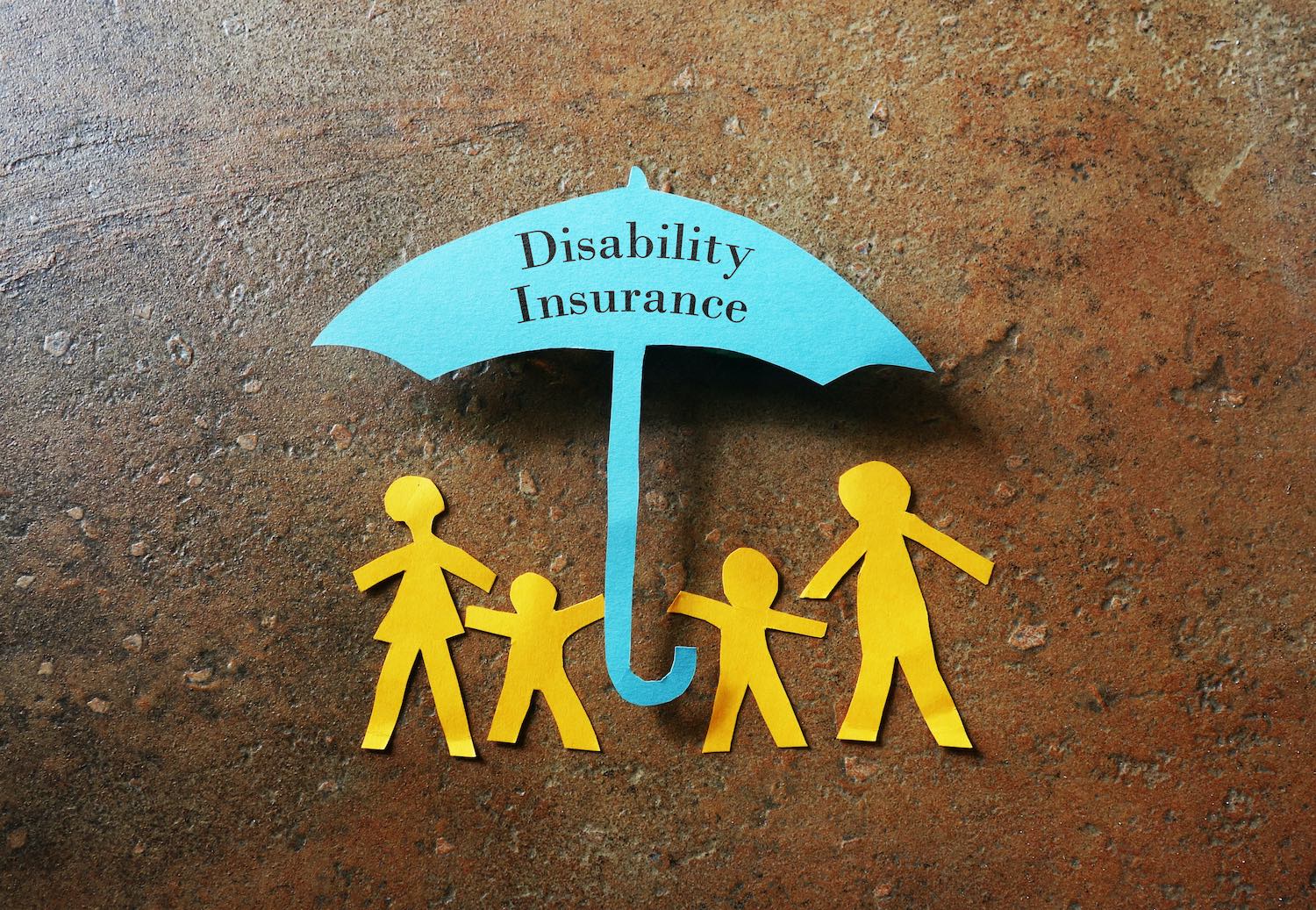
With the risks still posed by COVID-19, we all need to face the possibility that we could get sick, even if we take great care of ourselves through good nutrition, sleep, and exercise. And even if you don’t need to be hospitalized, if you do experience symptoms and test positive, you might have to stay quarantined for enough time that you’d lose income. These risks highlight the need for everyone, regardless of their age or current state of health, to have some form of disability insurance coverage.
You might think you don’t need disability insurance, especially if you’re young and in good health. Hopefully, you’re right. Unfortunately, though, becoming disabled can happen to anyone at any time. This isn’t specific to coronavirus either; it has always been true.
The Americans with Disabilities Act has detailed specifics on what a disability is, but the most basic definition is that an individual has “A physical or mental impairment that substantially limits one or more major life activities of such individual.” That can apply to a car-accident or other injury, or a debilitating illness documented by a doctor, including mental illness.
The sad fact is that, according to the US government’s statistics, one in four 20-year-olds become disabled before reaching retirement age. That makes it all the more important that you consider how to protect yourself with insurance.
And this is very important: you must get the actual insurance before something happens. If you’re already sick, you can’t buy disability insurance to make up for lost income.
So now is the time to make a plan. Here’s some information to get you started.
What Qualifies You for Benefits (And What Doesn’t)
Let’s get clear on one thing that applies to the coronavirus pandemic: only medical quarantine qualifies you for disability benefits. That means only medical self-quarantine related to COVID-19, which is verified by a doctor, will qualify you. Socially quarantining to decrease your chance of contracting the virus in the first place won’t qualify you for your disability insurance benefits. Disability insurance also won’t cover you if you lose income or health insurance because your employer has closed or laid you off.
Also, disability insurance is not the same as health insurance. Though your failed health is the reason you’d get access to your disability insurance in the first place, disability insurance will not cover your medical bills. Disability benefits are basically to help you pay housing and food costs. But in a time when you’re dealing with disability, it’s good to have those bills covered while you are focused on healing and self-care.
There are two different types of disability insurance, and knowing the difference will help you save a lot of time.
Short-Term Disability Insurance
Short-term disability insurance normally lasts around 3–6 months, sometimes up to a year or two years. It covers about 60–70% of whatever your salary is. The premiums you pay are often higher than long term coverage, ranging from 1–3% of your annual income. So for someone making $50k a year, it would range between $60 to $125 every month. The percentage depends on what kind of health risks the insurance company determines you have. If you smoke, for instance, the premium will probably be higher, just like with many health insurance policies. If you have a risky job, such as dealing with heavy machinery, premiums will likely be higher as well. A major upside, though, is that payouts usually happen within two weeks, which can be a huge relief in an emergency.
Financial expert Dave Ramsey points out that, because of the higher premiums and shorter span of coverage time, you might want to consider building up a solid emergency fund with 3–6 months of expenses instead. You can consider that personal short-term disability coverage that you don’t have to pay premiums on. But if you’re living paycheck-to-paycheck and can’t foresee saving that much (like 80% of American workers, according to CNBC), and your employer doesn’t offer short-term disability insurance, it is something you may want to consider buying yourself.
Long-Term Disability Insurance
This is the type of insurance that is most important to get, no matter what. This is the type that will last through a long recovery or treatment period. Look for a “non-cancellable insurance policy”, which will keep the insurance company from being able to cancel your policy if you have any health changes.
Long-term disability insurance may pay you benefits for a few years or until your disability ends. Most policies cover 40–60% of your salary, but ones that pay up to 70% do exist, and you should try to find one. These policies also cost 1–3% of your yearly income, but they tend to be on the lower side than short-term. A major difference between the two forms of insurance is that it can take up to 6 months to see a payout. This means that it’s not the best option for covering costs if you have to go into medical quarantine for COVID-19.
We recommend that, even if you decide to pass on short-term disability in favor of emergency fund savings (or if your employee already covers it), you should definitely consider a long-term policy to protect your earnings. Remember, though, it will only pay a percentage of the income you’d be taking in otherwise. Make sure you also have health insurance and as much savings as you can get to protect yourself as well.
If you need help weighing your options, give us a call and we’ll be happy to help.
Proper estate planning can keep your family out of conflict, out of court, and out of the public eye. Are you ready to protect your loved ones and legacy? Check out my next presentation.
The Basics of Disability Insurance and How It Can Help During COVID
The pandemic is causing us to consider a lot of things that we may not have before, even if maybe we should have.
It brings to mind something a colleague of mine shared recently. One unremarkable weekend, she left her small children with a babysitter and headed out to enjoy dinner at a restaurant with her husband. But as she sat there, a thought crept into her head that she couldn’t let go.
What would happen to her kids, she thought, if she and her husband got into a car accident on the way home?
And even though my colleague is an estate planning lawyer herself, and she had a will at home naming guardians for her kids, she didn’t have a definite and clear answer that provided the comfort she wanted. Her will was in a vault, and her named legal guardians lived thousands of miles away. It was that thought that spurred her to take action, not only for her own family, but to create tools and resources for others as well.
If you’d like to read the book she wrote as a result of her own discoveries, it’s called “Wear Clean Underwear: A Fast, Fun, Friendly—and Essential—Guide to Legal Planning for Busy Parents” and it’s the best-selling book on legal planning for families. We’d love to send it to you as our gift. Simply CLICK HERE TO GET THE BOOK.
One thing you’ll discover in the book is that even naming a legal guardian in your will is often not enough to keep your kids out of the care of strangers, or someone you wouldn’t want, if something happens to you.
Chances of COVID-19 Infection in the Family
If you are young and healthy, it might be hard to imagine that you won’t be there to care for your kids. But if the COVID-19 pandemic is showing us anything, it’s that even a healthy person can contract a serious illness that leaves them incapacitated and unable to care for their children.
If there is more than one adult in the house, that may alleviate some of your worry. While naming legal guardians for your kids may feel especially urgent for a single parent, parents with partners aren’t off the hook. You should take precautions though, especially since there are high infection rates among people who live in the same household.
A professor at the University of Florida has found a more than 19% chance that someone else in the household of a person infected with COVID-19 will also contract the disease. Researchers estimate the average incubation time is about four days and could be infectious for up to two weeks. That means it’s not outside the realm of possibility that you and your partner could both contract the illness, possibly at the same time.
An Easy Way to Find Guardians for Your Children
Even if you never contract COVID-19, you are of course still human, and vulnerable to accidents and other dangers that could separate you from your kids—either temporarily or permanently.
Last week we referred to one way to handle parental guilt: naming temporary and permanent legal guardians for your children. Don’t get me wrong, I’m not trying to give you a guilt trip right now! But I am encouraging you to take action if you haven’t already, and I’m going to show you a very easy (and free!) tool to use to get you started.
Go to this website right now and name guardians for your children in a legal document, and then have it reviewed by us. When we review your legal document (or, your will if you already have one), we can discuss who would care for your children in the immediate term if something happens to you, even on a short-term basis.
And, if you are having a difficult time deciding who to name as legal guardians for your children, we can even help you make the right decisions.
Officially answering the question of who will care for your kids if you can’t—even for a short time—is one of the best things you can do right now. It is a real, concrete way you can protect your kids during this scary period of time. We’ve made it as easy as possible for you to get it done quickly, so you can have peace of mind that your kids’ future is secure no matter what happens.
If you need help with the process, please do give us a call and we’ll be glad to walk you through it.
Proper estate planning can keep your family out of conflict, out of court, and out of the public eye. Are you ready to protect your loved ones and legacy? Check out my next presentation.

Who Would Care For Your Children If You Got Sick With COVID-19?
If you’re a parent, you may feel even more guilty than usual. If so, you are definitely not alone. Currently, the burden is on you to both carry on with your work and manage your child’s full-time care and education. Two full-time jobs that you’re trying to do by yourself, likely without teachers or care providers to help you.
If you are like most parents, you were probably struggling with guilt even before the virus. You simply can’t make it to every award ceremony or recital, and you might not have as much time to play with your kids or help them with their homework as you’d like. Those feelings of guilt may now be compounded by all the additional responsibilities you’ve had to take on in a short space of time.
Take a deep breath, and let me let you off the hook here for a minute. I have no doubt you are doing the best you can, and your kids see it, and know it too, even when they are being ungrateful pains in the rear.
I’ve got a few ideas about how to shift the guilt. They’re a little unconventional, but I invite you to give them a try and then message me to let me know how they went. We love hearing from you.
Let’s start with one thing that is fully within your control, can help to alleviate feelings that you are not doing enough, and that you can get handled easily, for free, right now— name legal guardians for your kids, so the people you want will take care of them, if anything happens to you.
Name Legal Guardians
If you have not already legally documented who you would want to raise your children, if you could not finish doing it yourself for any reason, find our Kids Protection Plan on our website. It’s free. It’s easy. And the site guides you through who to choose and creates a legal document for you.
Legally documenting your choices for who you want to take care of your kids if you can’t is a great first step to getting legal planning in place for the people you love. (Yes, I said “choices” because you want to name at least one person with two alternates.) And, doing so can provide you with a lot of relief, if you have not taken care of this yet for your kids.
After you are done, contact us for a no-charge review of the documents, and we’ll guide you to the next step in ensuring the well-being and care of your kids (and your assets), if something happens to you.
If the parents get sick with COVID-19, this is one of the most important things you can do for your kids right now, and we’re making it as easy as possible for you to get started with it.
So that’s one way we can support you to remove some of that mom or pop guilt you may have. And, here’s another…
Quality Time Doing…Nothing
While you’re probably already spending a significant amount of time with your kids, it may not be very high quality.
But you may be too tired or overwhelmed to plan big activities, or the things you used to do for “quality time” may not be available.
So, what’s a parent to do?
Nothing.
Yes, you read that right, nothing.
If you can take 15 minutes or so out of your day and do nothing with your child, it could be the best 15 minutes you spend with them, and with yourself, all day. Maybe you’ll even be able to stretch it to 30, 45 or 60 minutes of nothing.
It’s truly one of the best gifts you can give to your kids, and the best part is you don’t have to do anything.
We hope this idea provides some relief from the guilt. You don’t have to DO as much as you think. Mostly, your kids really just want to know you are there, and will give them your full attention, without screens, even if they aren’t paying attention to you.
Talk About It
If you’re on an emotional roller-coaster right now, your kids are probably having some similar struggles. This is an opportunity to connect with them, and a good time to show them a little vulnerability of your own. Remember how important sharing words of love and comfort can be, both to them and to you.
A friend of mine has three kids ranging from eight to fourteen, and she recently told me a story about a very special conversation with one of her children.
After my friend had spent a few weeks juggling school, work responsibilities, and a million other household duties, she was feeling worn out and discouraged.
Then she took a quiet moment to just sit around and talk with her tween daughter and share some of what was going on for her, that it was hard, and how she was making it through. Out of the blue, to my friend’s surprise and gratitude, her child gave her a big hug and said, “You do so much to take care of us all the time. That must be so hard. Thank you.”
This special moment filled my friend’s heart, and it has gotten her through some tough days. And it never would have happened if she hadn’t taken a little time out to just talk with her kid, without a particular agenda.
Reach Out For Support
If you have been feeling really alone and need support, reach out for help. Sometimes venting to your friends is enough, and chances are they’ll be able to relate! But if you are not getting the support you need, there are professionals who will communicate via phone and even text message. You can find local therapists and phone, video, and online therapists through Psychology Today’s directory.
Or, if family dynamics are rearing their head during these stressful times, and you want to keep your family out of court and conflict, give us a call to see how we can help.
Proper estate planning can keep your family out of conflict, out of court, and out of the public eye. Are you ready to protect your loved ones and legacy? Check out my next presentation.

3 Unique Ways to Handle the Guilt Inherent to Being a Parent
Wills, trusts, health care directives, powers of attorney, and legal guardian nominations are on many of our hearts and minds as COVID-19 compels us to face our own fragility and mortality.
It’s not as if we didn’t know we would all die (or become incapacitated) one day, but within our current reality, that “one day” has become an ever more real possibility. And one way to feel more in control over what’s happening out there is to make sure we all have our legal affairs in order at home. That way, if it does happen now, our families aren’t left with a big mess to clean up while they are grieving.
If you are trying to get your financial house in order right now, you may be just getting some basic documents in place. You may even be doing it yourself.
If that’s the case, it’s very important for you to know that the cost of a failed plan can be very high for the people you love. Plus if your documents are not properly signed, they will not work—period. End of story. And if your documents don’t work, your family could be stuck in court or conflict, which is probably the exact thing you want to avoid by handling your estate planning now.
There are many ways that plans fail, but one of the worst ways we see is when someone starts a plan and doesn’t get it signed properly. You do not want this to happen to your family, trust me. If you care enough about estate planning, you will want to make sure your plan will work when your family needs it.
That means you need to make sure your legal documents are actually signed, and signed in the right way. Some legal documents require two witnesses and some require notarization; however, in today’s social-distancing reality, these signatures could be difficult to come by. Some states have allowed remote notarization, others have not.
While we understand you likely have a desire to get documents in place now, we also believe there is going to be a significant increase in conflict and litigation as a result of DIY estate planning documents. Let’s keep that from happening to the people you love. If you want to get your plan done the right way, contact us and let’s have a 15-minute conversation about your next steps.
Proper estate planning can keep your family out of conflict, out of court, and out of the public eye. Are you ready to protect your loved ones and legacy? Check out my next presentation.

Getting Legal Documents Signed During COVID — Another Reason to Not Go It Alone
In a previous article we shared steps to understanding your parents’ estate planning and the nature of their assets, as well as how to ensure you’re not left with a mess when something happens to them.
Today, we want to focus on one of the major risks of not being “in the know” when it comes to your parents’ estate planning matters: the undue influence of bad actors.
It’s an unfortunate fact that predators emerge during times of upheaval to take advantage of people. That means the COVID-19 pandemic can leave your parents vulnerable in more ways than one. But even when things go back to normal, this chronic problem of financial exploitation will still be a risk.
We see it happen far too often. Maybe your elderly parents live several hours away, in another state or country, and someone in their community gets close to them. Or maybe they have a close relationship with a financial advisor who isn’t really looking out for their (or your) best interests. This person could even be another family member, friend, business partner, hired caregiver, professional advisor, or even someone they’ve just met.
Sometimes, when bad actors become involved with your parents’ lives and assets, it can lead not only to a loss of money, but even a loss of personal freedom. One of the worst cases of this I’ve heard of is the case of Milo, a retired veteran living in Arizona, and his son Greg, who lived in Northern California. It all started when Milo asked Greg to help him protect his small amount of money from a family member who was “borrowing” it freely. All Milo had was a savings of $140,000 and payments of $3,700 per month from social security, a pension, and veteran’s benefits.
To help his father out, Greg applied for guardianship of Milo’s money, and the court granted it to him. At the same time, without notifying Greg, the court appointed a professional financial Conservator that neither Milo nor Greg knew. The Conservator quickly set to draining Milo’s small savings, with the court barring Greg from filing any more motions.
The situation escalated even further when the Conservator decided to move Milo from his assisted living facility to a cheap lock-down facility, where he wouldn’t even have access to the outdoors. This would, of course, free up more money for the Conservator to access. Before this could happen, though, Greg hurried to pick his father up and bring him back to California with him.
Now, the two are essentially on-the-run from authorities, who are trying to bring Milo back to Arizona and under the control of the Conservator. Milo and Greg are out of funds and are now trying to raise the $15,000 it would take to hire a lawyer and free Milo from this terrible situation.
The scariest part is that Milo and Greg had all the proper legal documents in place. Sometimes, though, that is not enough to protect your parents from being taken advantage of—even to this extreme of a level. Especially in a time of stress and confusion like the COVID-19 pandemic we are currently living in, it is vital to be vigilant and get the best possible counsel to avoid something like this happening.
This isn’t meant to make you paranoid or distrustful of the people around you, or of how your parents handle their own lives. Well, maybe it is a little. Mostly, though, it’s a call to encourage you and your family to be aware, educated, and empowered in knowing what risks are possible for your parents, and for your future inheritance.
Look out for the following actions we have seen from influencers:
- Preventing important communication between family members;
- Withholding documents from other family members;
- Encouraging financial gifts or economic benefits to recently-met connections (usually in the same network as your parents’ “new friend”);
- Naming recently-met connections as attorney-in-fact (under a financial power of attorney), or as a joint owner on financial accounts, real estate, and other assets;
- Giving financial advice that may not be in your or your parents’ best interests, but rather in the interests of the advisor.
We recommend you start talking with your parents now about how they want their affairs to be handled. Also, you should immediately investigate any situation where you suspect your loved ones are being taken advantage of. There have been too many cases of financial abuse or inappropriate influence where family members are too late to stop the bad actor.
Ideally, you know the value of your parents’ tangible assets (i.e.,home, car, business, stocks) and intangible assets (i.e., generational stories, personal relationships, theological legacies). Additionally, you should be working with an advisor to help you understand how family dynamics and the law will impact you, and everything that matters to you and your parents, when they’re gone.
If you’d like our assistance in considering your parents’ affairs, and how you can be in a position to support them when they need you, contact us. We can help.
Proper estate planning can keep your family out of conflict, out of court, and out of the public eye. Are you ready to protect your loved ones and legacy? Check out my next presentation.

Protecting Your Parents From Undue Influence During Covid and Beyond
If you or your parents have a retirement account, (or any investment accounts for that matter) now is the time to get connected to how those accounts are invested. While you may have outsourced all of this to a broker in the past, you can no longer afford to allow your investments to be made without your clear understanding of exactly what you are investing in, how and whether your investments align with your plans for the future.
My colleague shared a story that hit home with me, and it may for you as well.
After my colleague’s grandmother died, her grandmother’s retirement and investment accounts went directly to her mom, due to the estate planning they had set up. No court process. No intervention. No conflict. Great!
But my colleague’s mom then never looked at the investments in those accounts. She just let them stay as they were for four years, until finally, her daughters convinced her to look.
When they did look, they were mortified to find that, even though the investments should have been gaining with the bull market we’ve been in for the last many years, the accounts had actually decreased over the years from $100,000 to $60,000. If my colleague and her mom had looked at these accounts and re-allocated them when grandma died, this would not have been the case.
Fast forward to now, and the daughters think to look at mom’s retirement accounts with her, only to discover that mom has a 401k with $180,000 in it and it’s lost $17,000 over the last two weeks. Mom had picked her investments with the help of a friend many, many years before, and hadn’t looked at those investments since.
My colleague’s mom is mostly invested in high-growth ETFs, which may have been the right choice when she was building her retirement fund, but definitely is not the right choice given that she retires next year and will need to start making withdrawals to replace her income.
If mom doesn’t get her money into safer investments now, her daughters could end up needing to support her for the rest of her life.
So, why am I sharing this story with you?
Because now is the time for you to get connected to your investments, even if they are in a retirement account and invested through a broker or advisor. This is simply not the time to set it and forget it. It’s time to know what you have, and make intentional, aware choices about how your resources (and your parent’s resources) are being used.
Now is the time to truly understand what you have, and use it wisely.
Educate Yourself
If you or your parents have a retirement account, and you are not intimately connected to how your assets are being invested, it’s time to get more involved.
Log in to your retirement account or pull your last statement and look. Many brokerages select investment funds for their clients’ portfolios based on rates of growth. They’ll offer investment options based on a few tiers of growth and risk, and very often you have no idea what your assets are actually invested in.
Labels like “slow-growth” or “conservative” or “high-growth” or “income” aren’t enough to tell you exactly where your money is invested. So what you want to do now is look at your statement, which should contain the names of the funds chosen for you, and you can go from there to do your research. Look up each of the funds on sites like Yahoo Finance to see what you are investing in, and whether you understand these companies, believe in their future growth, and want to stay invested there.
If your investments are tied to an index, like the S&P, are you willing to keep betting on its growth? If not, now may be the time to make a shift. It’s possible that you have some losses right now, so you’ll have to decide if you want to lock in and limit those losses (and potentially trade some future gains even) to get more connected to what you are investing in now
Go through this process with your parents, too. The money they have invested in the stock market is part of your overall family wealth. If it’s not there to support them through their senior years, that financial responsibility will eventually fall to you. Having these conversations with them now can be difficult, but it’s important. And if you need help with this, please let us know, and we can support you as you raise these issues with them.
If you have a broker you work with, call them now, and ask to get on a video conference. Then, have them help you review each investment, why it’s been chosen, and whether there may be better or other options for you or your parents.
Here’s the key: make sure you understand it, and don’t hang up the phone until you do. If your broker is using words you don’t understand, or jargon, keep asking questions until you do understand.
If you need a referral to an advisor, or want us to sit down with you to help you look at what you have, give us a call.
With everything that is happening in the world—and with the volatility of the stock market and our current reality —knowing your options is vital to preserving the life and legacy your parents have worked to build. If you need help figuring out how to best preserve these assets, we are here and ready to support you.
Proper estate planning can keep your family out of conflict, out of court, and out of the public eye. Are you ready to protect your loved ones and legacy? Join me for my next presentation.


.svg)
