

Welcome to the Blog
Keep up with the latest news and updates
In response to a series of wildfires that ravaged Southern California in 2017, we look to this article explaining why your family should have a “go-bag” ready in the event a natural disaster or other emergency strikes your home. Go-bags originated with the US military, which requires its personnel to always keep one on-hand packed with the essential items needed to survive for at least three days following a disaster.
When you have just minutes to evacuate, you won’t have time to think about what you should pack to survive the days—or weeks—to come, so the time to prepare for your family’s safety is now.
In 2020, we’re not only dealing with deadly wildfires again in California, but we’re also experiencing multiple hurricanes on the East and Gulf Coasts, and a number of devastating tornadoes and floods in the Midwest. And on top of all that, we’re still in the middle of the COVID-19 pandemic, which has already killed more than 180,000 Americans and seems unlikely to disappear anytime soon.
In light of the increased dangers posed by the pandemic, we decided to update our previous go-bag article. Although most of the items you should have in your go-bag remain the same, here we’ll cover the supplies and documents you should pack to deal with COVID-19. Whether you are forced to temporarily relocate somewhere other than your home, require hospitalization, or are subject to quarantine, the pandemic comes with unique risks that call for additional preparation.
The go-bag revisited
Before we discuss the estate planning and other key documents you should include in your go bag, we need to mention some general supplies to include to help protect your family from contracting COVID-19. Along with the personal sanitary items we listed in our previous article, you should add the following items:
- Face masks and/or face coverings
- Hand sanitizer containing at least 60% alcohol
- Lysol or other disinfectant sprays
- Disinfecting wipes
- Disposable gloves
When it comes to your estate plan, even if you have all of the necessary planning documents in place and updated, they won’t do you any good if your loved ones don’t know about them or can’t quickly locate them during an emergency. Without immediate access to your plan, if you become seriously ill or injured, medical and financial decisions can be dangerously delayed or be made by someone other than the people you would want. And the need for your plan to be easily accessible is particularly urgent during the pandemic. Due to the highly contagious nature of COVID, there’s a good chance your family members will not be allowed to accompany you if you are hospitalized or forced to quarantine. For these reasons, adding your estate plan and other important documents to your go-bag is a must. While all of your estate planning documents should be included in your go-bag, having your medical power of attorney and living will readily accessible is especially vital for medical emergencies. Without these documents, doctors and other healthcare professionals won’t know your wishes for treatment or which of your loved ones should help them make decisions.
At the same time, you should review and update your medical power of attorney and living will to address the unique medical scenarios and treatments related to COVID-19. The specifics of what this entails can be found here: COVID-19 Highlights Critical Need for Advanced Healthcare Directives.
Copies of your health insurance or Medicare card, along with a summary of your medical history should also be included in your go-bag. In your medical history, you’ll want to mention any chronic underlying medical conditions and illnesses, as well as list all prescriptions drugs, over-the-counter medications, and/or supplements you are currently taking—and don’t forget to list any known allergies.
You may also want to have your financial power of attorney and inventory of assets on hand, so that your loved ones would know what you have, where it is, and how to access it in the event you become incapacitated. If you have not yet created an inventory of your assets or the other legal documents you’d need, please watch this training by my mentor on creating your own personal resource map for the people you love.
As noted in our first article, including your ID and other essential personal documents in your go-bag should be a top priority. Among these items, you should also include contact information for your primary care doctor and other medical providers, as well as listing your emergency contacts, particularly your agents for both medical and financial power of attorney.
Make sure your loved ones know about your go-bag, and where to find it. You might even want to keep the bag near your home’s primary exit, so it’s there for you or someone else to grab on the way out the door. To make it as portable as possible, download your plan and other essential documents to a thumb drive you can carry in your go-bag and upload additional copies to the cloud.
Safeguard your belongings—and memories
While protecting your family’s health, safety, and well-being is the primary purpose of packing a go-bag, you should also take steps to prevent the financial devastation that can result from having your home and other property destroyed in a disaster. Obviously, having the appropriate levels of insurance coverage in place is your first task—and we can help with this.
But to make sure the insurance companies fully reimburse you for what you stand to lose, you should also take video and photos of all your belongings. We recommend walking through each room of your home, opening all cabinet and closet doors, along with desk and dresser drawers, to record everything stored inside. Such visual documentation can not only ensure you are able to replace your assets, but that your insurance claim is processed as quickly and smoothly as possible. Of course, not all of your belongings can be replaced, so you should take additional precautions to safeguard your most precious sentimental items—photo albums, home videos, old letters, family histories, and treasured cards from the past. Since you won’t have the time or space to bring these items with you in your go-bag, you should make digital copies of these keepsakes and store them in the cloud.
Keenly aware of the priceless value these items represent, we believe safely storing your sentimentals online is so important we offer this as a service to all of our clients. Be sure to ask us how we can help you preserve your family’s precious mementos.
Planning ahead is key
Given the chaotic times we’re living in, it’s no wonder people are experiencing increasing levels of fear, anxiety, and confusion. Although it’s not possible to totally prevent you or your loved ones from experiencing injury, illness, or death, putting proactive planning strategies in place can significantly minimize the suffering and conflict that can result if something tragic does occur. We can help ensure you’ve taken every conceivable precaution to protect your family and assets from today’s growing litany of threats. Contact us today to get started with a Family Wealth Planning Session™.
Proper estate planning can keep your family out of conflict, out of court, and out of the public eye. Are you ready to protect your loved ones and legacy? Check out my next presentation.

The Need For a Go-Bag Is Even More Important During a Pandemic
A case on the Supreme Court’s docket for October could have a major impact on the parental rights of same-gender couples seeking to adopt or foster children. In February, the high court agreed to hear Fulton v. City of Philadelphia, which deals with whether taxpayer-funded, faith-based foster care and adoption agencies have a Constitutional right to refuse child placement with LGBTQ families.In March 2018, the City of Philadelphia learned that Catholic Social Services (CSS), an agency it contracted with to provide foster care services was refusing to license same-gender couples as foster parents. This was in spite of the fact the agency consented to abide by a city law prohibiting anti-LGBTQ discrimination. The city told CSS it would not renew their contract unless they abided by its nondiscrimination requirements, but CSS refused to comply, and the city cancelled its contract. CSS then sued the city, claiming it had a First Amendment right to refuse licensing same-gender couples, since those couples were in violation of their religious beliefs.
Both a federal judge and the 3rd Circuit Court of Appeals sided with the city, noting the city’s decision was based on a sincere commitment to nondiscrimination, not a targeted attack on religion. From there, CSS took the case to the Supreme Court.
Rampant discrimination at the state level
LGTBQ adoptions are particularly contentious right now at the state level. The Supreme Court has yet to rule on the issue of the parental rights of non-biological spouses in a same-gender marriage. Given this, many married same-gender couples looking to obtain full parental rights in every state turn to second-parent adoption, as the Supreme Court has previously ruled that the adoptive parental rights granted in one state must be respected in all states.
That said, 11 states currently permit state-licensed adoption agencies to refuse to grant an adoption, if doing so violates the agency’s religious beliefs. In other states, the law specifically forbids such discrimination, but as we’ve seen in the Fulton case, those laws are being challenged.
We plan to write a follow up article once the Supreme Court rules on Fulton v. City of Philadelphia. Legal experts predict the case could have a significant impact on not just parental rights for same-gender couples, but nondiscrimination policies related to religious institutions at a broad level. In the meantime, same-gender couples should consider another potential option for gaining parental rights—one that doesn’t require adoption.
Estate planning offers another option
No matter how the Supreme Court rules, same-gender couples seeking parental rights have another option—estate planning. It may be surprising to hear, but it’s critically important for you to know that when used wisely, estate planning can provide a non-biological, same-gender parent with necessary and desired rights, even without formal adoption. Starting with our Kids Protection Plan®, couples can name the non-biological parent as the child’s legal guardian, both for the short-term and the long-term, while confidentially excluding anyone the biological parent thinks may challenge their wishes. In this way, if the biological parent becomes incapacitated or dies, his or her wishes are clearly stated, so the court can do what the parent would’ve wanted and keep the child in the non-biological parent’s care.
Beyond that, there are several other planning tools—living trusts, power of attorney, and health care directives—we can use to grant the non-biological parent additional rights. We can also create “co-parenting agreements,” legally binding arrangements that stipulate exactly how the child will be raised, what responsibility each partner has toward the child, and what kind of rights would exist if the couple splits or gets divorced.
Secure parental rights—and your family’s future
If you’re in a same-gender marriage—or even a committed partnership with someone of the same gender—and you want to ensure that your significant other has as many parental rights as possible, meet with us to discover the planning tools are available to you. And whether you are married, or in a domestic partnership, even with no children involved, it’s critically important you understand what will happen in the event one (or both) of you becomes incapacitated or when one (or both) of you dies. Proper planning can ensure your beloved is left with ease and grace, not a financial and legal nightmare that could have been avoided. With our guidance and support, you can ensure your partner or spouse will be protected and provided for in the event of your incapacity or when you die, while preventing your plan from being challenged in court by family members who might disagree with your relationship. Contact us today to get started.
Proper estate planning can keep your family out of conflict, out of court, and out of the public eye. Are you ready to protect your loved ones and legacy? Check out my next presentation.

Supreme Court Case Could Impact LGBTQ Adoption, But Estate Planning Offers Alternate Options
“You can’t drink out of an empty cup,” shares Arezou Zarafshan – CEO and Startup Coach. Listen in as Arezou shares her own belief system on prioritizing what comes into her and what she puts out into the world through managing work-life, mom-life, and her life. In this episode, you’ll also hear Arezou share her own negative and winning experiences in the world of startups.
Even though Arezou’s journey began bitterly, her search for a better path led her right back to startups. Following the plans of the Universe, Arezou embraced the good side of the startup world by turning a negative experience into a way to help other people such as Heidi Ganahl. Today, Arezou channels her 20+ years of experience of working in corporate America to passionately support first-time founders as they change the world.
Arezou shares the journey with first-time founders who are ready to evolve but confused about what to do next. There may be a million paths to take an idea to market and Arezou identifies what paths should be evaluated. Learn about the types of industries Arezou works with and how she helps first-time startup founders course correct and launch in a way that’s scalable later.
Arezou also shares insight into her life behind the scenes. Take a walk around Arezou’s mind as she talks through creating a mental model that has helped her “balance on aggregated”. Through an aggregated lens of her schedule, Arezou changes the very definition of the word balance. She views herself as a system and identifies ways to keep her system working. Arezou believes that family, work, and intellectual stimulation are all part of life. Thus, she seeks to create balance across all of it through reflection and relying on her tribe. Arezou also provides the best practices and tools she uses for managing the inputs and outputs of her life.
Later, Arezou provides guidance to overcome the guilt about hiring someone to help out mom. It is ok to have a tribe and Dispatch Mom was founded on this principle. Born from an organic experience, Arezou shares how Dispatch Mom allows the busy mom to have involvement in family life with the added freedom to take some time off. Giving mom a little relief is a truth Arezou feels strongly about. Find out how she crafted a way to help moms continue to give while rejuvenating themselves.
Quotes:
- “I had no intention of staying in the startup world but the startup world didn’t leave me.”
- “Uber for all things mom.”
- “It’s a one-stop-shop, mainly for professional women, who are also involved in their child’s life.”
- “I don’t use the phrase ‘work-life balance’. For me, it’s a life balance.”
- “Dispatch mom not only does it provide help to a busy mom, but it also doesn’t overburden a human being”
Links Mentioned:
Sign up on Dispatch Mom’s mailing list for a chance to win a Free $25 Target Gift card
Learn more about Arezou’s Consulting Practice
Contact Arezou. She loves hearing from founders, especially woman founders.
Discover more tips on work-life balance in Episode 7
Pamela Maass on Linkedin
Podcast production and show notes provided by FIRESIDE Marketing
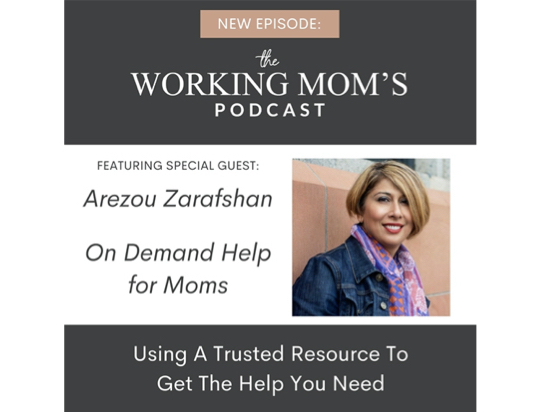
Episode 0008: Dispatch Mom – On-Demand Help for Moms
Anyone who has seen the hit Netflix documentary Tiger King: Murder, Mayhem, and Madness can attest that it’s one of the most outlandish stories to come out in a year full of outlandish stories. And while Tiger King’s sordid tale of big cats, murder-for-hire, polygamy, and a missing millionaire may seem too outrageous to have any relevance to your own life, the series actually sheds light on a number of critical estate planning and asset protection issues that could apply to your family. Over seven episodes, Tiger King provides several shocking, real-life examples of how estate planning and asset protection planning can go horribly wrong if it’s undertaken without trusted legal guidance. In this series of articles, we’ve been discussing some of the worst planning mistakes made by key people in the documentary, while offering lessons for how such disasters could have been avoided with proper planning and a trusted advisor on the team.In part one and part two of this series, we discussed how the nightmarish ordeal Don Lewis’ daughters experienced following his death could have been entirely avoided if Don had worked with a lawyer to create his estate plan. Here in part three, we’re going to shift gears and focus on the estate planning mistakes made by the self-proclaimed Tiger King himself, Joe Exotic.
The Tiger King gets dethroned
While the news that Carole forged Don’s will was a huge blow to Carole’s credibility and reputation, that very same week, Carole achieved a major victory over her arch nemesis, Joe. And ironically, that victory also involved fraud, although this time Carole was the victim, not the perpetrator. On June 1, 2020, a federal judge awarded Carole ownership to all of Joe’s property, including his Oklahoma zoo, 16.4 acres of land, several cabins, and multiple vehicles. The ruling was part of a $1-million judgment resulting from a trademark infringement lawsuit Carole brought against Joe in 2013. As we wrote about in part one, much of Tiger King was devoted to covering the bitter public feud between Carole and Joe that eventually resulted in Joe being sentenced to 22 years in prison for hiring a hitman to kill Carole. During this feud, Joe and Carole—both owners and breeders of big cats—repeatedly bash one another in the media over the course of decades.At some point during the feud, Joe creates a company called Big Cat Rescue Entertainment (BCR Entertainment) for his travelling tiger cub-petting business in order to poach Carole’s potential customers. Joe even goes so far as to create business cards for the new company that feature an imitation of the Big Cat Rescue logo, photos from the Big Cat Rescue website, and a Florida phone number to trick people into thinking BCR Entertainment was actually Carole’s sanctuary.
This leads Carole to file a trademark infringement lawsuit against Joe, claiming he created the business cards to cause confusion between the two companies and steal her customers. The court agreed with Carole’s claim, and a judge ordered Joe to pay Carole and Big Cat Rescue $953,000. This judgment, along with the resulting financial stress it puts on Joe, is what ultimately motivates Joe to hire a hitman.
How not to protect your assets
Following the court’s ruling, Joe knows he stands to lose his zoo and everything else he owns to pay the judgment. Desperate to keep his business and prevent Carole from collecting any of his money, Joe attempts to shield his zoo by transferring title to the property to his mother, Shirley Schreibvogel, using a series of quit-claim deeds.
Discovering Joe’s attempt to thwart her, Carole files a separate lawsuit against Joe’s mother for fraudulent transfer of property. Joe’s mother eventually admits under oath during a deposition that the zoo and land were transferred to her by Joe to remove it from the reach of creditors, including Carole. This leads the judge to rule that the property was fraudulently transferred by Joe to his mother, and this judgment effectively reverses those conveyances, giving Carole control over all of Joe’s property.
Although we certainly don’t condone Joe’s actions, he had every right to want to protect his zoo and other assets from being lost to a lawsuit—it’s just that he went about doing so in entirely the wrong way and at the wrong time. In fact, had Joe used proactive planning strategies to properly shield his assets when he started his zoo, he most likely could have prevented Carole from seizing control of his business—and at the same time, avoided the need to commit the crime that sent him to prison.This brings us to our third, and final, estate planning lesson—and this one will focus on asset protection:
Lesson three: To safeguard your family’s most valuable assets from legal and financial liability, consult with an experienced estate planning lawyer to put in place and maintain a comprehensive asset-protection plan—and do so well before you need it.
While we know most people would never find themselves facing anything remotely similar to Joe’s situation, just about everyone faces potential liability from far more common threats. Whether from a lawsuit, divorce, debt, or accident, the more successful you get, the more risk there is that someone will want to take what you have.
Moreover, it’s a popular, yet mistaken, belief that you can safeguard valuable assets like a home or business from creditors and lawsuits (or to qualify for government benefits like Medicaid to pay for long-term care needs) simply by signing over title of your assets to another family member. Yet, as we saw with Joe, transferring ownership in this way not only won’t effectively protect your assets, but can also lead to a myriad of other legal complications for yourself and others.Although there are a variety of different planning vehicles available for asset protection, the most airtight strategy involves the use of highly specialized irrevocable trusts. Such trusts are set up so that your most precious assets, including those you want to pass on to your children, are owned by the trust, not you. Since you can’t lose what you don’t own, those assets can’t be reached by creditors, lawsuits, or in a divorce. For example, if Joe had instructed his mother to set up an irrevocable trust for him right from the start, and then either funded the trust with enough money to start his zoo from scratch or buy the zoo at some point after it was up and running, the trust would have owned the zoo, not Joe. In that case, Carol would never have been able to seize the zoo, even if she won a judgment against Joe.Alternatively, if Joe didn’t have a parent or another loved one to set up the trust for him, he could have established an irrevocable trust for himself and then gifted his business and other assets into the trust. While this strategy isn’t as airtight as the first and requires the passage of years between the time of transfer and the time of protection, it can still be better than nothing, especially if you plan well in advance of any sort of an issue.Like all estate planning, for your plan to be effective, you must have your asset protection strategy in place well before something happens. If you try to protect your assets once a claim or lawsuit is even threatened, you could end up like Joe and find yourself not only losing your assets, but also charged with fraud. To this end, get your planning started now, while there’s nothing to worry about, and you still have every possible planning option available to safeguard your assets.
Planning lessons for the average Joe
As we’ve seen over the past three articles, when undertaken without the support and advice of a trusted lawyer, estate planning and asset protection planning can go tragically wrong. Although the details of the Tiger King saga are about as abnormal as they come, the lessons presented here can show all of us how to prevent extremely common planning mistakes and apply to practically everyone who seeks to put a plan in place.Indeed, if you attempt to handle even the most basic planning tasks, like creating a will on your own or using an online document service or transferring your property, you’re placing everything you’ve worked your whole life to build in serious jeopardy, while opening your family up to becoming mired in costly legal battles, even decades after you’re gone. Meet with us to ensure your estate plan works exactly as intended and your family stays out of court and conflict, no matter what.
Proper estate planning can keep your family out of conflict, out of court, and out of the public eye. Are you ready to protect your loved ones and legacy? Check out my next presentation.

What the Netflix Series Tiger King Can Teach You About Asset Protection Planning-Part 3
Anyone who has seen the hit Netflix documentary Tiger King: Murder, Mayhem, and Madness can attest that it’s one of the most outlandish stories to come out in a year full of outlandish stories. And while Tiger King’s sordid tale of big cats, murder-for-hire, polygamy, and a missing millionaire may seem too outrageous to have any relevance to your own life, the series actually sheds light on a number of critical estate planning issues that are pertinent for practically everyone.Over seven episodes, Tiger King provides several shocking, real-life examples of how estate planning can go horribly wrong if it’s undertaken without trusted legal guidance. In this series of articles, we’ll discuss some of the worst planning mistakes made by key people in the documentary, while offering lessons for how such disasters could have been avoided with proper planning.
A tale of two wills
Last week, in part one of this series we focused on the estate planning mistakes made by Don Lewis, the late husband of Carole Baskin. Don, a multi-millionaire who helped Carole found Big Cat Rescue, mysteriously disappeared in 1997. Following Don’s disappearance, Carole produced a copy of Don’s will and power of attorney. Don named Carole his executor in his will and agent in his power of attorney.In his will, Don left Carole nearly his entire estate—estimated to be worth $6 million—while leaving his three adult daughters from a previous marriage with just 10% of his assets. However, Don’s daughters claimed the documents Carole produced were fraudulent. The daughters contend that their father was getting ready to divorce Carole, and because of the impending split, Don created a will that left his daughters the bulk of his estate, while largely disinheriting Carole. Yet because Don created this will on his own without the assistance of a lawyer, he failed to make and distribute copies of his plan to his daughters—or anyone else.
Don’s oversight ultimately proved disastrous, as the only copy of the estate plan favoring his daughters vanished from his office 10 days after he disappeared. His daughters alleged Carole stole the documents and destroyed them, so she could present her forged documents and inherit the vast majority of Don’s assets—and this is exactly what ended up happening when Don was declared legally dead and his estate passed through probate in 2002.
Although this is as far into the story as Tiger King gets—and where we left off in part one—more facts have come to light since the documentary aired that make the story even more scandalous, while also offering us additional estate planning lessons.
The plot thickens
After seeing the documentary, Chad Chronister, the third Hillsborough County Sheriff in office since Don vanished, reviewed the old case files and assigned new deputies to investigate his disappearance. In June 2020, after enlisting the help of two handwriting experts, the sheriff declared the will produced by Carole as “100% a forgery.”
This was something Don’s daughters always suspected, but were unable to successfully prove on their own due to a lack of financial resources. After Carole first filed her copy of Don’s will and power of attorney with the court in September 1997 (a month following his disappearance), Don’s daughters challenged those documents in court as forgeries. Court documents show that in November 1997, Don’s daughters hired a handwriting expert to examine their father’s signatures on the planning documents Carole produced. The expert concluded that the signatures were forged, noting that they had likely been traced from Don and Carole’s marriage certificate. But Carole hired two of her own handwriting experts that concluded the signatures on Don’s documents were genuine. At the time, Don’s daughters said they didn’t have the money to continue to fight Carole over the forgery issue, so they chose not to further challenge the documents, and the court sided with Carole.
However, given the new proof of forgery, can Don’s daughters further challenge Carole in court in an attempt to recover their rightful share of his assets? Sadly, it looks highly unlikely at this late date.
The clock is always ticking
Under Florida law, the general statute of limitations for legally challenging a will is four years from the date the will was filed, which expired in 2001. And while Florida’s general statute of limitations for challenging a will can sometimes be extended for up to 12 years in cases of fraud, that term expired in 2009.On the criminal side, both the sheriff and Florida Attorney General noted that the five-year statute of limitations for prosecuting Carole for forgery has also run. Of course, there’s no statute of limitation for murder, and the sheriff said they were pursuing new leads as of July. So there’s a chance that Carole could be convicted on a charge related to Don’s death, and if so, she would be forced to give up all of the assets she inherited from him. Florida, like most states, has a “slayer statute” that prevents anyone “who unlawfully and intentionally kills or participates in procuring the death of the decedent” from benefiting from their will. Yet even if that were to happen, it’s unlikely that Don’s daughters would be able to recover anything close to what they would be entitled to, especially since Carole has had control of Don’s assets for nearly two decades already. Given these new facts, what actions should have been taken to prevent such an epic tragedy from occurring? This leads us to our second lesson:
Lesson Two: To avoid putting your loved ones through the unnecessary trauma and expense of litigating potential conflicts over your estate after something happens to you (and it’s too late), you must invest the time and money NOW to get planning in place with a lawyer.
Although Don was quite wealthy, according to almost everyone who knew him, he never came across as such. In fact, he was a notorious penny pincher, who reportedly was even willing to go “dumpster diving” if it meant he could save a dollar or two. In light of this, Don undoubtedly thought that he could save time and money by creating his own planning documents without consulting a lawyer.
Yet as we can see, trying to cut corners and save a few bucks by taking the DIY route with your planning documents is a huge mistake.
. Indeed, the potential consequences and costs to your loved ones can ultimately far exceed whatever minor savings in time and money you hoped to achieve by not enlisting the assistance of an attorney. As we pointed out last week, if Don had created his estate plan with the support of an experienced estate planning lawyer, none of this would have happened. And that same lesson applies here as well, particularly in light of these new facts. Had Don worked with a trusted lawyer to create, maintain, and update his plan, Carole would have been unable to pass off forged documents supposedly created by Don in 1996. And that’s because his lawyers, loved ones, and the court would all have certified copies of Don’s most recent plan, rendering any previous versions invalid. The reason you spend the time and money upfront to hire an attorney to put a proper plan in place is to prevent your loved ones from ever needing to hire their own lawyer down the road. Once something happens to you, whether it’s your eventual death or in the event of your incapacity, it’s too late—you must act now. By working with us, as your Personal Family Lawyer®, we can plan ahead to predict and prevent any potential for conflict that might arise over your estate, and we can also help ensure that there won’t be any legal grounds for your plan to be successfully contested.
Moreover, we can also ensure that your loved ones, along with anyone who might have reason to dispute your plan, are fully aware of the reasons and intentions behind every choice you made in your plan—and they learn about these choices while you’re still around. In fact, we often recommend holding a family meeting (which we can facilitate) to go over everything with all impacted parties.Contact us, as your Personal Family Lawyer®, today to ensure your plan works exactly as intended, and your family isn’t subjected to a nightmare scenario like the one Don’s daughters experienced and are still dealing with to this day.
But what about Joe?
Don’t worry, we haven’t forgotten about Carole’s tabloid-headlining legal battle with Mr. Tiger King himself, Joe Exotic. We’ll explore the highlights of their epic feud—and offer more estate planning lessons based on it—in our third and final article in this series next week.
Proper estate planning can keep your family out of conflict, out of court, and out of the public eye. Are you ready to protect your loved ones and legacy? Check out my next presentation.

What the Netflix Series Tiger King Can Teach You About Estate Planning-Part 2
Do you feel guilty for showering? Redefine your definition of self-care with Ceri Payne, MEd., Your Organized Life Coach. As a mom of three beautiful girls, she understands what it feels like to want more, but not feel like there is enough time. In this episode, you’ll learn how Ceri has equipped many Mompreneurs with the skills they need to create the home life, business life, and mommyhood of their dreams without sacrificing what matters most.
Ceri taught special education for several years after being a stay at home mom and later wanted to expand her career. Pursuing her Ph.D. seemed impractical to Ceri at the time. However, she came across a life school coach podcast that led her to the perfect path to fulfilling her dream to help people in this style and impactful way. Now, she supports moms overcome guilt and overwhelm by teaching tools and strategies designed to make hard things easier. Whatever you are not achieving in your life because there’s not enough time and you don’t have enough energy, Ceri can show you how to get it done without sacrificing your sleep, health, or relationships.
Ceri discusses the familiar topic of a schedule while honoring is as an instrument of adornment to enhance the beauty of life. Ceri highlights a schedule can be designed to bring empowerment, clarity, and balance to working moms. Discover the freedom that comes along with taking the time to plan when you listen to Ceri outlines specif changes you can start making today. Ceri also tells the story of a mother of six who works full time and how they overcame obstacles such as feeling defeated, not too busy before starting the day.
Later, Ceri outlines thinking errors to avoid and how to reprogram the thoughts of what a good mom should do. Using questions such as “Is this a priority?” and “What does a good mom look like?”, Ceri teaches how to identifies different thought processes and alternatives to overpacking a schedule and being too busy. For Ceri, time is not a big deal and busy is a state of mind. Ceri shares how to tackle task management in a way that alleviates confusion and wasting time. Instead of having many unidentifiable things swirling around, Ceri takes away the drama by teaching how to identify things that we do to avoid the things we need to do. Learn how to allow yourself to be the mom and employee or the mom and business owner that you want to be.
Find out how you can work with Ceri to develop balance in all of your life roles. With Ceri, you can drop shame, guilt, and overwhelm that comes with doing motherhood while creating room for confidence and balance. She will help you find the time you need so you can feel strong, satisfied, and successful. You get to decide what you want it to look like for you and you get to believe whatever you want.
Stay tuned to listen to Ceri’s answers your questions from social media:
- How do I deal with mom guilt over balancing your work life and mom-life?
- How do I find time for self-care and not feel guilty about it?
Quotes:
- “When we have that desire, we have that ability to make it happen.”I knew that desire was there for a reason.”
- “I don’t need to go back to get a higher education, I need to give her the first education.”
- “We get to decide what we want it to look like for us.”
- “Our busyness and overwhelm only come from our thoughts.”
- “The expectation is there’s always going to be unexpected events.”
- “Decide how you want to feel differently and think differently.”
Links Mentioned:
Follow Ceri on Instagram and click the link in profile to discover more
Schedule a Free Consultation Session with Ceri
Find more advice on how to reinvent yourself in Episode 0004
Pamela Maass on Linkedin
Podcast production and show notes provided by FIRESIDE Marketing
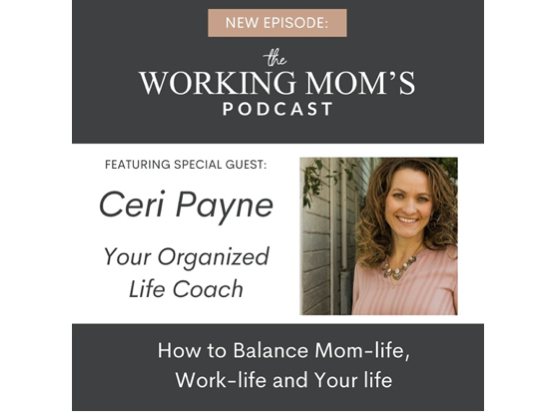
Episode 007: How to Balance Mom-life, Work-life and Your life
Anyone who has seen the hit Netflix documentary Tiger King: Murder, Mayhem, and Madness can attest that it’s one of the most outlandish stories to come out in a year full of outlandish stories. And while Tiger King’s sordid tale of big cats, murder-for-hire, polygamy, and a missing millionaire may seem too outrageous to have any relevance to your own life, the series actually sheds light on a number of critical estate planning issues that are pertinent for practically everyone.Over seven episodes, Tiger King provides several shocking, real-life examples of how estate planning can go horribly wrong if it’s undertaken without trusted legal guidance. In this series of articles, we’ll discuss some of the worst planning mistakes made by key people in the documentary, while offering lessons for how such disasters could have been avoided with proper planning.
The Feud
While the documentary’s dark, twisted plot is far too complicated to fully summarize, it focuses primarily on the bitter rivalry between Joe Exotic and Carole Baskin, who are both owners and breeders of big cats. Joe, the self-professed “Tiger King,” whose real name is Joseph Maldonado-Passage, runs a roadside zoo in Oklahoma filled with more than a hundred tigers, lions, and other assorted animals.
Carole is the owner of Big Cat Rescue, a Florida-based sanctuary for big cats rescued from captivity. As an avid animal rights activist, Carole goes on a public crusade against Joe, seeking to have his zoo shut down, claiming that he exploits, abuses, and kills the animals under his care.In retaliation, Joe launches an extensive media campaign of his own against Carole, in which he accuses her of murdering her late husband, millionaire Don Lewis, and feeding his remains to her tigers. The feud between Joe and Carole goes on for decades, and it ultimately peaks after Carole wins a million-dollar trademark infringement lawsuit against Joe.
The legal fees and impending judgment from the lawsuit nearly bankrupt Joe, eventually pushing him to hire someone to kill Carole. However, instead of killing Carole, the individual Joe hires goes to the FBI and informs them of Joe’s murderous plot. Joe is ultimately arrested for hiring a hitman to kill Carole, along with multiple animal abuse charges, and he’s sentenced to 22 years in federal prison.
Although the clash between Joe and Carole takes center stage and exposes key estate planning concerns related to business ownership and asset protection (which we’ll cover a little later) the most egregious planning errors are made by Carol’s late husband Don Lewis. In fact, the full extent of duplicity and damage related to these mistakes isn’t even uncovered by the documentary, and have only recently come to light following renewed public interest in the case sparked by the show.
What’s more, since the fallout from Don’s poor planning has tragic results not just for him, but for the very loved ones he was seeking to protect with his estate plan, we’ll discuss Don’s planning mishaps first.
Missing Millionaire
Don, a fellow big-cat enthusiast who helped Baskin start Big Cat Rescue, mysteriously disappeared in 1997 and hasn’t been seen since. After having him declared legally dead in 2002, Carole produced a copy of Don’s will that left her nearly his entire estate—estimated to be worth $6 million—while leaving his daughters from a previous marriage with just 10% of his assets.
Carole was not only listed as Don’s executor in the will she presented, but she also produced a document in which Don granted her power of attorney. However, the planning documents Carole produced were deemed suspicious by multiple people who were close to Don for a number of reasons.Don’s daughters and his first wife claim that Don and Carole were having serious marital problems before he disappeared, and that Don was planning to divorce Carole. As evidence of this, we learn that Don sought a restraining order against Carole just two months before he vanished, in which he alleges Carole threatened to kill him. A judge denied the restraining order, saying there was “no immediate threat of violence.”
Don’s daughters also claim that around the time the restraining order was filed, their father created a will that left the vast majority of his estate to them, and he did so in order to minimize any claims Carole might have to his property should he pass away. Additionally, Don’s administrative assistant, Anne McQueen, said that before he disappeared, Don gave her an envelope containing his new will and a power of attorney document, in which he named Anne as his executor and power of attorney agent, not Carole. Anne said Don told her to take the envelope to the police if anything should happen to him. According to Anne, the envelope with Don’s planning documents was kept in a lock box in Don’s office, but she claims Carole broke into the office and took the documents 10 days after he disappeared. At the time, Anne was being interviewed by detectives when she received a call from the alarm company, letting her know that the alarm in Don’s office had been triggered.
When police arrived, they found Carole removing files from the trailer that served as Lewis’ office. She was being helped by her father and Don’s handyman. The handyman had cut the locks, and according to Anne, this was because Carole didn’t have a key. Later that day, Carole had the entire trailer hauled to the grounds of the big cat sanctuary. Anne told detectives that Carole removed the trailer and its contents in order to destroy his planning documents stored in the lockbox. From there, Anne believes Carole forged the will and power of attorney she ultimately presented to the court.
Carole vehemently denied all of these claims. In an interview with the Tampa Bay Times, Carole said she moved the office trailer because her father claimed he saw Anne removing files from it a day earlier. She also insisted she never threatened Don’s life, and that he disappeared on one of his many trips to Costa Rica. She further claims that Don sought to disinherit his children in his will, and it was only at Carole’s suggestion that Don left them anything at all.
Although law enforcement investigated Don’s disappearance from Tampa to Costa Rica, Hillsborough County Sheriff Chad Chronister said the investigation failed to uncover any physical evidence, only a conflicting series of stories and dead ends. In light of this, Don’s estate passed through probate in 2002, and his assets were distributed according to the terms of the will Carole presented, leaving Carole with the bulk of his $6-million estate, and leaving Don’s daughters with just a small fraction of his assets.While there’s more to the story surrounding Don’s planning documents and Carole’s suspicious actions, let’s first look at the planning mistakes Don made and how they could have been easily prevented.
Lesson 1: Always work with an experienced estate planning lawyer when creating or updating your planning documents, especially if you have a blended family
If Don’s children and assistant are correct in their claim that Don created a will that left his daughters the bulk of his estate and disinherited Carole, it appears he did so without the assistance of an attorney. This was his first big mistake.There are numerous do-it-yourself (DIY) estate planning websites that allow you to create various planning documents within a matter of minutes for relatively little expense. Yet, as we can see here, when you use DIY estate planning instead of the services of a trusted advisor guiding you and your family, the documents can easily disappear or be changed without anyone who can testify to what you really wanted. In the end—and when it’s too late—taking the DIY route can cost your family far more than not creating any plan at all.
Even if you think your particular planning situation is simple, that turns out to almost never be the case. As we covered in a previous article, there are a number of complications inherent to DIY estate plans that can cause them to be ruled invalid by a court, while also creating unnecessary conflict and expense for the very people you are trying to protect with your plan.
And while it’s always a good idea to have a lawyer help you create your planning documents; this is exponentially true when you have a blended family like Don’s. If you are in a second (or more) marriage, with children from a prior marriage, there’s an inherent risk of dispute because your children and spouse often have conflicting interests, particularly if there’s significant wealth at stake. The risk for conflict is significantly increased if you are seeking to disinherit or favor one part of your family over another, as Don was claimed to have done with Carole. In fact, Florida law prevents one spouse from completely disinheriting the other in their estate plan, so unless Don was aware of this fact when he cut Carole out of his will, she would still be entitled to one-third of his assets upon his death, no matter what his will stipulated.By creating your own plan, even with the help of a DIY service, you won’t be able to consider and plan ahead to avoid all the potential legal and family conflicts that could arise. As your Personal Family Lawyer®, however, we are not only specially trained to predict and prevent such conflicts, but our unique planning process can actually help create connections among your loved ones and bring your family closer together. In fact, this is our special sauce.
Finally, as we saw with Don, if your loved ones can’t find your planning documents—whether because they were misplaced or stolen—it’s as if they never existed in the first place. Yet, if Don had enlisted the support of an experienced planning professional like us, his documents would have been safeguarded from being lost, stolen, or destroyed. When we create or update a plan for our clients, it’s standard practice to not only keep current copies in our office, but we also ensure that everyone affected by the plan is provided with the latest updated copies, and any older versions are discarded. Moreover, we ensure all beneficiaries of your plan know exactly what to do in the event of our client’s death, so your family can immediately put the necessary legal actions in motion to properly manage your estate. If you’ve yet to create a plan, have DIY documents you aren’t sure about, or have a plan created with another lawyer’s help that hasn’t been reviewed in more than a year, meet with us as your Personal Family Lawyer®. We can ensure that your plan will remain safe and work exactly as intended if something should happen to you.
Next week, we’ll continue with part two in this series on the estate planning lessons you can learn from the Netflix documentary Tiger King.
Proper estate planning can keep your family out of conflict, out of court, and out of the public eye. Are you ready to protect your loved ones and legacy? Check out my next presentation.

What the Netflix Series Tiger King Can Teach You About Estate Planning-Part 1
If you are engaged to be married, divorce is probably the last thing you and your fiancé want to be thinking about. Yet you might be rightfully concerned about what would happen to your assets should your marriage end in divorce or in the event of your death. One option you might be considering for protecting your assets from these events is a prenuptial agreement. However, even bringing up a prenup can be a romance killer that creates friction and distrust before the marriage even begins. And if it’s not properly created and executed, a divorce court can invalidate the asset protections offered by a prenup, so such agreements don’t exactly provide airtight protection. Plus, a prenup would do nothing to keep your family out of court and out of conflict should you become incapacitated or when you die, which is something everyone who gets married needs to consider.
That said, prenups aren’t your only option. With proactive estate planning, for example, you can structure your assets in such a way that not only protects them from being lost to divorce, but also provides for both your future spouse and any children you may have from a previous marriage in the event of your death or incapacity.
Last week in part one, we discussed some of the benefits and drawbacks associated with using prenuptial agreements. Here, we’ll look at different estate planning vehicles that could provide similar—or even better—protection than prenups.
Revocable living trust created by you
By setting up a revocable living trust and funding it with your separate assets before getting married, those assets would likely be considered non-marital property and not subject to division by the court upon divorce—as long as you never commingle any of those assets with your spouse after your marriage. To ensure your separate property assets stay separate, it’s vital that you create and fund the trust with your assets before the marriage and never add any assets acquired or created during the marriage.
If you commingle assets acquired during the marriage in a trust containing your separate non-marital assets, a court could declare all of those assets as marital property subject to claim as part of a divorce settlement. To this end, a revocable trust only protects your separate assets from divorce if they remain separate from marital property throughout the whole length of your marriage.
You can also use a revocable living trust to provide for your surviving spouse and children from a previous marriage in the event of your death or incapacity. Unlike a will, assets held by a trust are not subject to the court process known as probate, so those assets would be immediately available to your spouse and kids, sparing your family the time, expense, and potential conflict of probate.
Note that since a revocable trust is “revocable” by definition, there is no asset protection for assets in your revocable trust, meaning that a revocable living trust will not protect your assets from creditors during your lifetime. If you want to achieve protection from both a future divorce and future creditors, you may want to consider one of the irrevocable trusts below.
Irrevocable trust created by your family
You can protect your assets from divorce by having your parents (or another loved one) establish an irrevocable trust for you before your marriage. Then, the Investment Trustee of the irrevocable trust (who could be you) could purchase all of your existing assets in an arms-length transaction and manage those assets inside of the trust, where they are totally protected from a future divorce and any future creditors.Note that this strategy does require special provisions to ensure you cannot make distributions to yourself from the trust without the approval of an “independent trustee.” This trustee could be a best friend or a professional trustee, but cannot be anyone related or subordinate to you.Your parents or grandparents could also leave any future inheritance you are to receive to this irrevocable trust, ensuring that your inheritance would also be protected. If this irrevocable trust is properly established and the terms are well-counseled and well-drafted, all assets the trust owns—and any assets left to you in the future—will be fully protected from a future divorce, future creditors, and even from estate taxes and probate upon your death. Yes, we like these trusts a lot.
Irrevocable trust created by you
It’s also possible for you to establish an irrevocable trust for yourself and gift your assets into the trust to keep them safe from divorce. However, this strategy is not as airtight as having a parent or grandparents establish the trust for you. When you gift assets to an irrevocable trust, there’s a risk that a spouse or future creditor can claim fraudulent conveyance, if you gift those assets within a certain number of years (the exact time frame depends on the state) of the trust being set up. That said, if you are looking for asset protection and an alternative to a prenuptial agreement, and do not have a parent or grandparent available, a self-settled irrevocable trust can be a great second-best alternative.
Start your marriage off right
If you are getting ready to tie the knot and would like to ensure that assets you bring into the marriage don’t end up being lost in a future divorce settlement or are protected for your kids from a prior marriage, meet with us for trusted counsel and guidance on all of your options well before your marriage. Once you are married, many planning options are off the table.
And regardless of your concerns about divorce, you definitely need to create or update your estate plan to protect and provide for your soon-to-spouse and any children you have in the event of your death or incapacity. Schedule a Family Wealth Planning Session™ today to get this planning started.
Proper estate planning can keep your family out of conflict, out of court, and out of the public eye. Are you ready to protect your loved ones and legacy? Check out my next presentation.

How to Avoid the Need For a Prenuptial Agreement—Part 2
“Labor is a lousy time to learn,” says April Freer, Owner of Mother Nurture Birth services, Doula, Childbirth Educator, and Lactation Counselor. Listen in as April divulges the comforting techniques she uses to empower families by reminding them of a simple truth: There is no right when it comes to giving birth, it’s just a variation of normal.
April’s uplifting tone celebrates the natural process of birth while tapping into the symbiotic relationship between mother and baby. Breakthrough and deconstruct the cold medicalized birthing process with April as she expresses how the world’s greatest machine, the human body, leverages the brain to remove fear and let the body do what it does naturally.
Your journey on April’s path begins as she shares her feelings on being inadvertently launched into birth work by the presence of her infant daughter. April discovered the emotional freedom that hypnobirthing brings and today she imparts her wisdom to families which helps them navigate through the choices they have to make. Learn about April’s five-week childbirth education program that provides spiritual and emotional support and explores the physiology of the birthing process.
Further, April reveals how she helps families reframe their mindsets by tapping into the emotion of joy. She also explains how hypnobirthing has enhanced her work as a doula by bringing more peace while decreasing the effort that’s needed to support mother and baby. This results in the birthing process taking less time as mothers learn to work with and not fight against their bodies. Everything about pregnancy and birthing shifts.
In this episode, you’ll hear April discuss the differences between the hypnosis most are familiar with and how self-hypnosis is a skill many unknowingly use every day. Hear how families have used hypnobirth, hypnofertility, and hypnomotherhood as an aid to restoration and relaxation. Society may teach that we are fast-paced people, yet, April teaches the gift of relaxation and how to carve out time for meditation and learning.
Later, April tells birthing stories that you won’t see on TV. These calm birthing stories make really lousy media but it makes healthy humans. April also addresses how to overcome challenges and trepidations of being pregnant during a crisis and shifts to a positive focus on what moms and babies were literally created physiologically to do. “The world can go crazy”, says April, “but two people are showing up: mom and baby.”
Quotes:
- “Your body knows what it’s doing if your brain can get out of the way.”
- “I don’t speak in absolutes, I speak in ‘ish’ because as soon as I tell you something in absolute, your baby makes me a liar.”
- “When parents have a different mindset going in, it’s so empowering.“
- “Regardless of what language you speak, birth functions pretty much the same.
Links Mentioned:
Email or Call April 970.405.2626
Visit Mother Nurture Birth Service’s Website
See Upcoming Classes
Listen to Jamie Sarche’s path to her calling in Episode 3
Pamela Maass on Linkedin
Podcast production and show notes provided by FIRESIDE Marketing


.svg)
