

Welcome to the Blog
Keep up with the latest news and updates
In many families, money still is not a typical dinner table discussion, but we think it should be. Surprisingly, this is especially true when it comes to affluent parents. And, we hope to change it because one of the most important things you can do is talk to your kids (and your parents) about money.
According to the Spectrem Millionaire Corner, a market research group, only 17% of affluent parents said they would disclose their income or net worth to their kids by the time they turned 18. A nearly equal amount, 18% said they would never disclose these numbers to their kids. 32% of the rich parents surveyed by Spectrem said “it’s none of their business” when asked why they would not talk to their kids about money.
But, that’s just faulty thinking, wouldn’t you agree?! We hope so! But, if not, read on …
The amount of money generated by your family, and what will happen to it when you or your parents become incapacitated or die is definitely your business. In fact, we believe it may be the most important business you have. And whether your parents talk with you about it now, or you figure it all out after they die, your parent’s money has a huge impact on you.
And, of course your money has a huge impact on your kids.
If your parents are not talking to you about money, it could be because they are afraid that if you know how much money there is, it will make you lazy, unmotivated, or change the course of your life decisions in a negative manner. Maybe you have the same fears of talking about money with your own kids.
But the truth is that whether you know exactly what there is or not, you have a general sense of your family’s affluence and it’s already impacted your decisions in a myriad of ways. And the best way for your family’s money to impact your decisions in a positive manner is to get into open conversation about it all.
If you are a child of affluent parents who are not talking to you about money, consider that your job is to learn to communicate with your parents in a way that will have them trust you, and the decisions you will make if you know just how much there is.
Perhaps consider that when money has come up in the past, you behaved immaturely, and that caused your parents not to trust you, but you can change that now. And consider the possibility that your parents would love it if they saw evidence of your maturity in this arena.
If you are a parent yourself, you probably already know, or can imagine, that the most important wish you have for your children is that they learn to handle money well, and that you want to influence them in the most positive way possible, when it comes to money.
Consider how you would want your children to approach you to have the money conversation, and how you can do exactly that with your parents?
We all have to learn about our family’s money eventually. And if that doesn’t happen until after our parents die, it can be a much bigger burden to deal with, and we can lose tremendous opportunities for passing on more than just money.
As an affluent parent, or the child of affluent parents, getting into conversation about money now is a huge opportunity to pass on values, insights, stories and experience that will be lost, if you wait until incapacity or death to start facing the truth together.
Helping you talk to your kids (or your parents) about money is one of the things we most love to do because we see it as a real opportunity for your family to come together and use your whole family wealth to create more connection from one generation to the next. If we can help you here, either with your kids, or your parents, please be in touch.
Proper estate planning can keep your family out of conflict, out of court, and out of the public eye. Are you ready to protect your loved ones and legacy? Watch my Free Course now.

Money Talk: How Much Will You Share With Your Kids (and When)?
A last will and testament can ensure your wishes are respected when you die. But if your will isn’t legally valid, those wishes might not actually be carried out, and instead the laws of “intestate succession” would apply, meaning that the state decides who gets your stuff, and it’s very likely not to be who you would choose.
If you’ve created a will online, we congratulate you for doing SOMETHING, but we strongly recommend that you have it reviewed and make sure it does what you want, and is actually legally valid. We’ve seen it far too many times: someone THINKS they’ve created a will, because they did something, but the SOMETHING was the WRONG THING, and their family is left to deal with the fallout, confusion and complications that result.
The validity of a will depends on where you live when you die, as last will and testament laws vary from state to state. Most states, however, require wills to meet the following criteria in order to be legally binding:
The Essential Requirements
- You must be at least 18 years old or an emancipated minor to create a legally valid will.
- You must be of sound mind and capable of understanding your intentions for your estate, who you want to be a beneficiary, and your relationship with those people when you create your will.
- You must sign your will or direct someone else to sign it if you are physically incapable of doing so.
- There must be at least two witnesses—who are not beneficiaries— present at the signing. Some states do allow for one witness to be a beneficiary as long as the other witness is not.
Handwritten Wills
You may write a holographic will, which means an will that is written completely in your own hand, with no other printed material on the page. In that case, there are no witnesses required, and, in fact, having a witness would make the will invalid because there must be no other writing other than your hand on the page for a holographic will to be valid.
When a Will Isn’t Valid
If your will does not adhere to your state’s requirements, the court will declare it invalid. In this case, a few things could happen. Your estate could pass under your state’s intestacy laws, which means your assets would go to your closest living relatives, as determined by the law. And that may or may not be who you would want to receive your assets.
Is a Will All You Need?
A will is a baseline foundation for any estate plan, but it might not be enough to protect your wishes. A will does not keep your assets out of court, and it does not operate in the event of your incapacity. A will alone does not ensure your loved one’s receive your assets protected from unnecessary conflict or creditors.
The best way to ensure your will is legally valid is to consult with us. We can confirm your will is valid under our state’s laws and evaluate your estate plan to ensure it will protect your wishes and provide for your family according to your wishes in the event of your incapacity, or when you die.
Proper estate planning can keep your family out of conflict, out of court, and out of the public eye. Are you ready to protect your loved ones and legacy? Watch my Free Course now.

False Security: Is Your Will Legally Valid?
Both wills and trusts are estate planning documents that can be used to pass your wealth and property to your loved ones upon your death. However, trusts come with some distinct advantages over wills that you should consider when creating your plan.That said, when comparing the two planning tools, you won’t necessarily be choosing between one or the other—most plans include both. Indeed, a will is a foundational part of every person’s estate plan, but you may want to combine your will with a living trust to avoid the blind spots inherent in plans that rely solely on a will. Here are four reasons you might want to consider adding a trust to your estate plan:
1. Avoidance of probate
One of the primary advantages a living trust has over a will is that a living trust does not have to go through probate. Probate is the court process through which assets left in your will are distributed to your heirs upon your death.During probate, the court oversees your will’s administration, ensuring your property is distributed according to your wishes, with automatic supervision to handle any disputes. Probate proceedings can drag out for months or even years, and your family will likely have to hire an attorney to represent them, which can result in costly legal fees that can drain your estate.Bottom line: If your estate plan consists of a will alone, you are guaranteeing your family will have to go to court if you become incapacitated or when you die.
However, if your assets are titled properly in the name of your living trust, your family could avoid court altogether. In fact, assets held in a trust pass directly to your loved ones upon your death, without the need for any court intervention whatsoever. This can save your loved ones major time, money, and stress while dealing with the aftermath of your death.
2. Privacy
Probate is not only costly and time consuming, it’s also public. Once in probate, your will becomes part of the public record. This means anyone who’s interested can see the contents of your estate, who your beneficiaries are, as well as what and how much your loved ones inherit, making them tempting targets for frauds and scammers.Using a living trust, the distribution of your assets can happen in the privacy of our office, so the contents and terms of your trust will remain completely private. The only instance in which your trust would become open to the public is if someone challenges the document in court.
3. A plan for incapacity
A will only governs the distribution of your assets upon your death. It offers zero protection if you become incapacitated and are unable to make decisions about your own medical, financial, and legal needs. If you become incapacitated with only a will in place, your family will have to petition the court to appoint a guardian to handle your affairs. Like probate, guardianship proceedings can be extremely costly, time consuming, and emotional for your loved ones. And there’s always the possibility that the court could appoint a family member you’d never want making such critical decisions on your behalf. Or the court might even select a professional guardian, putting a total stranger in control of just about every aspect of your life.
With a living trust, however, you can include provisions that appoint someone of your choosing—not the court’s—to handle your assets if you’re unable to do so. Combined with a well-drafted medical power of attorney and living will, a trust can keep your family out of court and conflict in the event of your incapacity.
4. Enhanced control over asset distribution
Another advantage a trust has over just having a will is the level of control they offer you when it comes to distributing assets to your heirs. By using a trust, you can specify when and how your heirs will receive your assets after your death. For example, you could stipulate in the trust’s terms that the assets can only be distributed upon certain life events, such as the completion of college or purchase of a home. Or you might spread out distribution of assets over your beneficiaries lifetime, releasing a percentage of the assets at different ages or life stages. In this way, you can help prevent your beneficiaries from blowing through their inheritance all at once, and offer incentives for them to demonstrate responsible behavior. Plus, as long as the assets are held in trust, they’re protected from the beneficiaries’ creditors, lawsuits, and divorce, which is something else wills don’t provide.
If, for some reason, you do not want a living trust, you can use a testamentary trust to establish trusts in your will. A testamentary trust will not keep your family out of court, but it can allow you to control how and when your heirs receive your assets after your death.
An informed decision
The best way for you to determine whether or not your estate plan should include a living trust, a testamentary trust, or no trust at all is to meet with us for a Family Wealth Planning Session. During this process, we’ll take you through an analysis of your personal assets, your family dynamics, what’s most important to you, and what will happen for your loved ones when you become incapacitated or die. Sitting down with us to discuss your family’s planning needs will empower you to feel 100% confident that you have the right combination of planning solutions in place for your family’s unique circumstances. Schedule your appointment today to get started.
Proper estate planning can keep your family out of conflict, out of court, and out of the public eye. Are you ready to protect your loved ones and legacy? Watch my Free Course now.

4 Things Trusts Can Do That Wills Can’t
On January 1, 2020, the Setting Every Community Up for Retirement Enhancement Act (SECURE Act) went into effect, and it could have big implications for both your retirement and estate planning strategies—and not all of them are positive. Last week, we discussed three of the SECURE Act’s most impactful provisions. Specifically, we looked at the SECURE Act’s new requirements for the distribution of assets from inherited retirement accounts to your beneficiaries following your death.
Under the new law, your heirs could end up paying far more in income taxes than necessary when they inherit the assets in your retirement account. Moreover, the assets your heirs inherit could also end up at risk from creditors, lawsuits, or divorce. And this is true even for retirement assets held in certain protective trusts designed to shield those assets from such threats and maximize tax savings.
Here, we’ll cover the SECURE Act’s impact on your financial planning for retirement, offering strategies for maximizing your retirement account’s potential for growth, while minimizing tax liabilities and other risks that could arise in light of the legislation’s legal changes.
Tax-advantaged retirement planning
If your retirement account assets are held in a traditional IRA, you received a tax deduction when you put funds into that account, and now the investments in that account grow tax free as long as they remain in the account. When you eventually withdraw funds from the account, you’ll pay income taxes on that money based on your tax rate at the time.
If you withdraw those funds during retirement, your tax rate will likely be quite low because you typically have much less income in your retirement years. The combination of the upfront tax deduction on your initial investment with the lower tax rate on your withdrawal is what makes traditional IRAs such an attractive option for retirement planning. Thanks to the SECURE Act, these retirement vehicles now come with even more benefits. Previously, you were required to start taking distributions from retirement accounts at age 70 ½. But under the SECURE Act, you are not required to start taking distributions until you reach 72, giving you an additional year-and-a-half to grow your retirement savings tax free.
The SECURE Act also eliminated the age restriction on contributions to traditional IRAs. Under prior law, those who continued working could not contribute to a traditional IRA once they reached 70 ½. Now you can continue making contributions to your IRA for as long as you and/or your spouse are still working.
From a financial-planning perspective, you’ll want to consider the effect these new rules could have on the goal for your retirement account assets. For example, will you need the assets you’ve been accumulating in your retirement account for your own use during retirement, or do you plan to pass those assets to your heirs? From there, you’ll want to consider the potential income-tax consequences of each scenario. Your retirement account assets are extremely valuable, and you’ll want to ensure those assets are well managed both for yourself and future generations, so you should discuss these issues with your financial advisor as soon as possible. If you don’t already have a financial advisor, we’ll be happy to recommend a few we trust most. And if you meet with us for a Family Wealth Planning Session (or for a review of your existing plan) to discuss your options from a legal perspective, we can integrate your financial advisor into our meeting. Together, we can look at the specific goals you’re trying to achieve and determine the best ways to use your retirement-account assets to benefit yourself and your heirs.
Here are some things we would consider with you and your financial advisor:
Converting to a ROTH IRA
In light of the SECURE Act’s changes, you may want to consider converting your traditional IRA to a ROTH IRA. ROTH IRAs come with a potentially large tax bill up front, when you initially transition the account, but all earnings and future distributions from the account are tax free.
Life Insurance and trust options
Given the new distribution requirements for inherited IRAs, we can also look at whether it makes sense to withdraw the funds from your retirement account now, pay the resulting tax, and invest the remainder in life insurance. From there, you can set up a life insurance trust to hold the policy’s balance for your heirs.By directing the death benefits of that insurance into a trust, you can avoid burdening your beneficiaries with the SECURE Act’s new tax requirements for withdrawals of inherited retirement assets as well as provide extended asset protection for the funds held in trust.
If you have charitable inclinations, we can consider using a charitable remainder trust (CRT). By naming the CRT as the beneficiary of your retirement account, when you pass away, the CRT would make monthly, quarterly, semi-annual, or annual distributions to your beneficiaries over their lifetime. Then, when the beneficiaries pass away, the remaining assets would be distributed to a charity of your choice.
The decision of whether to transition your traditional IRA into a ROTH IRA now, or cash out and buy insurance, or use a CRT to provide for your beneficiaries is a solvable “math problem.” Using the specific facts of your life goals as the elements that go into solving the problem, we can team up with your financial advisor to help you do the math and solve the equation.
Adjusting your plan
While the SECURE Act has significantly altered the tax implications for retirement planning and estate planning, as you can see, there are still plenty of tax-saving options available for managing your retirement account assets. But these options are only available if you plan for them. If you don’t revise your plan to accommodate the SECURE Act’s new requirements, your family will pay the maximum amount of income taxes and lose valuable opportunities for asset-protection and wealth-creation as well. To make sure this doesn’t happen, schedule a Family Wealth Planning Session or an existing estate plan review today.We will work with you and your financial advisor to analyze all of the ways in which your retirement accounts are impacted by the SECURE Act and educate and empower you to choose the most suitable planning strategies for passing your assets to your loved ones in the most tax-advantaged and least risky manner possible. You’ve worked too hard for these assets to see them lost, squandered, or not pass to your heirs in the way you choose, so contact us right away.
Proper estate planning can keep your family out of conflict, out of court, and out of the public eye. Are you ready to protect your loved ones and legacy? Watch my Free Course now.

The SECURE Act’s Impact On Estate and Retirement Planning—Part 2
On January 1, 2020, the Setting Every Community Up for Retirement Enhancement Act (SECURE Act) went into effect, and it represents the most significant retirement-planning legislation in decades.Indeed, the changes ushered in by the SECURE Act have dramatic implications for both your retirement and estate planning strategies—and not all of them are positive. While the law includes a number of taxpayer-friendly measures to boost your ability to save for retirement, it also contains provisions that could have disastrous effects on planning strategies families have used for years to protect and pass on assets contained in retirement accounts.Given this, if you hold assets in a retirement account you need to review your financial plan and estate plan as soon as possible. To help you with this process, here we’ll cover three of the SECURE Act’s biggest changes and how they stand to affect your retirement account both during your lifetime and after your death. Next week, we’ll look more deeply into a couple of additional strategies you may want to consider.
1. Increased age for Required Minimum Distributions (RMD)
Prior to the SECURE Act, the law required you to start making withdrawals from your retirement account at age 70 ½. But for people who haven’t reached 70 ½ by the end of 2019, the SECURE Act pushes back the RMD start date until age 72.
2. Repeal of the maximum age for IRA contributions
Under previous law, those who continued working could not contribute to a traditional IRA once they reached 70 ½. Starting in 2020, the SECURE Act removed that cap, so you can continue making contributions to your IRA for as long as you and/or your spouse are still working.
These two changes are positive because with our increased life spans people are now staying in the workforce longer than ever before, and the new rules allow you to continue contributing to your retirement accounts and accumulating tax-free growth for as long as possible. However, to offset the tax revenue lost due to these beneficial changes, as you’ll see below, the SECURE Act also includes some less-favorable changes to the distribution requirements for retirement accounts after your death.
3. Elimination of stretch provisions for inherited retirement accounts
The part of the SECURE Act that’s likely to have the most significant impact on your heirs is a provision that makes significant changes to distribution requirements for inherited retirement accounts, and effectively ends the so-called “stretch IRA.”Under prior law, beneficiaries of your retirement account could choose to stretch out distributions—and, therefore, the income taxes owed on those distributions—over their own life expectancy. For example, an 18-year old beneficiary expected to live an additional 65 years could inherit an IRA and stretch out the distributions for 65 years, paying income tax on just a small amount of their inheritance every year. And in that case, the income tax law would encourage the child to not withdraw and spend the inherited assets all at once.Under the SECURE Act, however, most designated beneficiaries will now be required to withdraw all the assets from the inherited account—and pay income taxes on them—within 10 years of the account owner’s death. Those who fail to withdraw funds within the 10-year window face a 50% tax penalty on the assets remaining in the account.
The law does offer exemptions to the mandatory 10-year withdrawal rule for certain beneficiaries, known as eligible designated beneficiaries (EDB):
- A surviving spouse named as an outright beneficiary of a retirement plan still has the option of rolling over the benefits to his or her own IRA or taking distributions based on his or her own life expectancy.
- Beneficiaries who are less than 10 years younger than you can still take distributions based on their own life expectancy.
- Your minor children, who have not reached the “age of majority” don’t have to deplete the account until 10 years after they come of age. Yet that still would be a much shorter “stretch” than previously available.
- Disabled individuals and chronically ill individuals can take distributions based on their life expectancy.
Apart from these exceptions, opportunities for stretching an IRA over an extended period of time are no longer available. This means if you want the people who will inherit your retirement account after your death to benefit from long-term income tax deferral—as well as asset protection from lawsuits, creditors, or divorce—you must meet with us now to rework your plan.
Impact on trusts
Depending on the value of your retirement account, you may have already addressed the distribution of its assets using a “conduit” provision in your will, revocable trust, or standalone retirement trust. Prior to the SECURE Act, a trustee of a trust that included a conduit provision would only distribute the required minimum distributions (RMD) to trust beneficiaries each year. This allowed the beneficiary to take advantage of the continued “stretch” based on their age and life expectancy. In this way, the conduit trust protected the account balance and only exposed the much smaller RMD amounts to creditors and divorcing spouses.
Under the SECURE Act, however, the 10-year limit for taking distributions will lead to the acceleration of income tax due, possibly bumping your beneficiaries into a higher income tax bracket. This potentially hefty tax burden would likely result in your beneficiary receiving significantly less funds from the retirement account than you had initially planned on.What’s more, because the SECURE Act requires all funds in your retirement account to be withdrawn within 10 years after your death, a conduit trust would be required to distribute all of its assets outright to the beneficiary within this shortened period. This means you would also lose any long-term asset protection you may have built into your plan.
Alternative options
Given the SECURE Act’s new rules, you may want to consider amending your trust to shift it from a “conduit trust” to become an “accumulation trust.” Such a trust structure can’t extend the tax benefits any longer than 10 years, but it can ensure the assets are protected from your beneficiary’s future risky activities and/or a divorce.One important thing to note: Retained distributions from a traditional IRA distributing to an accumulation trust would be exposed to compressed income tax rates that apply to trusts. Currently, trusts reach the maximum 37% tax bracket with undistributed taxable income of $12,950. Facing such a tax hit, if you opt for this solution, your plan should include additional strategies to address the tax obligation. We’ll share some options for this in next week’s article.
Update your estate plan now
We can update your plan to address all of the potential ramifications the SECURE Act might have on the distribution of your retirement account’s assets to your loved ones following your death. But to do that, we need to meet with you to consider your family dynamic and all of your assets, so we can thoroughly assess the big-picture impact the SECURE Act stands to have on your estate.
This is exactly what we do during our Family Wealth Planning Session, a two-hour, working meeting that educates and empowers you to know you’ve done the right thing for the people you love no matter what happens to you. Whether you’ve yet to create a plan or already have one created another lawyer, schedule an appointment today.Next week in the second part of this series, we’ll cover some of the potential ramifications the SECURE Act stands to have on your financial-planning strategies and how you can make the most of the new legal landscape.
Proper estate planning can keep your family out of conflict, out of court, and out of the public eye. Are you ready to protect your loved ones and legacy? Watch my Free Course now.
The SECURE Act’s Impact On Estate and Retirement Planning—Part 1
The Tax Cuts & Jobs Act (TCJA) made sweeping changes to exemptions, deductions, and credits for your family’s federal income taxes. But one major change that you might not have noticed is the way the law altered the potential tax consequences of divorce.
Unlike child support, alimony payments have long been tax-deductible for the ex-spouse making the payments and taxed as income for the recipient. And alimony payments were an above-the-line deduction, meaning that the payor did not need to itemize in order to benefit from the tax advantage.Because the spouse making payments was typically in a higher tax bracket than the recipient, shifting the income to the recipient’s lower tax bracket could result in significant overall tax savings. Indeed, this tax savings was often an important factor when negotiating divorce settlements, and it often led to larger alimony payments.However, the TCJA repealed the alimony deduction and totally reversed the tax obligation: For divorce or separation agreements executed on or after January 1st, 2019, alimony payments are no longer tax deductible for the paying spouse, and alimony is no longer considered taxable income for the recipient.Divorce or separation agreements executed before January 1, 2019 are grandfathered in under the law, meaning alimony will remain tax deductible for the paying spouse and taxed to the recipient. That said, pre-2019 divorce agreements can be modified to apply the new rules to future alimony payments, provided the modification expressly states that the TCJA new tax treatment should apply.
Indeed, there could be situations where voluntarily modifying divorce agreements put in place before 2019 to apply the new tax treatment would benefit both parties. One example might be if the recipient spouse is now in a higher tax bracket than the payer-spouse. Consult with us to determine if such modification makes sense for your particular situation.
Unlike many other new provisions of the TCJA, which will sunset in 2025, the repeal of the alimony deduction is permanent. It will remain in effect unless Congress makes future changes to the tax code.
Broad implications
It’s important to note that these rules don’t just stand to affect those divorced after December 31, 2018. The repeal of the alimony deduction could also impact couples who’ve been divorced for years—and even those still happily married. For example, those whose current divorce settlements were based around tax assumptions that no longer apply may want to renegotiate alimony payments to better align with the new tax code. Similarly, married couples who put prenuptial agreements in place based on the old tax rules should review those agreements to determine if the terms need to be altered in light of the new tax responsibilities.
A new playing field
By upending alimony procedures that have been in place for more than 70 years, the TCJA stands to completely reshape the divorce landscape. In turn, the law also stands to alter estate-planning and retirement strategies that were built around the previous tax advantages offered by the alimony deduction.Whether you’re in the midst of a divorce, have been divorced for years, or are married with a prenup, it’s critical that you meet with us and qualified tax advisor to discuss how this provision of the TCJA stands to affect you.Depending on your situation, you may want to modify your existing legal agreements to bring them into better alignment with the new rules. Or, there may be planning tools available that could offset or lessen the new law’s impact on your tax obligations. Schedule a Family Wealth Planning Session today to learn more.
Proper estate planning can keep your family out of conflict, out of court, and out of the public eye. Are you ready to protect your loved ones and legacy? Watch my Free Course now.

The Tax Cut & Jobs Act Drastically Alters the Tax Consequences of Divorce
Investing in life insurance is a foundational part of estate planning. However, when naming your policy’s beneficiaries, there are a number of mistakes you can make that could lead to potentially dire consequences for the very people you’re trying to protect and support.
The following four mistakes are among the most common we see clients make when selecting life insurance beneficiaries. If you’ve made any of these errors, contact us right away, so we can amend your policy to ensure its proceeds provide the maximum benefit for those you love most.
1. Failing to name a beneficiary
Although it would seem like common sense, whether intentional or not, far too many people fail to name any beneficiary at all. Others make the mistake of naming “my estate” as the beneficiary, rather than listing a specific person. Both of these errors will mean your insurance proceeds will have to go through the court process known as probate.During probate, a judge will determine who gets your insurance death benefits, and this process can tie the benefits up in court for months or even years, depending on who the beneficiaries of your estate are under the law. Moreover, probate opens up the proceeds to creditors, which can seriously deplete—or even totally wipe out—the funds.To prevent this, make certain you name—at the very least—one primary beneficiary. In case your primary beneficiary dies before you, you should also name a contingent (alternate) beneficiary. For maximum protection, name more than one contingent beneficiary in case both your primary and secondary choices die before you.
2. Failing to keep beneficiaries updated
While failing to name any beneficiary at all is a huge mistake, not keeping your beneficiary designations up to date can be even worse. This is particularly true if you are in a second (or more) marriage and fail to remove an ex-spouse as beneficiary, which can leave your current spouse with nothing when you die.
To prevent this, you should review your beneficiary designations annually as part of an overall review of your estate plan, and immediately update your beneficiaries upon events like divorce, deaths, and births. When you are a client of ours, we have built-in systems to ensure your beneficiary designations (along with all other documents in your plan) are regularly reviewed and updated.
3. Naming a minor as beneficiary
Though you are technically allowed to name a minor child as beneficiary, it’s never a good idea. Minor children cannot receive insurance benefits until they reach the age of majority—which can be as old as 21 in some states. If a minor is listed as the beneficiary, the proceeds of your insurance will be distributed to a court-appointed custodian, who will be in charge of managing the funds (often for a fee) until the age of majority, at which point all benefits are distributed to the beneficiary outright.
This is true even if the minor has a living parent. A child’s living parent could petition to the court to be appointed custodian, but there is no guarantee that a parent would be appointed as custodian, especially if the parent cannot qualify or pay for a bond. In many cases, a court could deem a parent unsuitable (if they have poor credit, for example) and instead appoint a paid fiduciary to control the funds.Rather than naming a minor as beneficiary, you should set up a trust to receive the insurance proceeds, and name a trustee to hold and distribute the funds to a minor child you would want to benefit from your insurance proceeds. By doing so, you get to choose not only who would manage your child’s money, but also how and when the funds are distributed and used.
4. Naming an individual with special needs as beneficiary
Although a loved one with special needs is likely one of the first people you’d think of naming as beneficiary of your life insurance policy, doing so can have tragic consequences. If you leave the money directly to someone with special needs, it could disqualify that individual from receiving much-needed government benefits.
Rather than naming someone with special needs as beneficiary, you should create a “special needs trust” to receive the insurance proceeds. This way, the money won’t go directly to the beneficiary upon your death, but it would be managed by the trustee you name and dispersed according to the trust’s terms, without affecting benefit eligibility.
The rules governing special needs trusts are complicated and vary greatly from state to state, so if you have a child with special needs, meet with us today to discuss your options. In the end, special needs planning involves much more than just life insurance—it’s about providing for a lifetime of care and protection.
Don’t create problems
While naming life insurance beneficiaries might seem like a simple task, if you’re not careful, you can create major problems for the loved ones you’re trying to benefit. Meet with us today to be certain you’ve done everything properly. We can also support you in putting in place planning tools like trusts—special needs or otherwise—to ensure the proceeds provide the maximum benefit for your beneficiaries without negatively affecting them in any way. Schedule a Family Wealth Planning Session to get started.
Proper estate planning can keep your family out of conflict, out of court, and out of the public eye. Are you ready to protect your loved ones and legacy? Watch my Free Course now.

Avoid These 4 Mistakes When Naming Life Insurance Beneficiaries
Two women who say they were sexually assaulted by other passengers on Frontier Airlines flights are suing the Colorado based carrier for allegedly refusing to help them and either not having or failing to follow policies to respond to assaults. The class action lawsuit was filed Dec. 16. “It’s embarrassing, it’s traumatic, and it takes a lot of bravery to come forward,” said Attorney Pamela Maass, representing the plaintiffs in this case.
The women say they reported the assaults to flight attendants, who did not report them to anyone else and did not request that law enforcement meet them at the planes. Read more at this link https://denver.cbslocal.com/2019/12/26/lawsuit-sexual-assault-frontier-airlines/
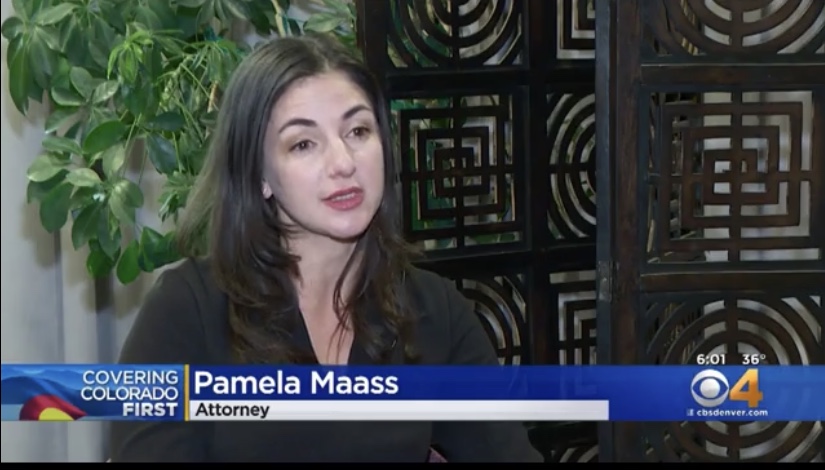
Attorney Pamela Maass speaks to CBS regarding groundbreaking lawsuit
Attorney Pamela Maass, owner of Maass Law speaks to 9 news on behalf of sexual assault victims.
Two women who say they were sexually assaulted on Frontier flights are taking the airline to court – they filed a class-action lawsuit last week. Both women say Frontier has refused to help them and accuse the airline of not following through on policies regarding response to assault.Doe’s attorney Pamela Maass claims Frontier does not have as strong policies and procedures to handle sexual assaults as it does for drunk or unruly passengers.
“If you were punched, someone would come,” she said. “They’d be taken off the flight. Police would be called. The FBI would be called. The pilot would be notified. This person would be detained. You would be made safe. That’s not what happened in these cases.”
Instead, Maass said all passengers were allowed to leave including potential witnesses and the alleged perpetrators. She said the FBI didn’t start investigating until it was too late.
“You’re completely ignored,” Maass said. “You’re treated like what has happened to you doesn’t matter.”
Read more here: https://www.9news.com/article/travel/2-woman-sue-frontier-over-sexual-assault-on-flights-out-of-denver/73-25c4c408-e81a-46bb-999a-4c5d6c948cf7


.svg)
