

Welcome to the Blog
Keep up with the latest news and updates
Now that same-gender couples can legally marry in all 50 states, more Americans than ever before are enjoying the rights and benefits that come with marriage. Estate planning, in particular, is one arena where these new rights and benefits are readily apparent.With marriage equality, same-gender couples no longer have to pay exorbitant amounts of money for creative estate-planning work-arounds just to achieve similar protections offered to opposite-gender couples. Yet same-gender couples continue to face unique planning challenges.Because you may have family members who remain opposed to the validity of your marriage, same-gender couples’ estate plans are often more vulnerable to dispute and even sabotage by unsupportive relatives. This could mean that family members are more likely to contest your wishes, or it might entail custody battles over non-biological children in the event of the biological parent’s death. Unsupportive family members may even try to block the ability of your spouse to make medical decisions on your behalf should you become incapacitated by accident or illness.While the planning vehicles available to same-gender and opposite-gender married couples are generally the same, there are a few unique considerations those in same-gender marriages ought to be aware of. Here are three of the most important things to keep in mind.
Relying solely on a will is risky
For a number of reasons, putting a trust in place—rather than relying solely on will—is a good planning strategy for nearly everyone. Upon the death of one spouse, a will is required to go through the often long, costly, and conflict-ridden court process known as probate. However, assets passed through a trust pass directly to the named beneficiaries without the need for probate.If your relationship is not supported by one or both families, avoiding probate is especially important. If a family member doesn’t support same-gender marriage, they’re more likely to contest your will during probate, especially if that family member would’ve received a substantially larger inheritance in a previous will prepared before the marriage.If your will is successfully contested, this could prevent your surviving spouse from receiving assets you left them in your will. And even if the contest ultimately fails, the process of defending the will’s validity in court can be extremely time-consuming, costly, and emotionally draining for your surviving spouse.What’s more, a trust works in cases of both your death and incapacity, while a will only goes into effect upon death. Given these reasons, it’s best for those in same-gender marriages to create both a will and trust.
Don’t neglect to plan for incapacity
Estate planning is not just about planning for your death; it’s also about planning for your potential incapacity. Should you be incapacitated by illness or injury, it’s not guaranteed that your spouse would have the ultimate legal authority to make key decisions about your medical treatment and finances.Absent a plan for incapacity, it’s left to the court to appoint the person who will make these decisions for you. Though spouses are typically given priority, this isn’t always the case, especially if unsupportive family members challenge the issue in court. To ensure your spouse has the authority to make decisions for you, you must grant him or her medical power of attorney and financial power of attorney. Medical power of attorney gives your spouse the authority to make health-care decisions for you if you’re incapacitated and unable to do so yourself. By the same token, financial power of attorney gives your spouse the authority to manage your financial affairs. And be sure to also create a living will, so that your spouse will know exactly how you want your medical care managed in the event of your incapacity.
Ensure parental rights are protected
While the biological parent of a child in a same-gender marriage is of course automatically granted parental rights, the non-biological spouse/parent still faces a number of legal complications. Because the Supreme Court has yet to rule on the parental rights of non-biological spouses/parents in a same-gender marriage, there is a tangled, often-contradictory, web of state laws governing such rights.
To ensure the full rights of a non-biological parent, many legal experts advise same-gender couples to undergo second-parent adoption. But in many states, it can be extremely difficult for same-gender couples to adopt—some states even permit employees of state-licensed adoption agencies to refuse to grant an adoption if doing so violates their religious beliefs. However, using a variety of unique planning strategies, we can provide non-biological, same-gender parents with nearly all parental rights without going through adoption. Using our Kids Protection Plan®, couples can name the non-biological parent as the child’s legal guardian, both for the short-term and the long-term, while confidentially excluding anyone the biological parent thinks may challenge their wishes. In this way, if the biological parent becomes incapacitated or dies, his or her wishes are clearly stated, so the court can do what the parent would’ve wanted and keep the child in the non-biological parent’s care.
Beyond that, there are several other planning tools we can use to offer the non-biological parent additional rights. One such tool is a co-parenting agreement. This is a legally binding arrangement that stipulates exactly how the child will be raised, what responsibility each spouse has toward the child, and what kind of rights would exist if the couple splits or goes through a divorce.
Experience you can trust
In light of these issues, it’s crucial that married, same-gender couples, especially those with children, always work with experienced planning professionals and avoid using generic online documents at all costs. We have extensive experience creating plans specifically designed to prevent your plan from being challenged in court by family members who disagree with your relationship.What’s more, our specialized planning services can help ensure that non-biological parents in same-gender marriages have as many parental rights as possible, without resorting to second-parent adoption.
Proper estate planning can keep your family out of conflict, out of court, and out of the public eye. If you’re ready to create a comprehensive estate plan, contact us to schedule your Family Wealth Planning Session. Even if you already have a plan in place, we will review it and help you bring it up to date to avoid heartache for your family. Schedule online today.

3 Estate Planning Concerns For Married, Same-Gender Couples
These days, lots of people consider their pets to be members of their family. Indeed, pets can become our closest companions. As such, it’s only natural you’d want to make sure your furry friend is provided for in your estate plan, so when you die or if you become incapacitated, your beloved companion won’t end up in an animal shelter or worse.
However, unlike your human family members, pets are considered your personal property under the law, so you can’t just name them as a beneficiary in your will or trust. If you do name your pet as a beneficiary in your plan, whatever money you tried to leave to it would go to your residuary beneficiary (the individual who gets everything not specifically left to your other named beneficiaries), who would have no obligation to care for your pet.
Wills aren’t a good option
Since you can’t name your pet as a beneficiary, your first alternative might be to leave your pet and money for its care in your will to someone you trust to be your pet’s new caregiver. While it’s possible to leave funding for your pet in this manner, it definitely isn’t the best option.
That’s because the person you name as beneficiary (the new caregiver) in your will would have no legal obligation to use the funds properly, even if you leave them detailed instructions for your pet’s care. In fact, your pet’s new owner could legally keep all of the money for themselves and drop off your beloved friend at the local shelter.
You’d like to think that you could trust someone to take care of your pet if you leave him or her money in your will to do so. Yet it’s simply impossible to predict what circumstances might arise in the future that could make adopting your pet impossible.
For example, when you die, the new caregiver might be living in an apartment or condo that doesn’t allow pets, or the individual could be suffering from an unforeseen illness that leaves them no longer able to care for the animal. Or, when faced with the reality of the situation, the person could simply change his or her mind about wanting to look after your pet for the rest of its life.
Additionally, a will is required to go through the court process known as probate, which can last for months or even years, leaving your pet in limbo until probate is finalized. Not to mention, a will only goes into effect upon your death, so if you’re incapacitated by accident or illness, it would do nothing to protect your companion.
Pet trusts offer the ideal option
In order to be completely confident that your pet is properly taken care of and the money you leave for its care is used exactly as intended, ask us to help you create a pet trust.
By creating a pet trust, you can lay out detailed, legally binding rules for how your pet’s chosen caregiver can use the funds in the trust. And unlike a will, a pet trust does not go through probate, so it goes into effect immediately and works in cases of both your incapacity and death.
What’s more, a pet trust allows you to name a trustee, who is legally bound to manage the trust’s funds and ensure your wishes for the animal’s care are carried out in the manner the trust spells out. And to provide a system of checks and balances to ensure your pet’s care, you might want to name someone other than the person you name as caregiver as trustee.
In this way, you’d have two people invested in the care of your pet and seeing that the money you leave for its care is used wisely.
Do right by your pet
To ensure your pet trust is properly created and contains all of the necessary elements, meet with us. With our guidance and support, you’ll have peace of mind knowing that your beloved pet will receive the kind of love and care it deserves when you’re no longer around to offer it.
Proper estate planning can keep your family out of conflict, out of court, and out of the public eye. If you’re ready to create a comprehensive estate plan, contact us to schedule your Family Wealth Planning Session. Even if you already have a plan in place, we will review it and help you bring it up to date to avoid heartache for your family. Schedule online today.

Why A Will Is Not A Suitable Option For Protecting Your Pet
Whether it’s called “The Great Wealth Transfer,” “The Silver Tsunami,” or some other catchy-sounding name, it’s a fact that a tremendous amount of wealth will pass from aging Baby Boomers to younger generations in the next few decades. In fact, it’s said to be the largest transfer of intergenerational wealth in history.
Because no one knows exactly how long Boomers will live or how much money they’ll spend before they pass on, it’s impossible to accurately predict just how much wealth will be transferred. But studies suggest it’s somewhere between $30 and $50 trillion. Yes, that’s “trillion” with a “T.”
A blessing or a curse?
And while most are talking about the benefits this asset transfer might have for younger generations and the economy, few are talking about its potential negative ramifications. Yet there’s plenty of evidence suggesting that many people, especially younger generations, are woefully unprepared to handle such an inheritance.
Indeed, an Ohio State University study found that one third of people who received an inheritance had a negative savings within two years of getting the money. Another study by The Williams Group found that intergenerational wealth transfers often become a source of tension and dispute among family members, and 70% of such transfers fail by the time they reach the second generation.
Whether you will be inheriting or passing on this wealth, it’s crucial to have a plan in place to reduce the potentially calamitous effects such transfers can lead to. Without proper estate planning, the money and other assets that get passed on can easily become more of a curse than a blessing.
Get proactive
There are several proactive measures you can take to help stave off the risks posed by the big wealth transfer. Beyond having a comprehensive estate plan, openly discussing your values and legacy with your loved ones can be a key way to ensure your planning strategies work exactly as you intended. Here’s what we suggest:
Create a plan
If you haven’t created your estate plan yet—and far too many of you haven’t—it’s essential that you put a plan in place as soon as possible. It doesn’t matter how young you are or if you have a family yet, all adults over 18 should have some basic planning vehicles in place.
From there, be sure to regularly update your plan on an annual basis and immediately after major life events like marriage, births, deaths, inheritances, and divorce. We maintain a relationship with our clients long after your initial planning documents are signed, and our built-in systems and processes will ensure your plan is regularly reviewed and updated throughout your lifetime.
Discuss wealth with your family early and often
Don’t put off talking about wealth with your family until you’re in retirement or nearing death. Clearly communicate with your children and grandchildren what wealth means to you and how you’d like them to use the assets they inherit when you pass away. Make such discussions a regular event, so you can address different aspects of wealth and your family legacy as they grow and mature.
When discussing wealth with your family members, focus on the values you want to instill, rather than what and how much they can expect to inherit. Let them know what values are most important to you, and try to mirror those values in your family life as much as possible. Whether it’s saving money, charitable giving, or community service, having your kids live your values while growing up is often the best way to ensure they carry them on once you’re gone.
Communicate your wealth’s purpose
Outside of clearly communicating your values, you should also discuss the specific purpose(s) you want your wealth to serve in your loved ones’ lives. You worked hard to build your family wealth, so you’ve more than earned the right to stipulate how it gets used and managed when you’re gone. Though you can create specific terms and conditions for your wealth’s future use in planning vehicles like a living trust, don’t make your loved ones wait until you’re dead to learn exactly what you want their inheritance used for.
If you want your wealth to be used to fund your childrens’ college education, provide the down payment on their first home, or invested for their retirement, tell them so. By discussing such things while you’re still around, you can ensure your loved ones know exactly why you made the planning decisions you did. And doing so can greatly reduce future conflict and confusion about what your true wishes really are.
Secure your wealth, your legacy, and your family’s future
Regardless of how much or how little wealth you plan to pass on—or stand to inherit—it’s vital that you take steps to make sure that wealth is protected and put to the best use possible. We have unique processes and systems to help you put the proper planning tools in place to ensure the wealth that’s transferred is not only secure, but that it’s used by your loved ones in the very best way possible.
Moreover, every plan we create has built-in legacy planning services, which can greatly facilitate your ability to communicate your most treasured values, experiences, and stories with the ones you’re leaving behind. By working with us, you can rest assured that the coming wealth transfer offers the maximum benefit for those you love most.
Proper estate planning can keep your family out of conflict, out of court, and out of the public eye. If you’re ready to create a comprehensive estate plan, contact us to schedule your Family Wealth Planning Session. Even if you already have a plan in place, we will review it and help you bring it up to date to avoid heartache for your family. Schedule online today.

How Will The Coming Wealth Transfer Affect Your Family?
“Lorem ipsum dolor sit amet, consectetur adipiscing elit, sed do eiusmod tempor incididunt ut labore et dolore magna aliqua. Ut enim ad minim veniam, quis nostrud exercitation ullamco laboris nisi ut aliquip ex ea commodo consequat. Duis aute irure dolor in reprehenderit in voluptate velit esse cillum dolore eu fugiat nulla pariatur. Excepteur sint occaecat cupidatat non proident, sunt in culpa qui officia deserunt mollit anim id est laborum.”
Subheading
“Lorem ipsum dolor sit amet, consectetur adipiscing elit, sed do eiusmod tempor incididunt ut labore et dolore magna aliqua. Ut enim ad minim veniam, quis nostrud exercitation ullamco laboris nisi ut aliquip ex ea commodo consequat. Duis aute irure dolor in reprehenderit in voluptate velit esse cillum dolore eu fugiat nulla pariatur. Excepteur sint occaecat cupidatat non proident, sunt in culpa qui officia deserunt mollit anim id est laborum.”
Subheading
“Lorem ipsum dolor sit amet, consectetur adipiscing elit, sed do eiusmod tempor incididunt ut labore et dolore magna aliqua. Ut enim ad minim veniam, quis nostrud exercitation ullamco laboris nisi ut aliquip ex ea commodo consequat. Duis aute irure dolor in reprehenderit in voluptate velit esse cillum dolore eu fugiat nulla pariatur. Excepteur sint occaecat cupidatat non proident, sunt in culpa qui officia deserunt mollit anim id est laborum.”
Subheading
“Lorem ipsum dolor sit amet, consectetur adipiscing elit, sed do eiusmod tempor incididunt ut labore et dolore magna aliqua. Ut enim ad minim veniam, quis nostrud exercitation ullamco laboris nisi ut aliquip ex ea commodo consequat. Duis aute irure dolor in reprehenderit in voluptate velit esse cillum dolore eu fugiat nulla pariatur. Excepteur sint occaecat cupidatat non proident, sunt in culpa qui officia deserunt mollit anim id est laborum.”
Subheading
“Lorem ipsum dolor sit amet, consectetur adipiscing elit, sed do eiusmod tempor incididunt ut labore et dolore magna aliqua. Ut enim ad minim veniam, quis nostrud exercitation ullamco laboris nisi ut aliquip ex ea commodo consequat. Duis aute irure dolor in reprehenderit in voluptate velit esse cillum dolore eu fugiat nulla pariatur. Excepteur sint occaecat cupidatat non proident, sunt in culpa qui officia deserunt mollit anim id est laborum.”
Subheading
“Lorem ipsum dolor sit amet, consectetur adipiscing elit, sed do eiusmod tempor incididunt ut labore et dolore magna aliqua. Ut enim ad minim veniam, quis nostrud exercitation ullamco laboris nisi ut aliquip ex ea commodo consequat. Duis aute irure dolor in reprehenderit in voluptate velit esse cillum dolore eu fugiat nulla pariatur. Excepteur sint occaecat cupidatat non proident, sunt in culpa qui officia deserunt mollit anim id est laborum.”
Subheading
“Lorem ipsum dolor sit amet, consectetur adipiscing elit, sed do eiusmod tempor incididunt ut labore et dolore magna aliqua. Ut enim ad minim veniam, quis nostrud exercitation ullamco laboris nisi ut aliquip ex ea commodo consequat. Duis aute irure dolor in reprehenderit in voluptate velit esse cillum dolore eu fugiat nulla pariatur. Excepteur sint occaecat cupidatat non proident, sunt in culpa qui officia deserunt mollit anim id est laborum.”
Proper estate planning can keep your family out of conflict, out of court, and out of the public eye. If you’re ready to create a comprehensive estate plan, contact us to schedule your Family Wealth Planning Session. Even if you already have a plan in place, we will review it and help you bring it up to date to avoid heartache for your family. Schedule online today.
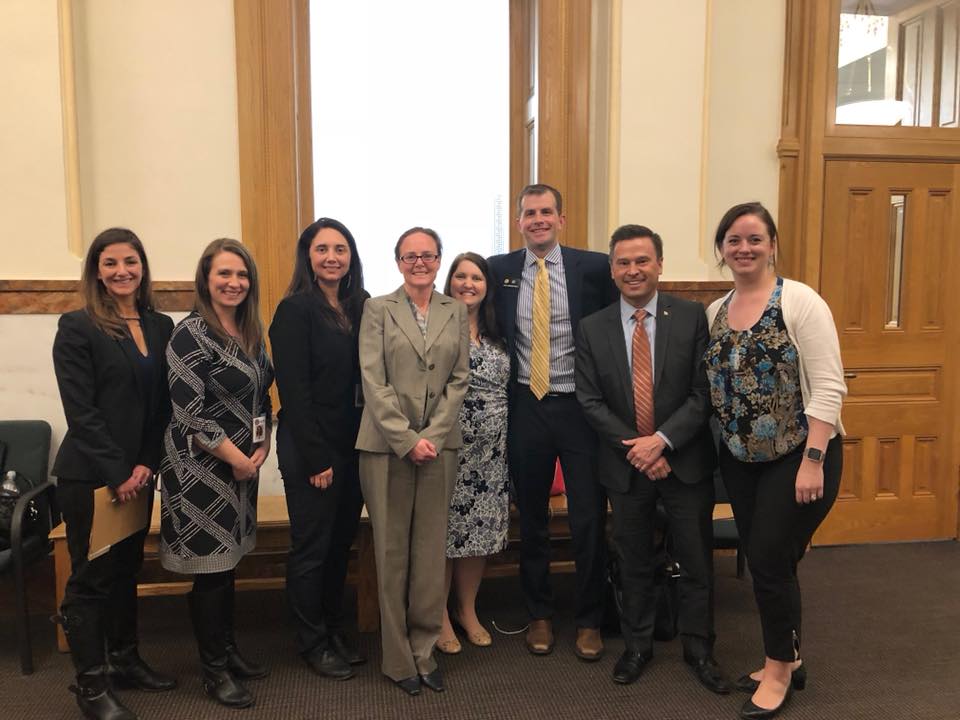
Pamela Maass Helps Colorado Domestic Violence Tort Bill Get Signed Into Law
If you were to suddenly die today, would your loved ones know how to quickly find your estate planning documents? Would they know how to access all of your financial accounts? How about your insurance policies? What about your login and password info to all of your digital assets?
One crucial part of estate planning that frequently gets overlooked is ensuring your loved ones can easily locate all of your planning documents and other key assets upon your death or incapacity. One simple way to handle this important task is to create a “When I Die” file. According to A Beginner’s Guide to the End: Practical Advice for Living Life and Facing Death, this is a “findable file, binder, cloud-based drive, or even a shoebox where you store estate documents and meaningful personal effects.”
This new book, authored by Shoshana Berger and BJ Miller, was recently excerpted in TIME magazine, and the excerpt discussed the importance of creating such a file in order to “save your loved ones incalculable time, money, and suffering” upon your death.
We agree with Berger and Miller, and would add that this file is every bit as important in the event of your potential incapacity, not just your death—and perhaps even more so. We also offer some additional guidance here about how to ensure your “When I Die” file provides maximum efficiency and effectiveness for the people you love.
Death can be a logistical nightmare
Following the death of her elderly father, Berger learned first-hand how agonizing it can be to not have a “When I Die” file. Though her father made his will and trust easily accessible, Berger and her sister spent nearly two years tracking down his other planning documents, assets, and finalizing his affairs.
Berger recalls “sleuthing through his file cabinet and mail and requesting what seemed like a mountain of duplicate death certificates to prove to various companies that he had actually died.”
Berger recommends that in addition to creating your “When I Die” file, you should also call your internet, cable, cell phone providers (as well and any other companies that bill you on an ongoing basis) and add your partner or children as joint owners. Unless you add a loved one’s name to these accounts, Berger says those you leave behind could be in for a torturous ordeal.
“If billing accounts are not in both your and a loved one’s name, your survivors will end up spending hours… begging bureaucrats to shut them down or convert the accounts to their name so they can manage them,” she says. “Think of every frustrating call you’ve had with your cell provider, and then multiply it by 10.”
Beyond burdening your loved ones with needless work and expense, if your planning documents, such as wills, prenuptial agreements, and insurance policies, can’t be located, it will be as if they never existed. The same goes for valuable assets like stocks, bank accounts, and other financial property no one knows about.
Given this, you should make sure your “When I Die” file contains an updated inventory of all your assets and their location. And don’t forget to include your online property in this inventory.
Don’t forget your digital assets
When it comes to digital assets like cryptocurrency, email, photos, video, and social media, your loved ones must not only be able to locate these items, they must also know how to access them. Given this, you should include any related login and password information in your “When I Die” file, along with detailed instructions about how to get into the accounts.
If you store your file online, password management apps like LastPass can greatly simplify this effort. In fact, we highly recommend you scan and upload copies of ALL the items in your “When I Die” file to the cloud and store them online. This not only makes your file much easier to access, it also prevents it from being destroyed in a fire, flood, or other natural disaster.
What to include in your file
Because the TIME excerpt only includes a partial collection of the items Berger and Miller suggest including in your “When I Die” file (their book has the full list), we’ve added a few items to their list below to provide a more detailed inventory.
- An updated inventory of all your assets and their location, including password and access info for all digital assets
- An advance healthcare directive
- A will and living trust (with certificate of trust)
- Marriage or divorce certificate(s)
- Instructions for your funeral and final disposition
- An ethical will explaining why you made the choices you did in your real will
- Letters, cards, photos, and other treasured sentimentals
- If you have minor children, a Kids Protection Plan naming long and short-term guardians, along with detailed care instructions for both
Get your affairs in order – before it’s too late
Each family is unique, so this is just a minimum of what can be included in your “When I Die” file. We have systems in place to help ensure all of your assets are properly inventoried throughout your lifetime for the utmost convenience and care of those you love most.
And because death or incapacity can strike at any moment, don’t wait to get your affairs in order. If you do, your loved ones might experience the same lengthy ordeal Berger did when her dad died.
Proper estate planning can keep your family out of conflict, out of court, and out of the public eye. If you’re ready to create a comprehensive estate plan, contact us to schedule your Family Wealth Planning Session. Even if you already have a plan in place, we will review it and help you bring it up to date to avoid heartache for your family. Schedule online today.

Why You Need To Add a ‘When I Die’ File to Your Estate Plan
This is the fourth in an ongoing series of articles discussing the true costs and consequences of failed estate planning. The series highlights a few of the most common—and costly—planning mistakes we encounter with clients.
If you’re like most people, you probably view estate planning as a burdensome necessity—just one more thing to check off of life’s endless “to-do” list.
You may shop around and find a lawyer to create planning documents for you, or you might try creating your own DIY plan using online documents. Then, you’ll put those documents into a drawer, mentally check estate planning off your to-do list, and forget about them.
The problem is, your estate plan is not a one-and-done type of deal.
In fact, if it’s not regularly updated when your assets, family situation, and/or the laws change, your plan will be totally worthless when your family needs it. What’s more, failing to regularly update your plan can create its own unique set of problems that can leave your family worse off than if you’d never created a plan at all.
The following true story illustrates the consequences of not updating your plan, and it happened to the founder and CEO of New Law Business Model, Alexis Neely. Indeed, this experience was one of the leading catalysts for her to create the new, family-centered model of estate planning we use with all of our clients.
The father-in-law story
When Alexis was in law school, her father-in-law died. He’d done his estate planning—or at least thought he had. He paid a Florida law firm roughly $3000 to prepare an estate plan for him, so his family wouldn’t be stuck dealing with the hassles and expense of probate court or drawn into needless conflict with his ex-wife.
And yet, after his death, that’s exactly what did happen. His family was forced to go to court in order to claim assets that were supposed to pass directly to them. And on top of that, they had to deal with his ex-wife and her attorneys in the process.
Alexis couldn’t understand it. If her father-in-law paid $3,000 for an estate plan, why were his loved ones dealing with the court and his ex-wife? It turned out that not only had his planning documents not been updated, but his assets were not even properly titled.
Alexis’ father-in-law had created a trust so that when he died, his assets would pass directly to his family and they wouldn’t have to endure probate, but some of his assets had never been transferred into the name of his trust from the beginning. And since there was no updated inventory of his assets, there was no way for his family to even confirm everything he had when he died. To this day, one of his accounts is still stuck in the Florida Department of Unclaimed Property.
Alexis thought for sure this must be malpractice. But after working for one of the best law firms in the country and interviewing other top estate-planning lawyers across the country, she confirmed what happened to her father-in-law wasn’t malpractice at all. In fact, it was common practice.
When Alexis started her own law firm, she did so with the intention and commitment that she would ensure her clients’ plans would work when their families needed it and create a service model built around that.
Keep your plan up to date
We hear similar stories from our clients all the time. Indeed, outside of not creating any estate plan at all, one of the most common planning mistakes we encounter is when we get called by the loved ones of someone who has become incapacitated or died with a plan that no longer works. By the time they contact us, however, it’s too late.
We recommend you review your plan annually to make sure it’s up to date, and immediately amend your plan following events like divorce, deaths, births, and inheritances. We have built-in systems and processes to ensure your plan is regularly reviewed and updated, so you don’t need to worry about whether you’ve overlooked anything important as your life changes, the law changes, and your assets change.
You should also create (and regularly update) an inventory of all your assets, including digital assets like cryptocurrency, photos, videos, and social media accounts. This way, your family will know what you have and how to find it when something happens to you, and nothing you’ve worked so hard for will be lost to your state’s Department of Unclaimed Property.
We’ll not only help you create a comprehensive asset inventory, but we’ll make sure it stays up to date throughout your lifetime.
Properly title your trust assets
When you create a trust, it’s not enough to list the assets you want it to cover. You have to transfer the legal title of certain assets—real estate, bank accounts, securities, brokerage accounts—to the trust, known as “funding” the trust, in order for them to be disbursed properly.
While most lawyers will create a trust for you, few will ensure your assets are properly funded. We’ll not only make sure your assets are properly titled when you initially create your trust, we’ll also ensure that any new assets you acquire over the course of your life are inventoried and properly funded to your trust.
This will keep your assets from being lost, as well as prevent your family from being inadvertently forced into court because your plan was never fully completed.
Keep your family out of court and out of conflict
Our planning services go far beyond simply creating documents and then never seeing you again. Indeed, we’ll develop a relationship with your family that lasts not only for your lifetime, but for the lifetime of your children and their children, if that’s your wish.
We’ll support you in not only creating a plan that keeps you family out of court and out of conflict in the event of your death or incapacity, but we’ll ensure your plan is regularly updated to make certain that it works and is there for your family when you cannot be. Contact us today to get started.
Proper estate planning can keep your family out of conflict, out of court, and out of the public eye. If you’re ready to create a comprehensive estate plan, contact us to schedule your Family Wealth Planning Session. Even if you already have a plan in place, we will review it and help you bring it up to date to avoid heartache for your family. Schedule online today.

The Real Cost To Your Family of Failed Estate Planning: Not Updating Your Plan
This is the third in an ongoing series of NLBM articles discussing the true costs and consequences of failed estate planning. The series highlights a few of the most common—and costly—planning mistakes we encounter with clients. If the series exposes any potential gaps or weak spots in your plan, meet with a lawyer to learn how to properly address them.
When it comes to putting off or refusing to create an estate plan, your mind can concoct all sorts of rationalizations: “I won’t care because I’ll be dead,” “I’m too young,” “That won’t happen to me,” or “My family will know what to do.”
But these thoughts all come from a mix of egoic pride, denial, and above all, we imagine, a lack of real education about estate planning and the consequences to your family. Once you understand exactly what planning is designed to prevent and support, you’ll realize there really is no acceptable excuse for not having a plan, provided you are able to plan and truly care about your family’s experience after you die or if you become incapacitated.
Indeed, the first step in creating a proper plan is to thoroughly understand the potential consequences of going without one. In the event of your death or incapacity, not having a plan could be incredibly traumatic and costly for your family, who will be left to deal with the mess you’ve left behind.
While each estate and family are unique, here are some of the things most likely to happen to you and your loved ones if you fail to create any estate plan at all.
Your family will have to go to court
If you don’t have a plan, or only have a will (yes, even with a will), you’re forcing your family to go through probate upon your death. Probate is the legal process for settling your estate, and even if you have a will, it’s notoriously slow, costly, and public. But with no plan at all, probate can be a true nightmare for your loved ones.
Depending on the complexity of your estate, probate can take months or even years to complete. And like most court proceedings, probate can be expensive. In fact, once all of your debts, taxes, and court fees have been paid, there might be nothing left for anyone to inherit. And if there are any assets left, your family will likely have to pay hefty attorney’s fees and court costs in order to claim them.
Yet the most burdensome part of probate is the frustration and anxiety it can cause your loved ones. In addition to grieving your death, planning your funeral, and contacting everyone you’re close with, your family will be stuck dealing with a crowded court system that can be challenging to navigate even in the best of circumstances. Plus, the entire affair is open to the public, which can make things exponentially more arduous for those you leave behind, especially if the wrong people take an interest in your family’s affairs.
The expense and drama of the court system can be almost totally avoided with proper planning. Using a trust, for example, we can ensure that your assets pass directly to your family upon your death, without the need for any court intervention. Instead, so long as you have planned properly, just about everything can happen in the privacy of our office and on your family’s time.
You have no control over who inherits your assets
If you die without a plan, the court will decide who inherits your assets, and this can lead to all sorts of problems. Who is entitled to your property is determined by our state’s intestate succession laws, which hinge largely upon on whether you are married and if you have children.
Spouses and children are given top priority, followed by your other closest living family members. If you’re single with no children, your assets typically go to your parents and siblings, and then more distant relatives if you have no living parents or siblings. If no living relatives can be located, your assets go to the state.
But you can change all of this with a plan and ensure your assets pass the way you want.
It’s important to note that state intestacy laws only apply to blood relatives, so unmarried partners and/or close friends would get nothing. If you want someone outside of your family to inherit your property, having a plan is an absolute must.
If you’re married with children and die with no plan, it might seem like things would go fairly smoothly, but that’s not always the case. If you’re married but have children from a previous relationship, for example, the court could give everything to your spouse and leave your children out. In another instance, you might be estranged from your kids or not trust them with money, but without a plan, state law controls who gets your assets, not you.
Moreover, dying without a plan could also cause your surviving family members to get into an ugly court battle over who has the most right to your property. Or if you become incapacitated, your loved ones could even get into conflict around your medical care. You may think this would never happen to your loved ones, but we see families torn apart by it all the time, even when there’s not significant financial wealth involved.
You can create a plan that handles your assets and your care in the exact manner you wish, taking into account all of your family dynamics, so your death or incapacity won’t be any more painful or expensive for your family than it needs to be.
You have no control over your medical, financial, or legal decisions in the event of your incapacity
Most people assume estate planning only comes into play when they die, but that’s dead wrong. Yes, pun intended.
Indeed, though planning for your eventual death is a big part of the process, it’s just as important—if not even more so—to plan for your potential incapacity due to accident or illness.
If you become incapacitated and have no plan in place, your family would have to petition the court to appoint a guardian or conservator to manage your affairs. This process can be extremely costly, time consuming, and traumatic for everyone involved. In fact, incapacity can be a much greater burden for your loved ones than your death. The first article in this series offers an in-depth look at the consequences of failing to plan for incapacity.
You can put planning vehicles in place that grant the person(s) of your choice the immediate authority to make your medical, financial, and legal decisions for you in the event of your incapacity. You can also implement planning strategies that provide specific guidelines detailing how you want your medical care to be managed, including critical end-of-life decisions.
You have no control over who will raise your children
If you’re the parent of minor children, the most devastating consequence of having no estate plan is what could happen to your kids in the event of your death or incapacity. Without a plan in place naming legal guardians for your kids, it will be left for a judge to decide who cares for your children. And this could cause major heartbreak not only for your children, but for your entire family.
You’d like to think that a judge would select the best person to care for your kids, but it doesn’t always work out that way. Indeed, the judge could pick someone from your family you’d never want to raise them to adulthood. And if you don’t have any family, or the family you do have is deemed unfit, your children could be raised by total strangers.
What’s more, if you have several relatives who want to care for your kids, they could end up fighting one another in court over who gets custody. This can get extremely ugly, as otherwise well-meaning family members fight one another for years, making their lawyers wealthy, while your kids are stuck in the middle.
If you have minor children, your number-one planning priority should be naming legal guardians to care for your children if anything should happen to you.
Naming legal guardians won’t keep your family out of court, as a judge is always required to finalize the legal naming of guardians in the event of death or incapacity of parents. But if it’s important to you who raises your kids if you can’t, you need to give the judge clear direction.
On top of that, you need to take action to keep your kids out of the care of strangers over the immediate term, while the authorities figure out what to do if something happens to you.
No more excuses
Given the potentially dire consequences for both you and your family, you can’t afford to put off creating your estate plan any longer. We’ll guide you step-by-step through the planning process to ensure you’ve taken all the proper precautions to spare your loved ones from needless frustration, conflict, and expense.
But the biggest benefit you stand to gain from putting a plan in place is the peace of mind that comes from knowing that your loved ones will be provided and cared for no matter what happens to you.
Proper estate planning can keep your family out of conflict, out of court, and out of the public eye. If you’re ready to create a comprehensive estate plan, contact us to schedule your Family Wealth Planning Session. Even if you already have a plan in place, we will review it and help you bring it up to date to avoid heartache for your family. Schedule online today.

The Real Cost To Your Family: Having No Estate Plan At All
Last week, we discussed the benefits of a unique estate planning vehicle known as a Lifetime Asset Protection Trust (LAPT). We referenced this planning tool in the context of how it could have protected Clare Bronfman, the heiress to the multi-billion-dollar Seagram’s fortune, who was manipulated into blowing much of her $200 million inheritance by financing the cult-like group known as Nxivm.
Yet Clare’s case was quite extreme in terms of both the amount of her inheritance and the circumstances that wiped out her wealth. Though an LAPT would have almost undoubtedly protected both her and her family’s fortune, this planning vehicle can benefit families with far less wealth than Clare’s—and offer asset protection from far less outlandish threats.
Indeed, LAPTs are primarily designed to protect your loved ones and their inheritance from much more common threats, such as divorce, serious debt, devastating illness, and unfortunate accidents. At the same time, LAPTs can provide your heirs with a unique educational opportunity in which they gain valuable experience managing and growing their inheritance, while enjoying airtight asset protection.
To demonstrate how LAPTs can provide protection to families of all asset profiles, here we’ll describe another true story involving a tragic—yet much more relatable—life scenario. While the following events are entirely true, the individual’s name has been changed for privacy protection.
The flooded penthouse
Eric was staying at a friend’s apartment in New York City. The apartment was the penthouse of the building, and Eric decided to run himself a bath. While the bath was running, another friend called and invited Eric to go out with him, which he did.
At about 2 a.m., Eric came back to the apartment and discovered he made a huge mistake and left the bath running when he left the apartment. The resulting flood caused more than $400,000 in damage to the apartment and the one below it.
While there was insurance to cover the damage, the insurance company sued Eric for what’s known as “subrogation,” meaning the company sought to collect the $400,000 they paid out to repair the damage Eric caused to the property.
Because the flood was due to his negligence in leaving the bath running—a simple, but costly mistake—Eric was responsible for the damage. Now here’s where the inheritance piece comes into play and why it’s so important to leave whatever you’re passing on to your heirs in a protected trust. If Eric had received an inheritance outright in his own name, he would have lost $400,000 of it to this unfortunate mishap.
However, if Eric had received an inheritance in an LAPT, instead of an outright distribution, his inheritance would be completely protected from such a lawsuit—and just about any other threat imaginable.
Safeguarding your children’s inheritance
If you’re like most people, you hope to leave an inheritance for your children. Indeed, it may even be one of the primary motivations driving your life’s work. Yet if you don’t take the proper precautions, the wealth you pass down can easily be lost or squandered. And in certain cases, such as Clare’s, the inheritance can even end up doing more harm than good.
When it comes to leaving an inheritance, most lawyers will advise you to place the money in a trust, which is the right thing to do. However, most lawyers would have you distribute the trust assets outright to your loved ones at specific ages, such as one-third at 25, half of the balance at 35, and the rest at 40. Check your own trust now to see if it does this or something similar.
But giving outright ownership of the trust assets in this way puts everything you’ve worked so hard to leave behind at risk. While a trust may protect your loved ones’ inheritance as long as the assets are held by the trust, once the assets are disbursed to the beneficiary, they can be lost to future creditors, a catastrophic accident or illness, divorce, bankruptcy—or as in Eric’s case, a major lawsuit.
Rather than risking their inheritance by leaving it outright to your children at certain ages or following certain life events, such as graduating college, you can gift your assets to your children at the time of your death using an LAPT. When you gift an inheritance to your kids via an LAPT, the trustee of the trust owns the assets, not your children.
Therefore, if your kids ever get divorced, file bankruptcy, have a major medical issue, or are ordered to pay damages in a lawsuit, they can’t lose their inheritance because they never owned it in the first place. An LAPT can be built into a revocable trust, which becomes irrevocable at the time of your death and holds your loved one’s inheritance in continued trust for their lifetime.
A trustee of your choice owns the trust assets upon your death. Because the LAPT is discretionary, this individual has the power to distribute the assets at their own discretion, instead of being required to release them in a rigid structure. This discretionary power enables the trustee to control when and how your kids can access their inheritance, so they’re not only protected from outside threats like ex-spouses and creditors, but from their own poor judgment as well.
And if you’re afraid that a trustee would keep your beneficiary from using the trust assets, you can build in protections to ensure your beneficiary has flexible use, unless there would be a significant risk of loss if he or she did. You can even allow your beneficiaries to become Co-Trustees and then sole Trustees of their own LAPT.
And contrary to what some might think, LAPTs are not just for the mega wealthy. In fact, the asset protection they provide is even more valuable for those leaving behind a modest inheritance. With less money to pass on, it’s much more likely that the inheritance could be totally wiped out by a single unfortunate event, as opposed to a much larger inheritance, which might survive even multiple mishaps.
An educational opportunity
Additionally, you can use an LAPT as a unique way to educate your children about investing, charitable giving, and even running a business. This is done by adding provisions into the trust allowing the beneficiary to become co-trustee of the trust with a person you’ve chosen and trust to support their education.
In this way, the beneficiary would become co-trustee at a predetermined age or stage of life and be able to use and control the trust assets under the supervision of the other co-trustee you’ve named to guide them. You can even allow the beneficiary to become sole trustee later in life, once he or she has been properly educated and is ready to assume full control. As sole trustee, the beneficiary would be able to resign and replace themselves with an independent trustee, if necessary, to provide the ultimate asset protection.
There are several different ways we can structure the trust to meet your family’s unique needs, so be sure to ask us what options might be best for your particular situation.
A priceless gift
If you wish to protect your child’s inheritance from all possible threats, while incentivizing them to invest and grow the money rather than squander and waste it, consider including a Lifetime Asset Protection Trust in your plan for the ones you love. Indeed, the trust’s highly flexible structure, combined with its bulletproof asset protection make it one of the most valuable gifts you can give your loved ones.
Proper estate planning can keep your family out of conflict, out of court, and out of the public eye. If you’re ready to create a comprehensive estate plan, contact us to schedule your Estate Plan Strategy Session. Even if you already have a plan in place, we will review it and help you bring it up to date to avoid heartache for your family. Schedule online today.

Safeguard Your Children’s Inheritance With a Lifetime Asset Protection Trust
When you create your estate plan, the idea that one of your adult children would ever use their inheritance to bankroll a cult is probably something you’d never dream of, much less anticipate.
Yet that’s exactly what 40-year-old Clare Bronfman, heiress to the multi-billion-dollar Seagram’s fortune, did with hers.
In the end, with her inheritance—and the power that came with it—she was led her down a dark path that seems almost too outlandish to be true.
In May, Clare pled guilty to felony charges of harboring an illegal alien and fraudulent use of a deceased person’s identity as part of a plea deal with federal prosecutors. The charges stem from her role as an executive board member of Nxivm (pronounced NEX-ee-um), a group that prosecutors described as a “deeply manipulative pyramid scheme” that forced some of its members to endure slave-like conditions and even have sex with the group’s leader and founder, Keith Raniere.
Had she gone to trial for her involvement with Nxivm, Clare would have faced up to 25 years in prison. But given her plea, she’ll likely serve just over two years. Her sentencing is scheduled for July 25.
Following Clare’s plea, Raniere, 58, was found guilty in June on seven felony counts, including racketeering and sex trafficking. He faces up to life in prison when he’s sentenced on September 25. His conviction comes following a six-week trial that exposed the world to Nxivm’s sordid inner workings and put wealth’s dark side on full display.
Unforeseen threats
Clare’s sad story highlights just how risky it can be to leave money outright to your children. Indeed, bestowing significant wealth upon your children or grandchildren can turn out to be a blessing—or it can just as easily be a curse.
Fortunately, there are proactive estate planning solutions designed to safeguard your adult children from such scenarios. And these planning protections aren’t just for the extraordinarily rich like Clare’s family—inheriting even relatively modest amounts of wealth can lead to similar issues. Regardless of your asset profile, we can help you put the proper planning vehicles in place to help prevent your heirs from falling prey to wealth’s darkest temptations—or even losing their inheritance to simple mistakes.
Indeed, the planning strategies we describe here can safeguard your child’s inheritance from being depleted out by other, less devious events, such as a divorce, a catastrophic medical expense, or even a simple accident. You just never know what life has in store for your heirs, and the right planning protections can ensure their inheritance is protected from practically all potential threats—even those you could never possibly imagine.
From self-help to self-sabotage
Clare joined Nxivm, which was billed as a life-coaching program, in 2002 at age 23. She reportedly joined the group in hopes that its mentoring might help her fulfill her dream of making the U.S. Olympic equestrian team. In large part due to her substantial financial contributions, Clare quickly rose to the top ranks of the organization and became increasingly close with Raniere.
According to a recent Forbes article, Raniere took advantage of Clare’s estranged relationship with her elderly father, Edgar Bronfman Sr., and emotionally manipulated her into believing that her family’s money was “evil and that she had to purify it by spending it on ethical things like Nxivm.”
To help convince her, Raniere constantly reminded Clare that the Seagram’s fortune was made selling alcohol, and that her grandfather, Samuel Bronfman, earned millions by conveniently setting up his Canadian whiskey distillery directly on the U.S.-Canada border during Prohibition.
Under the spell of Raniere’s devious manipulation, Clare reportedly came to view her financial support of Nxivm as a way to make up for her family’s past. All total, Clare is said to have poured roughly $150 million into Nxivm. Much of the money was spent on funding Raniere’s failed investment schemes in real estate and commodities.
Another big chunk of Clare’s inheritance was spent suing Nxivm’s detractors. During her time with the group, Clare reportedly hired nearly 60 lawyers and spent approximately $50 million on lawsuits against journalists, ex-girlfriends of Raniere, and others who were critical of the group.
Big money can cause big problems
While we don’t know the exact age Clare came into her money or just how much of it she had access to, her total inheritance was valued at an estimated $200 million. The inheritance was reportedly held in a trust, but given that she funneled roughly three-fourths of that sum into Nxivm in just more than 15 years, it’s likely her money was disbursed outright with little or no direction on how it could be used.
Though her case is extreme, Clare is certainly not the first wealthy person to be negatively impacted by inheriting too much money at a young age—nor will she be the last. Similar cases occur quite often, and no matter how well adjusted your children or grandchildren may seem, there’s just no way to accurately predict how their inheritance will affect them.
One unique planning vehicle designed to prevent the potential perils of outright distributions is a Lifetime Asset Protection Trust (LAPT). These trusts last for the lifetime of their respective beneficiaries, and provide them with a unique and priceless gift. With an LAPT, for instance, the beneficiary can use and invest the trust assets, yet at the same time, the trust offers airtight asset protection from unexpected life events, such as divorce or serious debt, which have the potential to wipe out their inheritance.
Exercise your discretion
When drafted properly, an LAPT can be used to educate your beneficiary on how to handle their inheritance. This is done by allowing the beneficiary to become a co-trustee with someone you’ve named at a specific age or stage of life, and then the beneficiary can become the sole trustee later in life, once he or she has been properly educated and are ready to take over.
The LAPT is discretionary, which means that the trust would not only protect your heir from outside threats, like creditors and ex-spouses, but also from their own mistakes. The trustee you name holds the trust’s assets upon your death. This gives the person you choose the power to distribute its assets to the beneficiary at their discretion, rather than requiring him or her to release the assets in more structured ways, such as in staggered distributions at certain ages.
Your direction and guidance
Many of our clients choose to provide non-binding guidelines directing the trustee on how the client would choose to make distributions in up to 10 different scenarios, such as for the purchase of a home, a wedding, the start of a business, and/or travel. Some clients choose to provide guidelines around how they would make investment decisions, as well.
This ensures that future trustees will be aware of your values when determining whether to make distributions, as well as how to invest trust assets, rather than operating in a vacuum of information, which often leads to problems down the road. In many cases, the beneficiary may eventually become the trustee him or herself, and then resign and appoint an independent trustee, if needed, for asset-protection purposes.
Don’t take any chances
You might think that something as depraved as what happened to Clare Bronfman would never happen to your children or grandchildren—but don’t be so sure. It can, and does, happen to even the most successful and upstanding among us. Having too much money at a young age is a Pandora’s Box, so it’s best not to open it.
Yet even if your heirs never experience a threat as evil as Nxivm and Raniere, their inheritance is still vulnerable to more common threats like divorce, poor spending, and sudden accident or illness.
Meet with a trusted advisor to see if a Lifetime Asset Protection Trust is the right option for protecting your family wealth and loved ones from situations and circumstances (no matter what they may be), which are simply impossible to foresee.
Proper estate planning can keep your family out of conflict, out of court, and out of the public eye. If you’re ready to create a comprehensive estate plan, contact us to schedule your Estate Plan Strategy Session. Even if you already have a plan in place, we will review it and help you bring it up to date to avoid heartache for your family. Schedule online today.


.svg)
