

Welcome to the Blog
Keep up with the latest news and updates
Retirement planning is one of life’s most important financial goals. Indeed, funding retirement is one of the primary reasons many people put money aside in the first place. Yet many of us put more effort into planning for our vacations than we do to prepare for a time when we may no longer earn an income.Whether you’ve put off planning for retirement altogether or failed to create a truly comprehensive plan, you’re putting yourself at risk for a future of poverty, penny pinching, and dependence. The stakes could hardly be higher.When preparing for your final years, it’s not enough to simply hope for the best. You should treat retirement planning as if your life depended on it—because it does. To this end, even well thought-out plans can contain fatal flaws you might not be aware of until it’s too late.Have you committed any of the following three deadly sins of retirement planning?
1. Not having an actual plan
Even if you’ve been diligent about saving for retirement, without a detailed, goal-oriented plan, you’ll have no clear idea whether your savings strategies are working adequately or not. And such plans aren’t just about calculating a retirement savings number, funding your 401(k), and then setting things on auto-pilot. Once you know how much you’ll need for retirement, you have to plan for exactly how you’ll accumulate that money and monitor your success. The plan should include clear-cut methods for increasing income, reducing spending, maximizing tax savings, and managing investments when and where needed.What’s more, you should regularly review and update your asset allocation, investment performance, and savings goals to ensure you’re still on track to hit your target figure. With each new decade of your life (at least), you should adjust your savings strategies to match the specific needs of your new income level and age.The plan should also take into consideration unforeseen contingencies, such as downturns in the economy, health emergencies, layoffs, and inflation. Failing to plan, as they say, is planning to fail.
2. Not maximizing the use of tax saving retirement accounts
One way or another, the money you put aside for retirement is going to be taxed. However, by investing in tax-saving retirement accounts, you can significantly reduce the amount of taxes you’ll pay.Depending on your employment and financial situation, there are numerous different plans available. From traditional IRAs and 401(k)s to Roth IRAs and SEP Plans, you should consider using one or more of these investment vehicles to ensure you achieve the most tax savings possible. What’s more, many employers will match your contributions to these accounts, which is basically free money. If your employer offers matching funds, you should not only use these accounts, but contribute the maximum amount allowed—and do so as early as possible.Since figuring out which of these plans will offer the most tax savings can be tricky—and because tax laws are constantly changing—you should consult with us and a professional financial advisor to find the one(s) best suited for your particular situation. Paying taxes is unavoidable, but there’s no reason you should pay any more than you absolutely have to.
3. Underestimating health care costs
One of the most frequent mistakes people make when planning for retirement is assuming that things will always stay the same. Whether it’s tax laws, inflation, market conditions, or marital status, if you don’t carefully consider how your circumstances might change with time, you’re putting yourself and your savings at serious risk.While many such contingencies are mere possibilities, the one thing that’s certain to change with time is your body and mind. It’s an inescapable fact that our health naturally declines with age, so one of the most risky things you can do is not plan for increased health-care expenses. With many employers eliminating retiree health-care coverage, Medicare premiums rising, and the extremely volatile nature of health insurance law, planning for your future health-care expenses is absolutely critical. And it’s even more important seeing that we’re now living longer than ever before. Plus, these considerations are assuming that you don’t fall victim to a catastrophic illness or accident. The natural aging process is expensive enough to manage, but a serious health-care emergency can wipe out even the most financially well off. But with so many unknowns, how can you possibly prepare for every possible scenario? The truth is, you can’t. That said, you should take advantage of every available precaution within your means. This might mean delaying retirement, purchasing supplemental insurance, investing in long-term care insurance, opening a Health Savings Account, or some combination of these options. We can advise you on precautions that are right for you and your family.
Start preparing for retirement now
The best way to maximize your retirement funding is to start planning (and saving) as soon as possible. In fact, your retirement savings can be exponentially increased simply by starting to plan at an early age.
We don’t just draft documents; we ensure you make informed and empowered decisions about life and death, for yourself and the people you love. That’s why we offer an Estate Plan Strategy Session during which you will get more financially organized than you’ve ever been before, and make all the best choices for the people you love. You can begin by calling our office today to schedule an Estate Plan Strategy Session and mention this article to find out how to get this $750 session at no charge. Schedule online today.

3 Deadly Sins of Retirement Planning
You might think you can save time and money by using do-it-yourself estate planning documents you find online. You’re probably anxious to check estate planning off your life’s to-do list, and these forms offer a seemingly quick and inexpensive way to handle this important task.You may even realize such generic plans aren’t as high quality as those drafted with an attorney’s help, but with your hectic schedule, a DIY will is just way more convenient. Besides, having “something” in place is better than having nothing, right?Unfortunately, this is one case in which SOMETHING is not better than nothing. Indeed, the false sense of security offered by DIY wills can lead you to believe you have things covered and no longer have to worry about estate planning. The reality, however, is that such generic forms could end up costing the loved ones you leave behind more money and heartache than if you’d never gotten around to doing anything at all.In this way, DIY wills and other legal documents are among the most dangerous choices you can make for the people you love. In part one, we discussed the many ways DIY plans can fail to keep your family out of court and out of conflict, and here we’ll explain how these generic documents can leave the people you love most of all—your children—at risk.
The people you love most
It’s probably distressing to think that by using a DIY will you could force your loved ones into court or conflict in the event of your incapacity or death. And if you’re like most parents, it’s probably downright unimaginable to contemplate your children’s care falling into the wrong hands. Yet that’s exactly what could happen if you rely on free or low-cost fill-in-the-blank wills found online, or even if you hire a lawyer who isn’t equipped or trained to plan for the needs of parents with minor children.
Naming and legally documenting guardians entails a number of complexities that most people aren’t aware of. Even lawyers with decades of experience frequently make at least one of six common errors when naming long-term legal guardians.
If wills drafted with the help of a professional are likely to leave your children at risk, the chances that you’ll get things right on your own are pretty much zero.
What could go wrong?
If your DIY will names legal guardians for your kids in the event of your death, that’s great. But does it include back-ups? And if you named a couple to serve, how is that handled? Do you still want one of them if the other is unavailable due to illness, injury, death, or divorce?
And what happens if you become incapacitated and are unable to care for your children? You might assume the guardians named in the DIY will would automatically get custody, but your will isn’t even operative in the event of your incapacity.Or perhaps the guardians you named in the will live far from your home, so it would take them a few days to get there. If you haven’t made legally-binding arrangements for the immediate care of your children, it’s highly likely that they will be placed with child protective services until those guardians arrive. Even if you name family who live nearby as guardians, your kids are still at risk because it’s possible they might not be immediately available if and when needed.
And who even knows where your will is or how to access it?
There are simply far too many potential errors you can make when you go it alone.
The Kids Protection Plan®
To ensure your children are never raised by someone you don’t trust or taken into the custody of strangers (even temporarily), consider creating a comprehensive Kids Protection Plan®, which only Personal Family Lawyers® like us are trained and licensed to counsel you through and prepare.This is so important, we’ve even created an easy-to-use (and absolutely free) website you can visit right now to take the first steps in creating the proper legal documents naming the long-term guardians you’d want to care for your children if you could not. If you have minor children at home, you should immediately use this resource to get started, and then schedule a follow-up visit with us to put the full Kids Protection Plan® in place.
The the right “something”
Protecting your family and assets in the event of your death or incapacity is such a monumentally important task you should never consider winging it with a DIY plan. No matter how busy you are or how little wealth you own, the potentially disastrous consequences inherent in such plans are simply too great—often they’re not even worth the paper they’re printed on. Plus, proper estate planning doesn’t have to be super expensive, stressful, or time consuming. Working with us as your Personal Family Lawyer®, planning will not only be as stress-free as possible, but we offer options for all budgets and asset values.What’s more, many of our clients actually find the process highly rewarding. Our proprietary systems provide the type of peace of mind that comes from knowing that you’ve not only checked estate planning off your to-do list, but you’ve done it using the most forethought, experience, and knowledge available.
Act now
If you’ve yet to do any planning, contact us to schedule a Family Wealth Planning Session. This evaluation will allow us to determine if a simple will or some other strategy, such as a living trust, is your best option. If you’ve already created a plan—whether it’s a DIY job or one created with another lawyer’s help—contact us to schedule an Estate Plan Review and Check-Up. We’ll ensure your plan is not only properly drafted and updated, but that it has all of the protections in place to prevent your children from ever being placed in the care of strangers or anyone you’d never want raising them. No matter what you do, make certain you have a “something” that’s actually better than nothing. Contact us as your Personal Family Lawyer® today, and we’ll provide you with that level of confidence—and so much more.
We don’t just draft documents; we ensure you make informed and empowered decisions about life and death, for yourself and the people you love. That’s why we offer a Family Wealth Planning Session, ™ during which you will get more financially organized than you’ve ever been before, and make all the best choices for the people you love. You can begin by calling our office today to schedule a Family Wealth Planning Session and mention this article to find out how to get this $750 session at no charge. Schedule online today.

When Something is NOT Better Than Nothing—Part 2
Go online, and you’ll find tons of websites offering do-it-yourself estate planning documents. Such forms are typically quite inexpensive. Simple wills, for example, are often priced under $50, and you can complete and print them out in a matter of minutes.In our uber-busy lives and DIY culture, it’s no surprise that this kind of thing might seem like a good deal. You know estate planning is important, and even though you may not be getting the highest quality plan, such documents can make you feel better for having checked this item off your life’s lengthy to-do list.
But this is one case in which SOMETHING is not better than nothing, and here’s why:
A false sense of security
Creating a DIY will online can lead you to believe that you no longer have to worry about estate planning. You got it done, right?Except that you didn’t. In fact, you thought you “got it done” because you went online, printed a form, and had it notarized, but you didn’t bother to investigate what would actually happen with that document in place in the event of your incapacity or when you die.
In the end, what seemed like a bargain could end up costing your family more money and heartache than if you’d never gotten around to doing anything at all.
Creating a DIY will can lead you to believe that you no longer have to worry about estate planning. In the back of your mind, you might even promise that one day you’ll revisit and update your plan with something better, but chances are, having done “something” will lead you to put this off until it’s too late. By doing nothing, on the other hand, at least you won’t be lulled into a false sense of security, and estate planning will still be at the top of your life’s to-do list, as it should be until you handle it properly.
Not just filling out forms
Unfortunately, because many people don’t understand that estate planning entails much more than just filling out legal documents, they end up making serious mistakes with DIY plans. Worst of all, these mistakes are only discovered when you become incapacitated or die, and it’s too late. The people left to deal with your mistakes are often the very ones you were trying to do right by.
The primary purpose of wills and other estate planning tools is to keep your family out of court and out of conflict in the event of your death or incapacity. With the growing popularity of DIY wills, tens of thousands of families (and millions more to come) have learned the hard way that trying to handle estate planning alone can not only fail to fulfill this purpose, it can make the court cases and conflicts far worse and more expensive.
The hidden dangers of DIY wills
From the specific state you live in and the wording of the document to the required formalities for how it must be signed and witnessed, there are numerous potential dangers involved with DIY wills and other estate planning documents. Estate planning is most definitely not a one-size-fits-all deal. Even if you think you have a simple situation, that’s almost never the case. The following scenarios are just a few of the most common complications that can result from attempting to go it alone with a DIY will:
- Improper execution: For a will to be valid, it must be executed (i.e. signed and witnessed or notarized) following strict legal procedures. Such procedural requirements are designed to prevent foul play and vary by state. For example, many states require that you and every witness to your will must sign it in the presence of one another. If your DIY will doesn’t mention that or you don’t read the fine print and fail to follow this procedure, it can be worthless.
- Court challenges: Before the assets covered in a will can be transferred to your heirs, the will must go through the court process called probate. During probate, creditors, heirs, and other interested parties have the opportunity to contest your will or make claims against your estate. Though wills created with an attorney’s guidance can also be contested, DIY wills are not only far more likely to be challenged, but the chances of those challenges being successful are much greater than if you have an attorney-drafted will.
- Thinking a will is enough: It is almost never the case that a will alone is sufficient to handle all of your legal affairs. In the event of your incapacity, you would also need a health care directive and/or a living will plus a durable financial power of attorney. In the event of your death, a will does nothing to keep your loved one’s out of court. And if you have minor children, having a will alone could leave your kids’ at risk of being taken out of your home and into the care of strangers, at least temporarily.
In many ways, DIY will planning is the worst choice you can make for the people you love because you think you’ve got it covered, when you most certainly do not.
We don’t just draft documents; we ensure you make informed and empowered decisions about life and death, for yourself and the people you love. That’s why we offer a Estate Plan Strategy Session during which you will get more financially organized than you’ve ever been before, and make all the best choices for the people you love. You can begin by calling our office today to schedule an Estate Plan Strategy Session and mention this article to find out how to get this $750 session at no charge. Schedule online today.

When Something is NOT Better Than Nothing—Part 1
Want to know a proven way to live a more fulfilling life? All you have to do is fully accept the fact that one day you’re going to die.“I am of the nature to die. There is no way to escape death.” –Upajjhatthana Sutta
The unavoidable nature of death is a basic tenet found in every religion. Indeed, the acceptance of death is so important in Buddhism that “impermanence,” or the fact that everything born eventually dies, is at the top of the Buddha’s list of the three universal characteristics of existence.
Before religious practice, Tibetan Buddhists chant, “The whole world and its inhabitants are impermanent. The life of human beings is like a bubble. Death comes without warning; this body too will be a corpse.”
Such teachings may seem morbid, but they’re actually designed to awaken you from denial and inspire you to fully appreciate life because you never know when it will end.
“How sad is it that most of us only begin to appreciate our life when we are at the point of dying.” Sogyal Rinpoche
Numerous individuals have discovered that contemplating and accepting their own mortality is a powerful source of happiness. It may seem counterintuitive, but this isn’t something only found in religious teachings; it’s also been demonstrated by modern science.Countless healthcare professionals report that people facing terminal illness often experience an incredible sense of peace and fulfillment in the days and weeks before they die. Many of them describe the acceptance of death as a life-changing event, confessing they never knew what it meant to live until they knew they were going to die.The same is true for many who undergo a near-death experience (NDE). After staring death in the face, they report that their lives have much greater meaning. They frequently make dramatic life changes because they know without a doubt that any day, even today, might be their last.
“It is only in the face of death that man’s self is born.” -St. Augustine
You’ve undoubtedly heard the key to happiness is to be fully present in each and every moment. This advice is also derived from acceptance of death. By accepting that death is inevitable, we’re inspired to embrace every second of our lives with more gratitude and joy because we know that our existence is so fleeting. If you’ve been avoiding thinking about and preparing for death, you may be missing out on an incredible opportunity. What all of these experiences show us is that death is an essential part of what makes life so sweet.
One of the biggest steps in accepting death is to prepare for it with proper estate planning. And proper estate planning is needed, regardless of how big or small you think your estate is, because no matter what, your family is going to have to handle whatever you have when you’re gone. Indeed, facing life’s greatest fear head-on and using it as an opportunity to protect and provide for your family is one of the greatest gifts you can give yourself and those you love. If you’re ready to begin truly living your life, start by working with us.
We don’t just draft documents; we ensure you make informed and empowered decisions about life and death, for yourself and the people you love. That’s why we offer a Estate Plan Strategy Session during which you will get more financially organized than you’ve ever been before, and make all the best choices for the people you love. You can begin by calling our office today to schedule an Estate Plan Strategy Session and mention this article to find out how to get this $750 session at no charge. Schedule online today.

To Live a Happier Life, Start Thinking About Death Now
You might not be a big fan of their typical life choices, but the Kardashians recently demonstrated impressive wisdom in protecting their minor children using estate planning.
During a recent episode of Keeping Up With The Kardashians, Khloé Kardashian was preparing to give birth to her first child, daughter True. Khloé was second-guessing her initial choice to name her sister Kourtney as the child’s legal guardian in the event something happened to her or the baby’s father, Tristan Thompson. During her pregnancy, Khloé spent lots of time with her other sister Kimberly and her family, daughters North, Chicago, son Saint, and husband Kanye West. Watching her interacting with her own kids, Khloé really connected with Kim’s mothering style and pondered if she might be a better choice as guardian.
“I always thought Kourtney would be the godparent of my child, but lately I’ve been watching Kim, and she’s been someone I really gravitate to as a mom,” Khloé said.
To make things more challenging, Kourtney always assumed she’d be named guardian and said as much. Over the years, Khloé had lots of fun times with Kourtney’s family—sons Mason, Reign, and daughter Penelope—and Kourtney thought her own passion for motherhood would make her the natural choice.
For guidance, Khloé asked her mother, Kris Jenner, how she chose her kids’ guardians. Kris’ answer was to compare how her two sisters’ raised their own children.“You just have to think,” Kris told her. “‘Where would I want my child raised, in which environment? Who would I feel like my baby is going to be most comfortable and most loved?’”
In the end, Khloé chose Kim over Kourtney. She explained her decision had nothing to do with her respect or love of Kourtney; it was merely about which style of parenting she felt most comfortable with.“Watching Kimberly be a mom, I really respect her parenting skills—not that I don’t respect Kourtney’s, I just relate to how Kim parents more,” said Khloé. “I just have to make the best decision for my daughter.”
Lessons learned
Khloé’s actions are admirable for several reasons. First off, far too many parents never get around to legally naming a guardian to care for their children in the event of their death or incapacity. Khloé not only made her choice, but she did so before the child was even born.
Khloé also took the time to speak and spend time with her sisters beforehand, so the family understood the rationale behind her decision. Khloé was lucky her choices were close family members, so she had ample opportunity to experience both of their parenting styles.
Depending on your life situation, you might not be able to spend that much time vetting your choice. But at the very least, you should sit down with each of your top candidates to openly and intimately discuss what you’d expect of them as your child’s new parents.
Avoid conflict and court
Furthermore, with multiple family members vying for the guardian role, Khloé’s quick action may have prevented a potential nightmare. If she’d delayed naming a guardian and something happened to her, Kourtney, Kim, and even other family members could’ve gone to court seeking guardianship of True.
This could’ve lead to years of contentious legal battles that not only cost the family huge sums of money, but the potential hardship imposed on the children can be incalculable. Even if you think something like this would never happen to your family, why take the risk, especially when it’s so easy to avoid?
Get started now
While the Kardashians are wealthy and famous, you too can provide the exact same level of protection for your kids, even with minimal financial resources. It’s imperative as soon as it’s physically possible to choose someone who will step in to raise your children if you cannot. You must also legally document your choice and make sure the individual you’ve selected knows what to do if they’re called upon.
Many parents have no idea how to go about making this critical decision, much less create a legally binding plan, so they never get around to doing it. And even parents who have legally named a guardian (even with a lawyer’s help) often make at least one of six common mistakes that leave their children at risk.
This is because most lawyers aren’t aware of all that’s involved with planning for the well-being and care of minor children following their parents death or incapacity. As a Personal Family Lawyer®, one of our specialties is legal planning for the unique needs of those with minor children.
We’ve even created an easy-to-use (and absolutely free) website, where you can create legal documents naming long-term guardians for your children. You should immediately take this opportunity to ensure your kids are properly cared for by the person you trust most should anything happen to you.
And if you’ve already named guardians on your own or with a lawyer, wecan review your existing legal documents. We’ll determine whether you’ve made any of the six common mistakes that leave your kids vulnerable and help you fill those gaps.
Beyond naming legal guardians, with us as your Personal Family Lawyer®, we can create a comprehensive estate plan with all of the necessary legal documents to ensure the protection and well-being of your entire family and assets, no matter what happens. Contact us now.
We don’t just draft documents; we ensure you make informed and empowered decisions about life and death, for yourself and the people you love. That’s why we offer an Estate Plan Strategy Session, during which you will get more financially organized than you’ve ever been before, and make all the best choices for the people you love. You can begin by calling our office today to schedule an Estate Plan Strategy Session and mention this article to find out how to get this $750 session at no charge. Schedule online today.

Who Should Khloé Kardashian Choose as Legal Guardian For Her Child—One Instance Where ‘Keeping Up With the Kardashians’ Might Be A Good Idea
Maass Law attorney Pamela Maass was interviewed by FOX31 on her impression of the Kavanaugh hearing. Check out this clip to hear her take on how the contentious hearing went.
Pamela is an experienced sexual assault victim’s attorney, dedicated to protecting the rights of survivors of sexual assault, and to bringing their attackers to justice.
Call her today at 720.899.3541 for a free consultation to learn what your legal options are, and how she can help.

Pamela Maass Interviewed By FOX31 on Kavanaugh Hearing
Last week, we shared the first part of this series, discussing some of the key steps for conscious co-parenting. In part two, we continue with the final steps.
Today, many married couples who decide to end their marriages choose conscious divorce. However, once the divorce is finalized, you must continue using the same positive approach in your joint-parenting efforts.
Conscious co-parenting is a child-centered process, where both you and your ex agree to work as cooperative partners for the sake of your kids. This ultimately helps both you and your children adapt in a healthier way.Such collaboration can be challenging, but last week we offered three ways you can successfully navigate the process. Here, we continue with three additional ways to make conscious co-parenting work for you:
4. Respect your co-parent’s time with the children
Conscious co-parenting is about demonstrating to your children that you still want the other parent in their lives.To this end, don’t do anything that might stop your kids from having an enjoyable time when they’re with the co-parent. This means not scheduling children’s activities during the co-parent’s time, unless you’ve asked them first. It also means respecting their time together by not constantly calling or texting.
It’s normal to miss your children when they’re away, but it will be easier and healthier for everyone if you respect their time together.
5. Get outside support
When it comes to divorce, the experience is often painful and unsettling. The underlying emotions can be overwhelming if they aren’t processed properly, which can have negative effects on your parenting skills.Given this, it’s crucial you have support systems in place to move through this phase of life. There’s no single solution, so try a few different supportive outlets to find the one(s) that most suit you.Whether it’s therapy, support groups, trusted confidants, and/or meditative solitude, you should take this opportunity to practice self-care. For better or worse, our personal identities are often largely centered around our marriages, so it’s perfectly natural to go through a grieving process when they end. Just don’t let the grief become too burdensome.
6. Use conscious co-parenting to achieve personal growth
While it may sound paradoxical, divorce can offer a wonderful opportunity for personal growth. The steps discussed here can help you adjust to your new life in divorce’s immediate aftermath, but they can also allow you to better express yourself throughout your life overall.Consciously choosing a cooperative co-parenting relationship is just the beginning. You can bring the same mindful focus to every other area of your life. Treating your co-parent in a compassionate, respectful, and patient manner can provide the foundation for how you deal with all of life’s relationships and circumstances.By doing this, you can serve as a role model for your children, demonstrating how they can deal with adversity in their own lives. In fact, conscious co-parenting can provide them with an array of vital skills that will strengthen their ability to endure the trials and tribulations they’ll likely face in the future.
From custody agreements to alimony payments, there are numerous legal issues that can arise when co-parenting, so be sure you have the legal support you need by consulting with us as your Personal Family Lawyer®, and we can help you identify how to get the best support possible. And given the fact that your family structure has changed, you’ll definitely want to update your estate plan as well. Contact us today for assistance with any of these matters.
We don’t just draft documents; we ensure you make informed and empowered decisions about life and death, for yourself and the people you love. That’s why we offer an Estate Plan Strategy Session during which you will get more financially organized than you’ve ever been before, and make all the best choices for the people you love. You can begin by calling our office today to schedule an Estate Plan Strategy Session and mention this article to find out how to get this $750 session at no charge. Schedule online today.

6 Key Steps for Conscious Co-Parenting – Part 2
We’re proud to announce that our own Pamela Maass was awarded the 2018 Purple Ribbon for Outstanding Community Ally by the Colorado Coalition Against Domestic Violence . The award was presented on June 5 at the Colorado Advocacy in Action Conference in Vail, and recognizes the integral role she has played in the passing of recent Colorado legislation protecting the rights of survivors of violence.
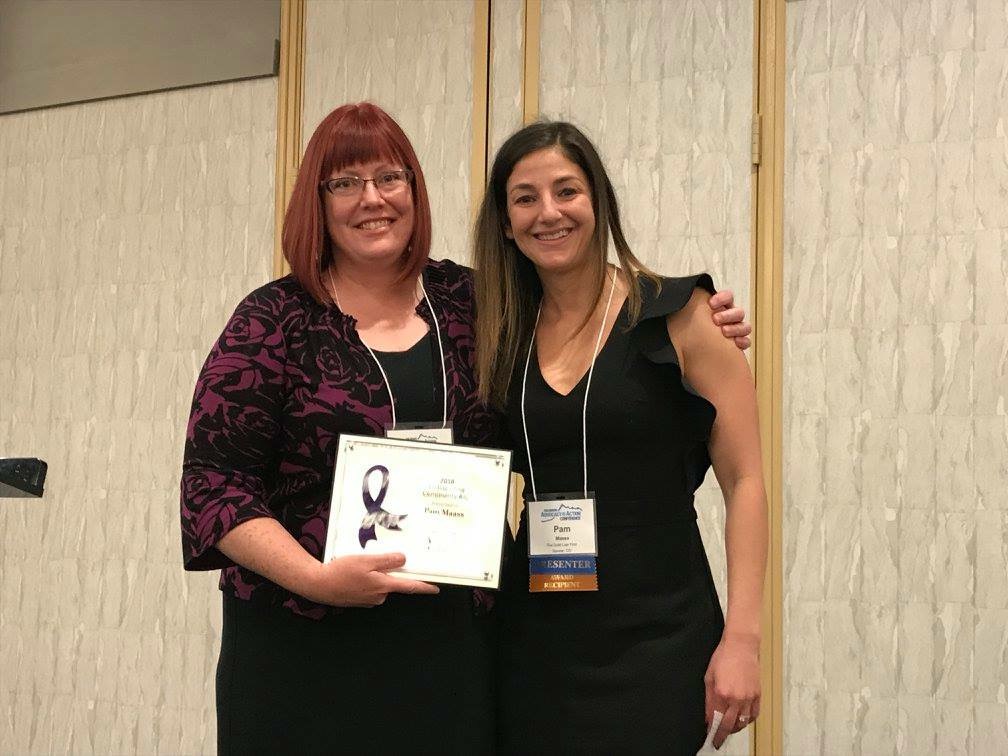
Pamela Maass Awarded the 2018 Purple Ribbon for Outstanding Community Ally
It’s a common misconception to think that if you don’t have children, you don’t need to worry about estate planning. But the fact is, it can be even MORE important to do estate planning if you have no children.
If you haven’t read it yet, you can do so here. Here in part two, we discuss the other risks involved for those who forego estate planning
Someone will have power over your health care
Estate planning isn’t just about passing on your assets when you die. In fact, some of the most critical parts of planning have nothing to do with your money at all, but are aimed at protecting you while you’re still very much alive.Advance planning allows you to name the person you want to make healthcare decisions for you if you’re incapacitated and unable to make decisions yourself.For example, if you’re temporarily unconscious following a car accident and unable to give doctors permission to perform a potentially risky medical treatment, it’s not always clear who’ll be asked to make that decision for you. If you have a romantic partner but aren’t married and haven’t granted them medical power of attorney, the court will likely have a family member, not your partner, make that decision. Depending on your family, that person may make decisions contrary to what you or your partner would want. Indeed, if you don’t want your estranged brother to inherit your property, you probably don’t want him to have the power to make life-and-death decisions about your medical care, either. But that’s exactly what could happen if you don’t proactively plan.
Even worse, your family members who have priority to make decisions for you could keep your dearest friends away from your bedside in the event of your hospitalization or incapacity. Or family members who don’t share your values about the types of food you eat, or the types of medical care you receive, could be the one’s making decisions about how you’ll be cared for.
Even if, or maybe especially if, you don’t have kids, you need to do estate planning in order to name health care decisions-makers for yourself and provide instructions on how you want decisions made.
Someone Will Get Power Over Your Finances
As with health-care decisions, if you become incapacitated and haven’t legally named someone to handle your finances while you’re unable to do so, the court will pick someone for you. The way to avoid this is by naming someone you trust to hold power of attorney for you in the event of your incapacity.
Durable power of attorney is an estate planning tool that gives the person you choose immediate authority to manage your financial matters if you’re incapacitated. This agent will have a broad range of powers to handle things like paying your bills and taxes, running your business, collecting your Social Security benefits, selling your home, as well as managing your banking and investment accounts.
Because these powers are so broad, it’s critical that you only give this power to someone you absolutely trust, and ideally, with the guidance of a lawyer who can watch out for your best interests.
The fact that durable power of attorney is granted as soon as you’re incapacitated means your agent can begin handling your finances immediately, without waiting for a judge’s decision, simply by presenting a legal document and appropriate proof of your incapacity to a financial account holder. Since courts are notoriously slow, this quick access can be immensely beneficial to ensure your bills get paid on time and you have the funds available when you need them.
Without signed durable power of attorney, your family and friends will have to go to court to get access to your finances, which not only takes time, but it could lead to mismanagement and even the loss of your assets should the court grant this authority to the wrong person.Furthermore, the person you name doesn’t have to be a lawyer or financial professional—it can be anybody you choose, including both family and friends. The most important aspect of your choice is selecting someone who’s imminently trustworthy, since they will have nearly complete control over your estate. Besides, with us as your Personal Family Lawyer®, your agent will have access to us as your trusted counsel should they need guidance or help.
Given all of these potential risks, it would be foolhardy for those without children to ignore or put off these basic estate-planning strategies. Identifying the right planning tools is easy to do, and begins with an Estate Plan Strategy Session, where we can consider everything you own and everyone you love, and guide you to make informed, educated, empowered choices for yourself and your loved ones. It will likely take just a few hours of your time to be certain that both your assets, healthcare, and relationships will be managed in the most effective and affordable manner possible in the event of your death or incapacity.
This article is a service of , Personal Family Lawyer®. We don’t just draft documents; we ensure you make informed and empowered decisions about life and death, for yourself and the people you love. That’s why we offer a Estate Plan Strategy Session, during which you will get more financially organized than you’ve ever been before, and make all the best choices for the people you love. You can begin by calling our office today to schedule a Estate Plan Strategy Session and mention this article to find out how to get this $750 session at no charge. Schedule online.


.svg)
